


Spacecraft orbits
A spacecraft is said to orbit something when gravity keeps it moving around an object or point in space in a (relatively) stable loop.
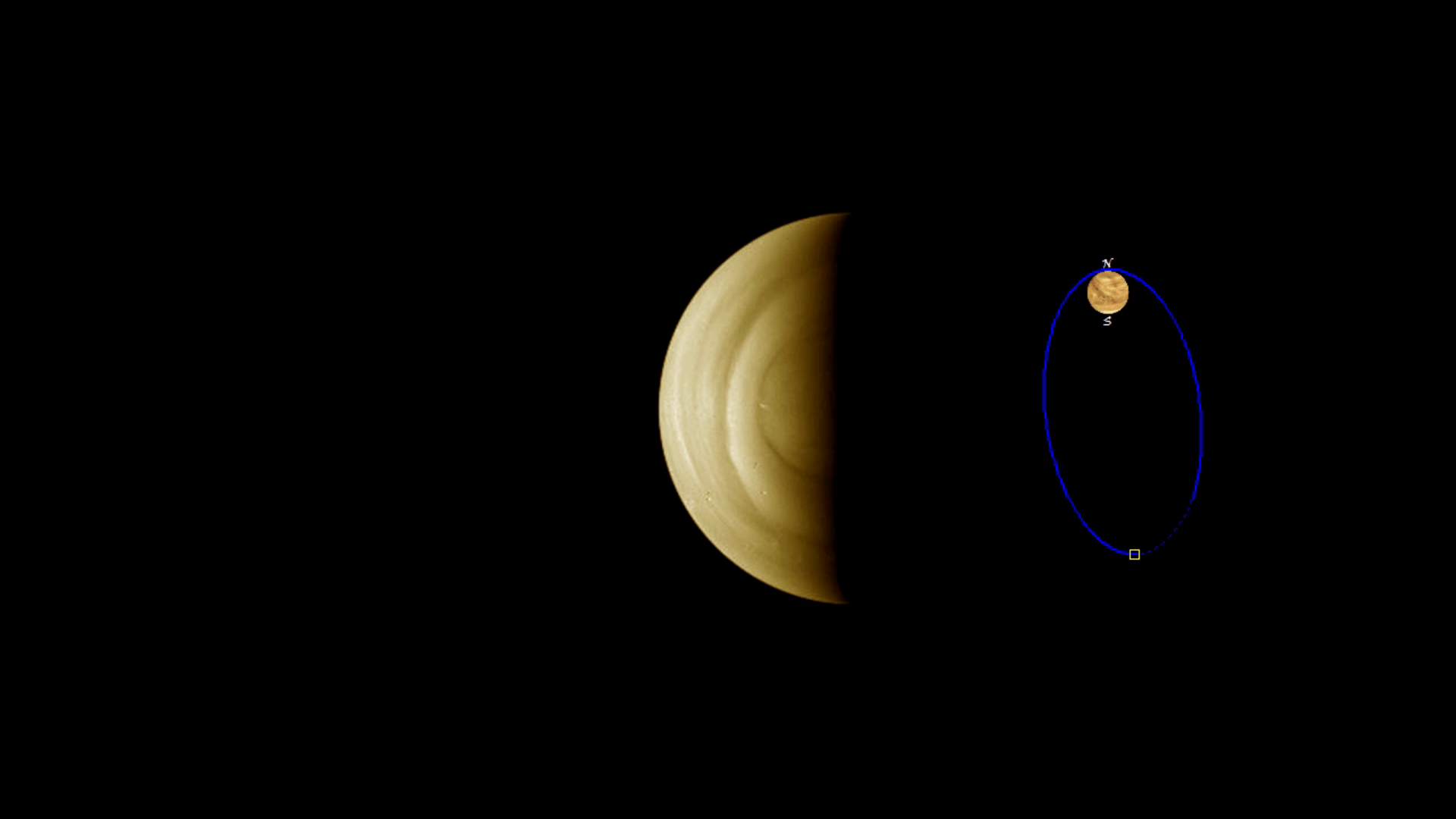
Most spacecraft have prograde orbits, which means they move from west to east. This is also the usual direction of rotation of objects in our Solar System, although there are exceptions: planet Venus spins 'backwards' on its axis.
Spacecraft can enter orbit around objects in space such as Earth, the Moon, the Sun or other planets and moons in the Solar System. The more massive an object is, the stronger its gravitational pull and the easier it is for a spacecraft to orbit around it. This makes it harder – but certainly not impossible – to orbit smaller objects like asteroids.
So what types of orbits are there?
Low-Earth orbit
A low-Earth orbit (LEO) is the lowest altitude a spacecraft must achieve to orbit the Earth – at least 160 km. Spacecraft in these orbits circle our planet once every ninety minutes or so. The International Space Station and the Hubble Space Telescope are both in LEO
Geostationary and geosynchronous orbits
A geostationary or geosynchronous orbit is located at an altitude of 36 000 km above Earth, and takes a lot more energy to reach than LEO. At this higher altitude it takes the satellite a full 24 hours to orbit the Earth. Thus, the satellite moves at the same speed as the Earth rotates.
Geostationary satellites are those orbiting above the equator in a circular orbit – they appear to ‘hover’ in the sky over the same spot on the ground.
Geosynchronous satellites are not positioned over the equator or have an elliptical orbit and so appear to move across the sky. These types of satellites are typically communications or weather satellites, for example ESA’s Meteosat family of weather satellites operate in geostationary orbit.
'Geo-', derived from Gaia, refers to Earth. Similar orbits around Mars would technically be called areostationary and areosynchronous, where 'areo-' is derived from Ares, the Greek name for Mars. (Planets have traditionally been named after Roman gods.) To avoid too many different namings, geosynchronous and geostationary can be used to describe orbits around other objects, just like we use the term geology for other planets. Alternatively, one can use the more generic terms (surface-)stationary and synchronous to describe these orbits
Polar orbit
A polar orbit is any orbit in which the spacecraft passes over the rotation poles of its host planet/moon/star. In a polar orbit, the spacecraft can be made to follow any line of longitude. As the host object rotates below the satellite, the satellite passes over a different region of the planet with each orbit.
both use(d) elliptical, polar orbits. Otherwise, they can be used to observe specific effects relating to polar regions, such as Cluster observing the Sun–Earth interaction.
Sun-synchronous orbit
An orbit that passes over the same part of Earth at the same local time each day is called Sun-synchronous. ESA’s Proba-2 is situated in a Sun-synchronous orbit.
Orbits around a Lagrange point
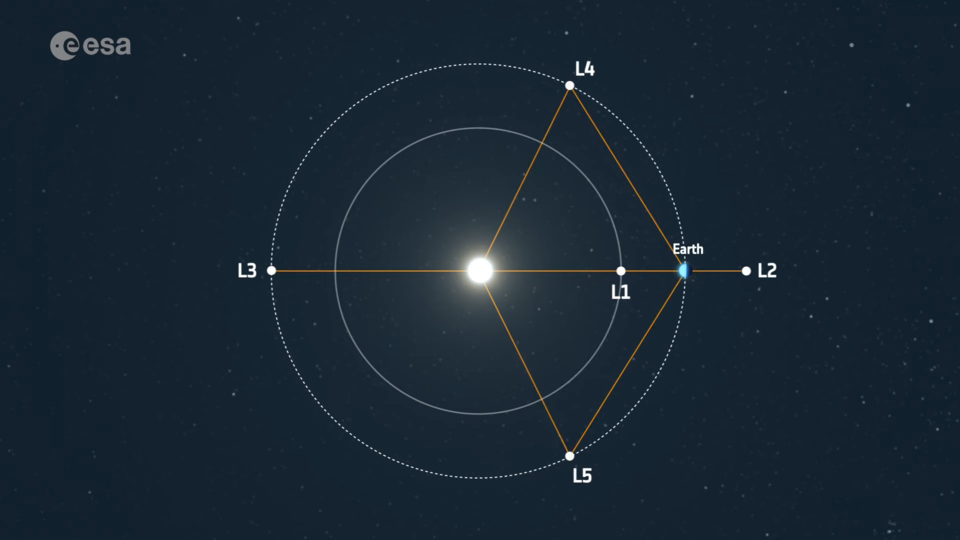
Some spacecraft don't orbit an object, but a so-called 'Lagrange point'. Each planet orbiting the Sun has five of these points around it, dubbed 'L1' to 'L5'. At these locations, the balance of the gravitational forces and the orbital motion of the spacecraft, Sun and planet can keep a spacecraft orbiting the Lagrange point.