• → European Space Agency

      • Space for Europe
      • Space News
      • Space in Images
      • Space in Videos
    • About Us

      • Welcome to ESA
      • DG's News and Views
      • For Member State Delegations
      • Business with ESA
      • ESA Exhibitions
      • ESA Publications
      • Careers at ESA
    • Our Activities

      • Space News
      • Observing the Earth
      • Human Spaceflight
      • Launchers
      • Navigation
      • Space Science
      • Space Engineering
      • Operations
      • Technology
      • Telecommunications & Integrated Applications
    • For Public

    • For Media

    • For Educators

    • For Kids

    • ESA

    • Launch Special

    • Planck

    • Herschel

    • ESA Science

    • About Planck

      • Planck at a glance
      • Science objectives
      • Planck highlights
      • History of microwave astronomy
    • The Microwave Universe

      • Why the microwave
      • Key questions
    • The spacecraft

      • Vital stats
      • Telescope
      • Instruments
      • Sophisticated spacecraft
    • The mission

      • Journey
      • Launch and early operations
      • Operating Planck
    • Meet the team

      • Planck Project Scientist: An interview with Jan Tauber
      • Herschel and Planck Programme Manager: An interview with Thomas Passvogel
    • Multimedia
    • Planck images
    • Planck videos
    • Science@ESA vodcast

    ESA > Our Activities > Space Science > Planck

    Vital stats

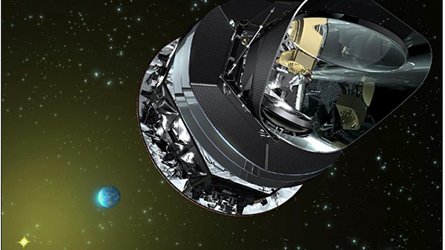
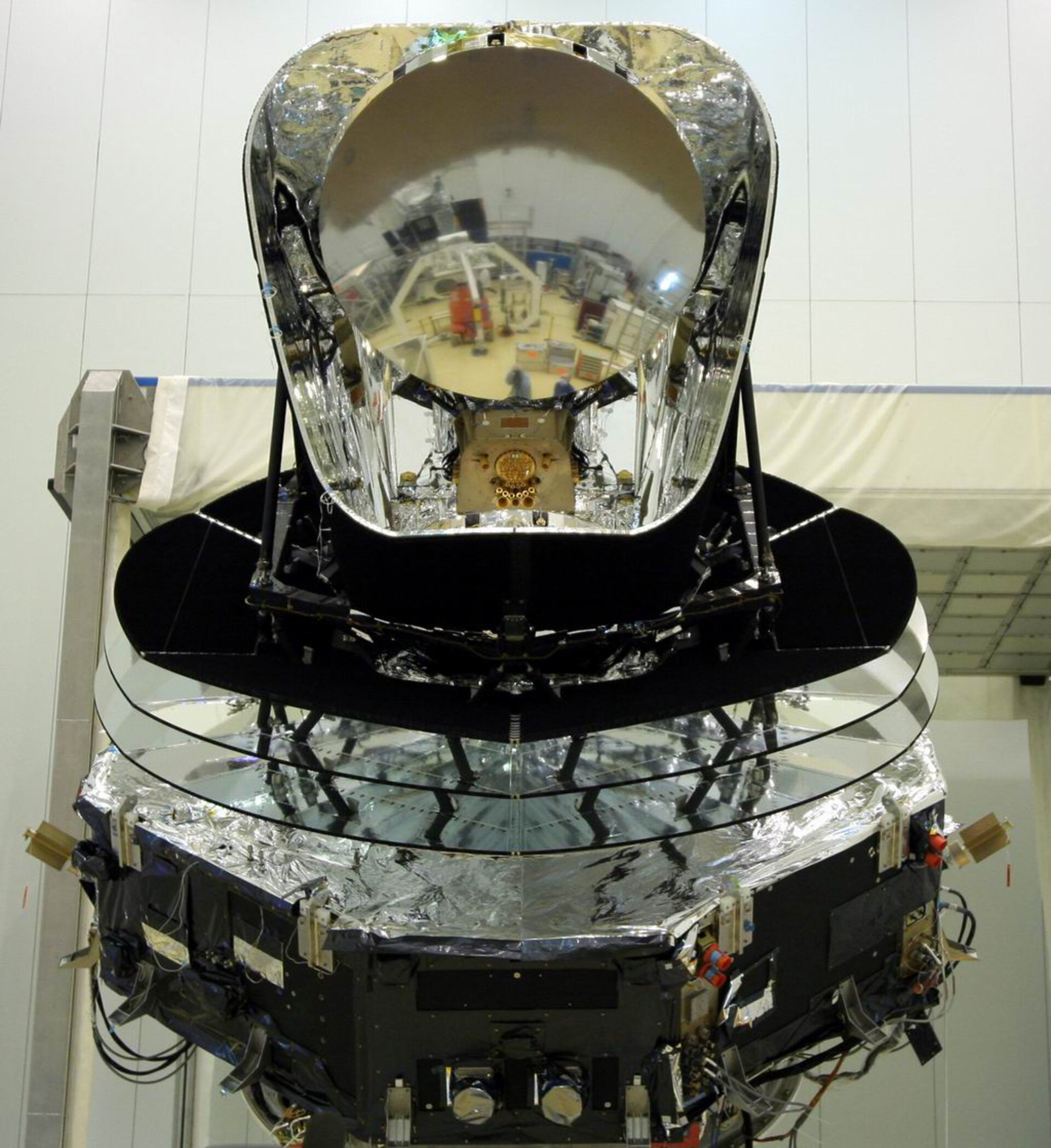
    Herschel reflected in Planck mirror

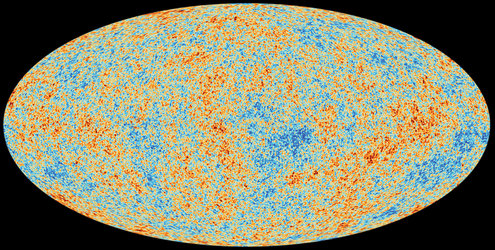
    Planck will offer vastly improved performance in measuring the Cosmic Microwave Background (CMB) radiation compared to balloon-borne and ground-based experiments and will exceed the performance of any previous space-based instruments of this kind.

    The spacecraft revolves about its Sun-pointing axis once per minute to stabilise its attitude. Planck will use this stabilisation spin to scan the sky, observing at least 95% of it through two separate observation periods in a span of 15 months.


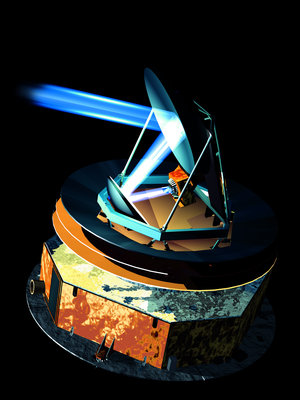
    The Planck spacecraft
    Dimensions 4.20 x 4.22 m (height x width)
    Mass 1.95 tonnes at launch
    Spacecraft Spin stabilised, 1 rpm
    Telescope mirror 1.9 x 1.5 m primary reflector
    Telescope mass 205 kg with focal plane unit
    Lifetime A minimum of 15 months, limited by degradation of cooling system
    Operational orbit Lissajous orbit at an average distance of 400 000 km from L2
    Propulsion Hydrazine, 12 thrusters x 20 N each, 4 thrusters x 1 Newton each
    Solar arrays Flat, fixed triple-junction Gallium-Arsenide cell panels on rear of spacecraft
    Solar array area: 13m2
    Batteries 39 Ah lithium ion batteries
    Communication 3 x low gain antennae
    1 x medium gain antenna

    Rate this

    Views

    Share

    • Currently 0 out of 5 Stars.
    • 1
    • 2
    • 3
    • 4
    • 5
    Rating: 0/5 (0 votes cast)

    Thank you for rating!

    You have already rated this page, you can only rate it once!

    Your rating has been changed, thanks for rating!

    85
    facebook
    twitter
    reddit
    google plus
    digg
    tumbler
    digg
    blogger
    myspace
    • Planck: looking back at the dawn of time
    • Read more
      • Cosmic Microwave Background (CMB) radiation
        • Travelling back in time
          • Observations: Seeing in microwave wavelengths
            • So, how did everything start?
            • In depth
            • Planck in depth
            • Planck spacecraft in depth

    Connect with us

    • RSS
    • Youtube
    • Twitter
    • Flickr
    • Google Buzz
    • Subscribe
    • App Store
    • LATEST ARTICLES
    • · CryoSat hits land
    • · Ariane 5 completes seven launches …
    • · Measuring skull pressure without t…
    • · Malargüe station inauguration
    • · The solar wind is swirly
    • FAQ

    • Jobs at ESA

    • Site Map

    • Contacts

    • Terms and conditions