Rosetta factsheet
Name: Rosetta
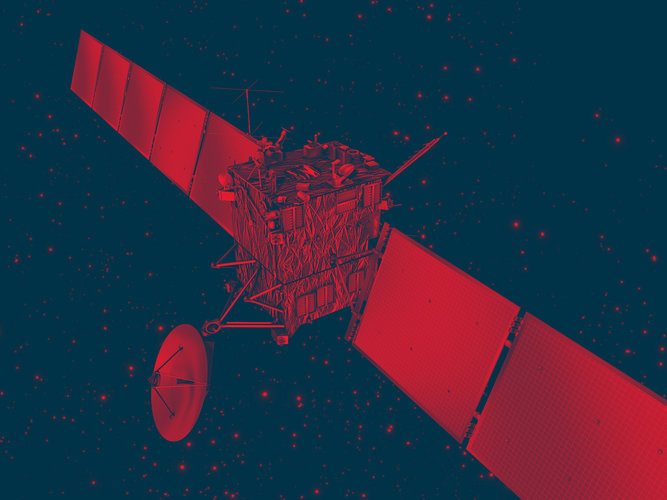
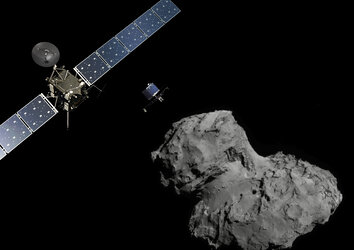
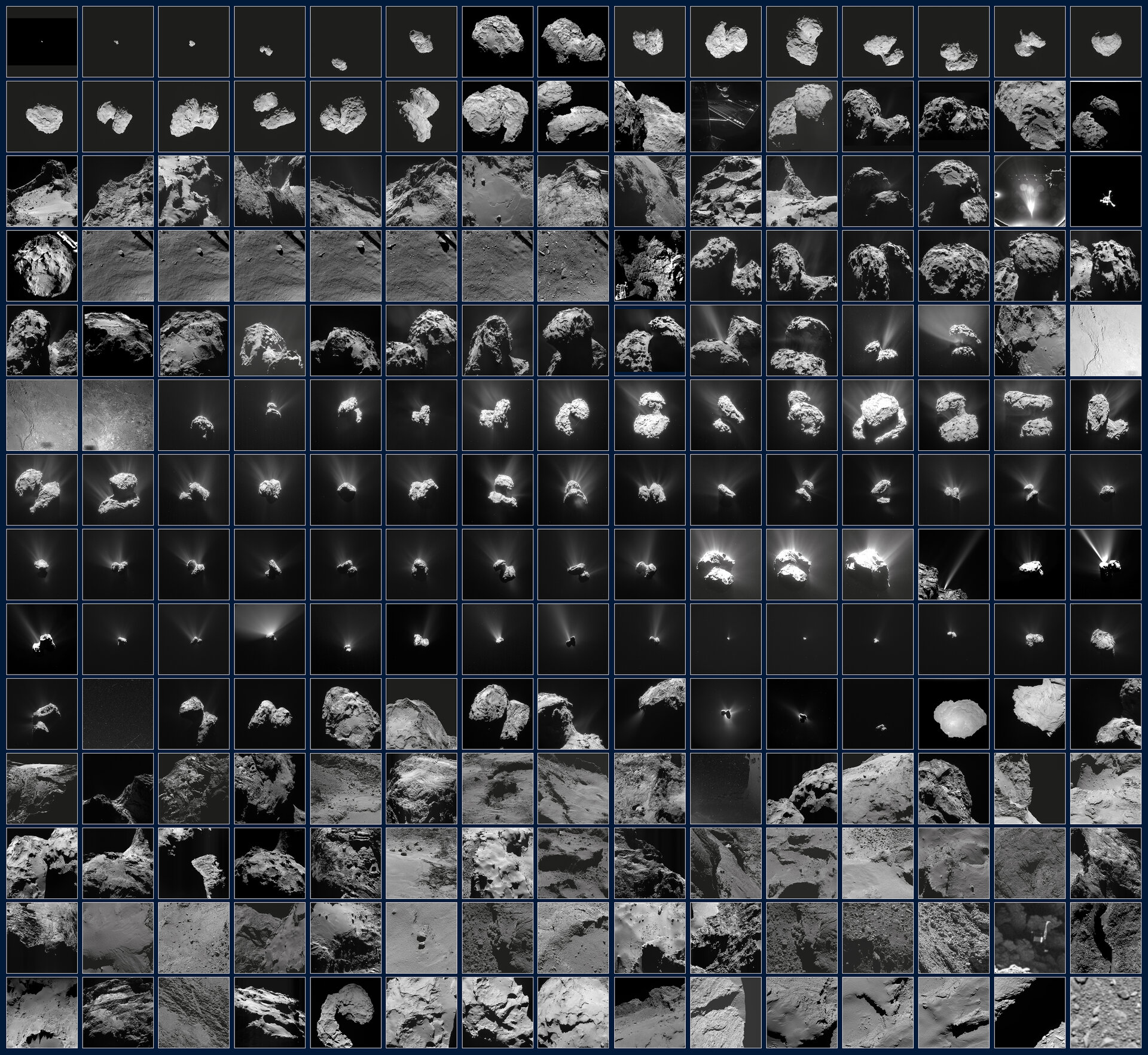
Mission: To rendezvous with Comet 67P/Churyumov-Gerasimenko and study the nucleus of the comet and its environment for nearly two years, and land a probe on its surface.
Primary mission objectives:
- Undertake a lengthy exploration of a comet at close quarters to watch how it is transformed by the warmth of the Sun along its elliptical orbit
- Land a probe on a comet’s nucleus for in-situ analysis

Launch date: 2 March 2004
Mission end: 30 September 2016
Launch vehicle: Ariane-5 G+
Launch mass: Orbiter: 2900 kg (including 1670 kg propellant and 165 kg science payload); Lander (Philae): 100 kg
Dimensions: Orbiter: 2.8 × 2.1 × 2.0 m with two 14 metre long solar panels
Journey milestones
1st Earth gravity assist: 4 March 2005
Mars gravity assist: 25 February 2007
2nd Earth gravity assist: 13 November 2007
Asteroid Steins flyby: 5 September 2008
3rd Earth gravity assist: 13 November 2009
Asteroid Lutetia flyby: 10 July 2010
Enter deep space hibernation: 8 June 2011
Exit deep space hibernation: 20 January 2014
Comet rendezvous manoeuvres: May - August 2014
Arrival at comet: 6 August 2014
Philae lander delivery: 12 November 2014
Closest approach to Sun: 13 August 2015
Rosetta descent to comet: 30 September 2016
Instruments
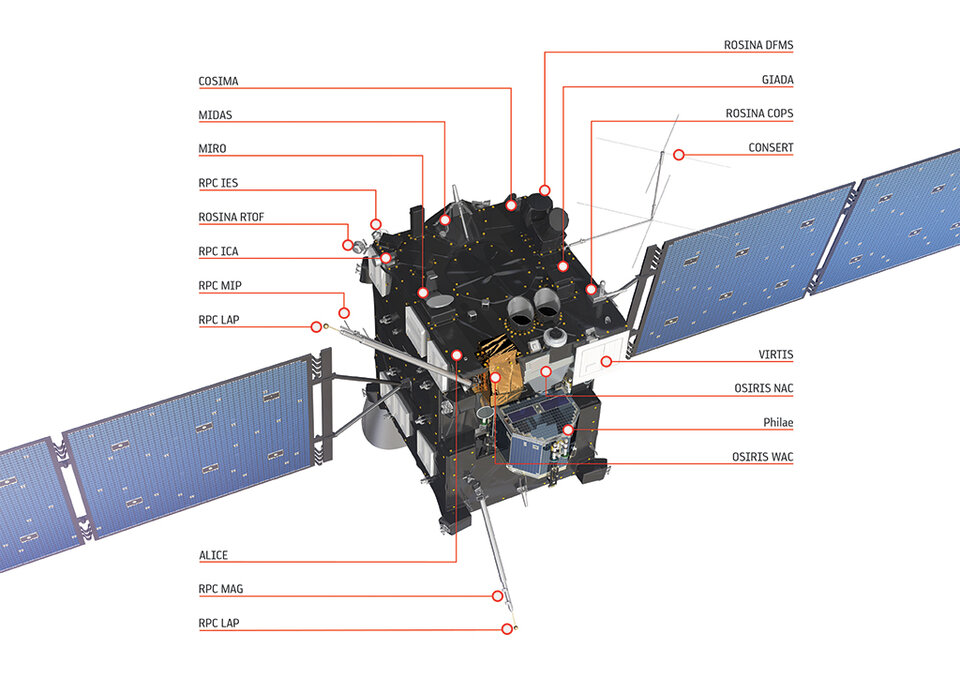
| Rosetta orbiter instruments | |
|
ALICE Ultraviolet Imaging Spectrometer |
OSIRIS Rosetta Orbiter Imaging System |
|
CONSERT Comet Nucleus Sounding |
ROSINA Rosetta Orbiter Spectrometer for Ion and Neutral Analysis |
|
COSIMA Cometary Secondary Ion Mass Analyser |
RPC Rosetta Plasma Consortium |
|
GIADA Grain Impact Analyser and Dust Accumulator |
RSI Radio Science Investigation |
|
MIDAS Micro-Imaging Analysis System |
VIRTIS Visible and Infrared Mapping Spectrometer |
|
MIRO Microwave Instrument for the Rosetta Orbiter |
|
| Philae lander instruments | |
|
APXS Alpha Proton X-ray Spectrometer |
MUPUS Multi-Purpose Sensor for Surface and Subsurface Science |
|
ÇIVA / ROLIS Rosetta Lander Imaging System |
ROMAP RoLand Magnetometer and Plasma Monitor |
|
CONSERT Comet Nucleus Sounding |
SD2 Sample and Distribution Device |
|
COSAC Cometary Sampling and Composition experiment |
SESAME Surface Electrical Sounding and Acoustic Monitoring Experiment |
|
MODULUS PTOLEMY Evolved Gas Analyser |
|
Partnerships
The orbiter's scientific payload is provided by scientific consortia from institutes across Europe and the United States. The lander is provided by a European consortium headed by the German Aerospace Research Institute (DLR). Other members of the consortium are ESA, CNES and institutes from Austria, Finland, France, Hungary, Ireland, Italy, and the United Kingdom.
Science highlights
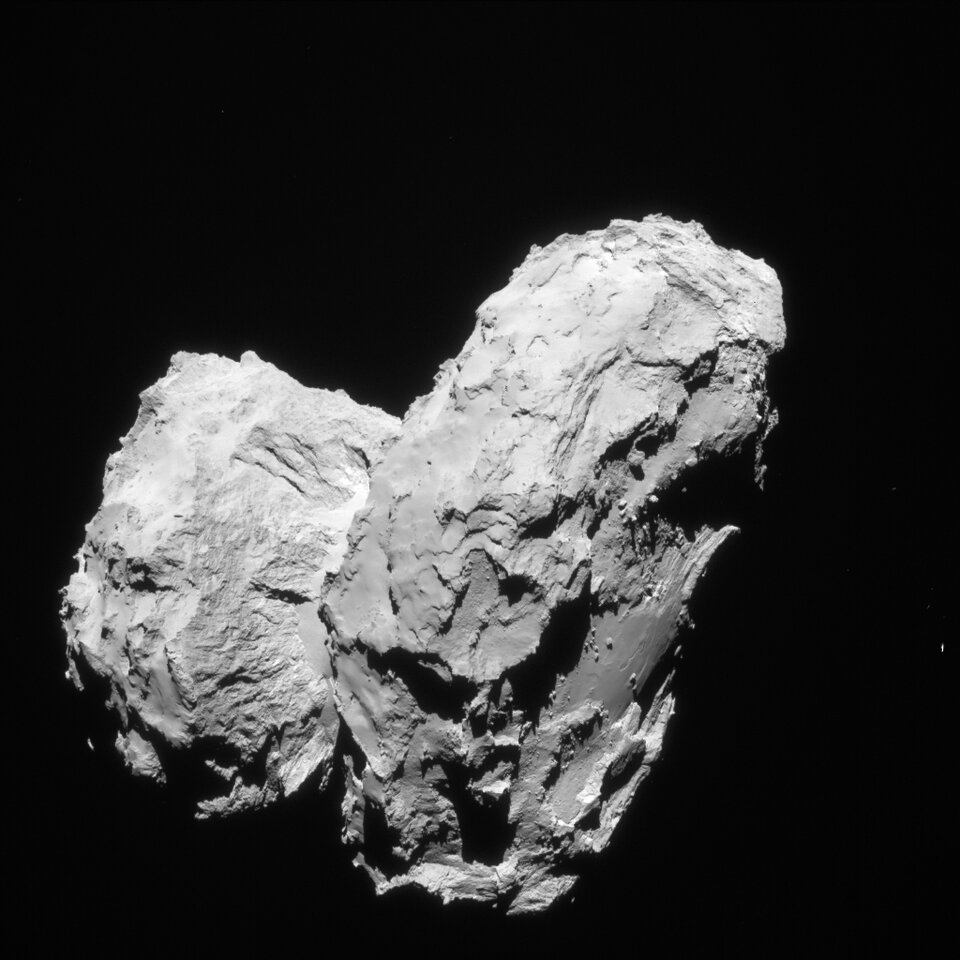
- Discovery of how Comet 67P/Churyumov–Gerasimenko got its curious shape and insight into its double-lobed form.
- Insight into the importance of the comet’s shape in influencing its seasons, moving dust across its surface, and in explaining the variations measured in the density and composition of the coma, the comet’s ‘atmosphere’.
- The discovery of molecular oxygen and nitrogen, and water with a different ‘flavour’ to that in Earth’s oceans.
- Discovery of elements regarded as crucial for the origin of life including the amino acid glycine, which is commonly found in proteins, and phosphorus, a key component of DNA and cell membranes.
- Revelation that comets are the ancient leftovers of early Solar System formation, and not younger fragments resulting from subsequent collisions between other, larger bodies.

Mission facts
- Rosetta gets its name from the famous Rosetta stone that led to the deciphering of Egyptian hieroglyphics almost 200 years ago.
- Rosetta’s original target was comet 46P/Wirtanen, but after postponement of the initial launch a new target was set: Comet 67P/Churyumov-Gerasimenko.
- Rosetta was the first spacecraft to fly close to Jupiter’s orbit using only solar cells as its main power source.
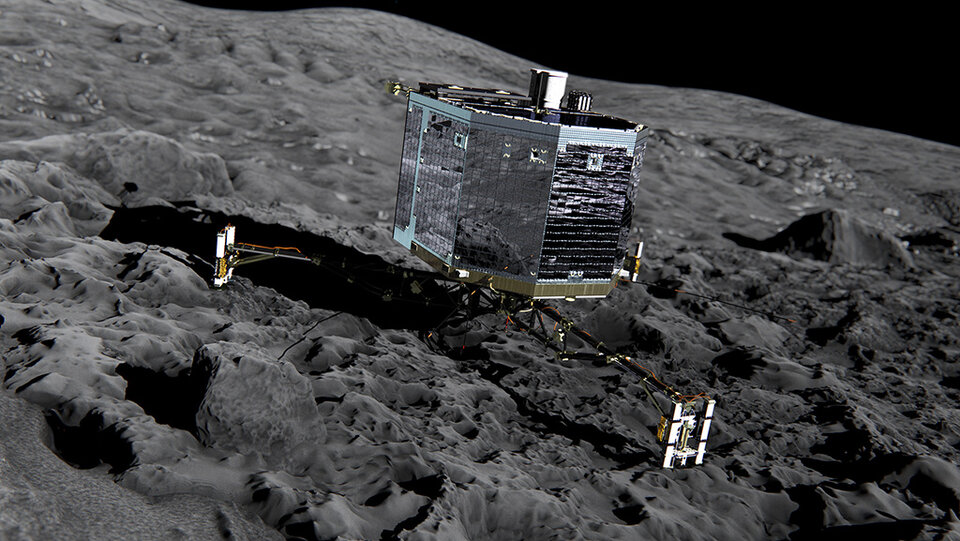
- Rosetta is the first spacecraft to orbit a comet and land on its surface
- The Philae lander is named for the island in the river Nile on which an obelisk was found that had a bilingual inscription that enabled the hieroglyphs of the Rosetta Stone to be deciphered.