• → European Space Agency

      • Space for Europe
      • Space News
      • Space in Images
      • Space in Videos
    • About Us

      • Welcome to ESA
      • DG's News and Views
      • For Member State Delegations
      • Business with ESA
      • ESA Exhibitions
      • ESA Publications
      • Careers at ESA
    • Our Activities

      • Space News
      • Observing the Earth
      • Human Spaceflight
      • Launchers
      • Navigation
      • Space Science
      • Space Engineering
      • Operations
      • Technology
      • Telecommunications & Integrated Applications
    • For Public

    • For Media

    • For Educators

    • For Kids

    • ESA

    • Space Science

    Rosetta overview

    Rosetta logo Status

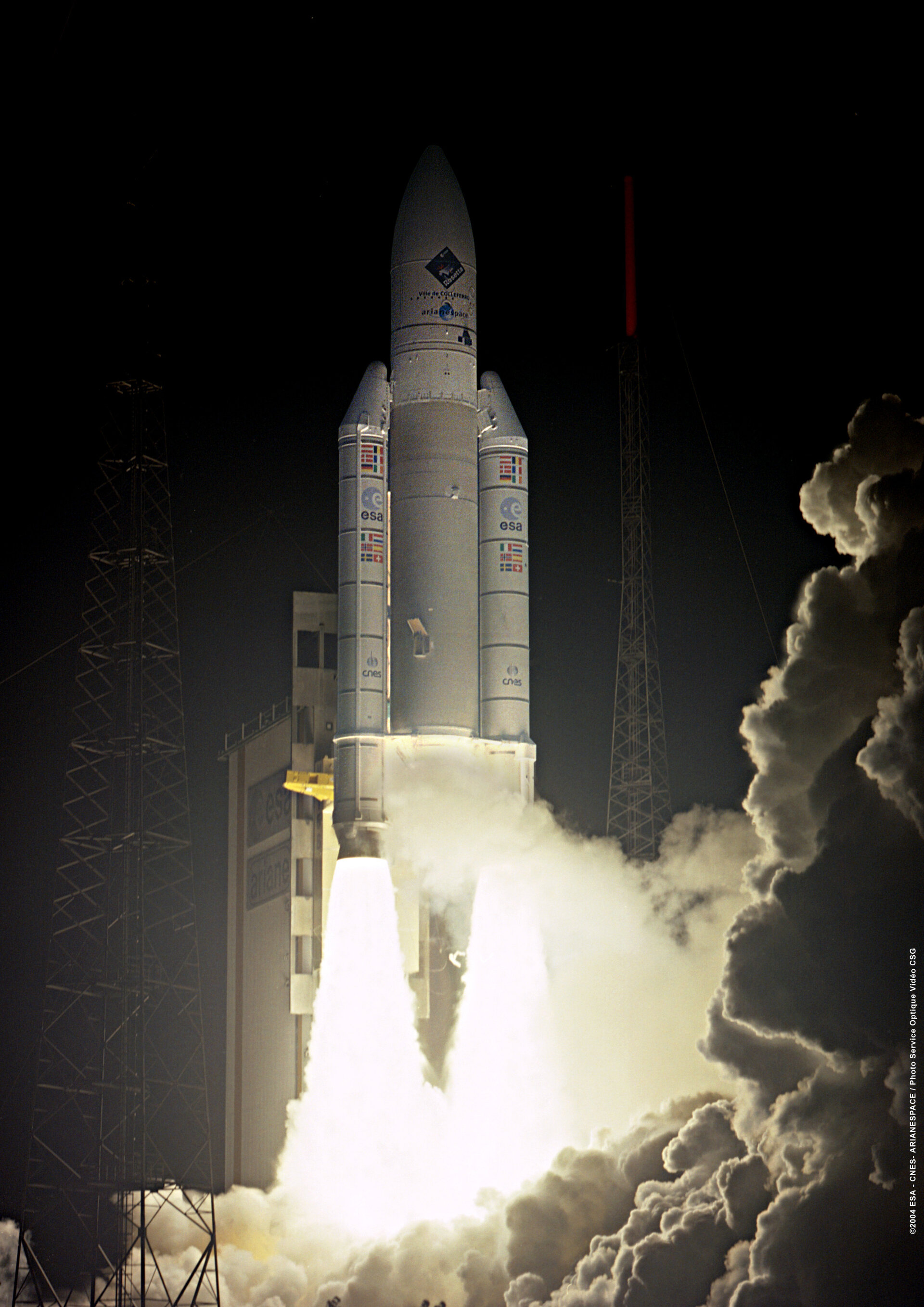
    Launched 2 March 2004

    Objective

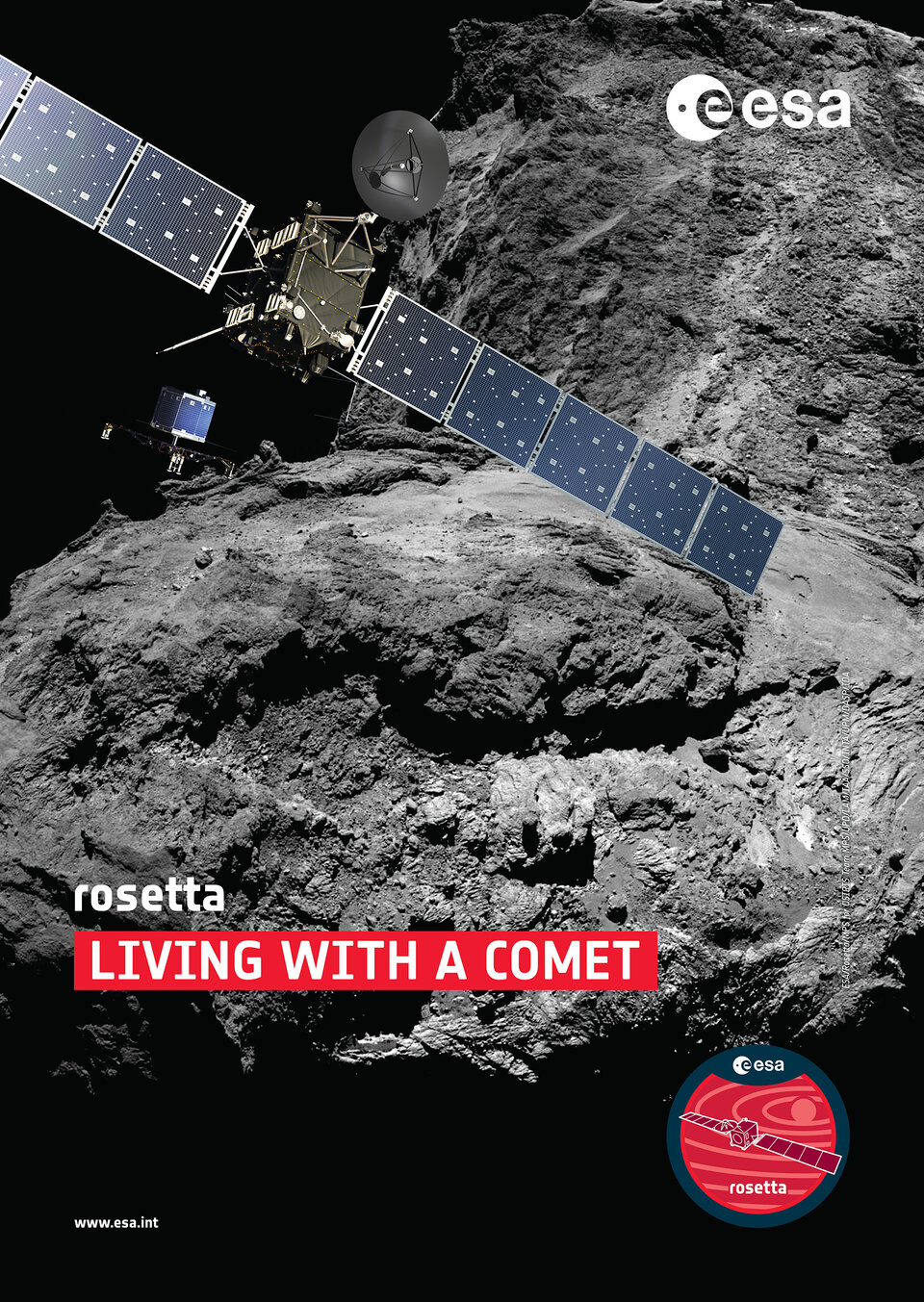
    Rosetta's main objective is to rendezvous with Comet 67P/Churyumov-Gerasimenko. It will study the nucleus of the comet and its environment in great detail for a period of nearly two years, and land a probe on its surface.

    Don't click here, use the red link ->> Bookmark this page as:


    For more in-depth scientific and technical details of our Space Science Programme and missions, follow this link.
    Scientific & Technical web site
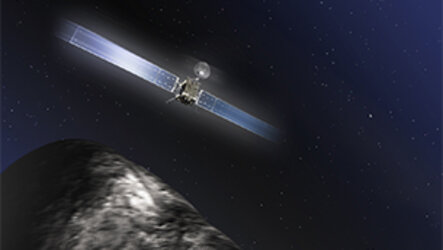
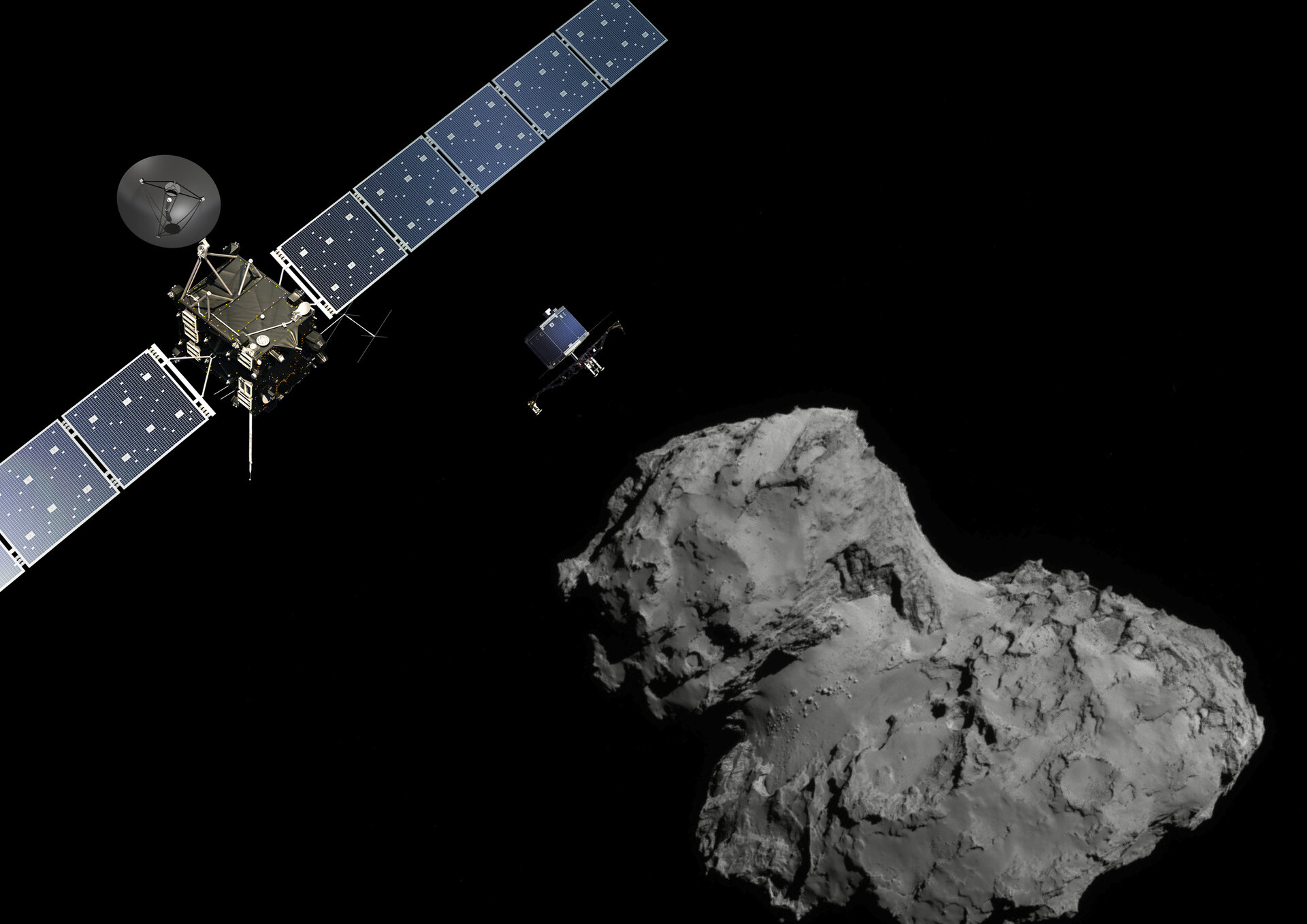
    The Rosetta lander Rosetta spacecraft Comet rendezvous Artist view of the Rosetta lander
    • Our Universe
    • About Space Science
    • ESA's 'Cosmic Vision'
    • Science missions
    • Mission navigator
    • Target groups
    • For Media
    • For Scientists
    • For Kids
    • Multimedia
    • Science images
    • Science videos
    • Animations
    • Downloads
    • Sounds from space
    • Resources
    • Reference section
    • Services
    • FAQs
    • Glossary
    • Help
    • Portal terms of use
    • Comments
    • ESA Press Releases
    • Follow us
    • RSS feeds
    • ESA Sci on Twitter
    • ESA Space Science Images on Flickr
    • ESA 3D on Flickr

    ESA > Our Activities > Space Science

    Rosetta overview

    Mission

    The Rosetta orbiter - spacecraft design

    Rosetta will be the first mission ever to land on a comet. After its lander reaches the comet, the main spacecraft will follow the comet for many months as it heads towards the Sun. Rosetta's task is to study comets, which are considered the primitive building blocks of the Solar System. This will help us to understand if life on Earth began with the help of 'comet seeding'.

    Rosetta is one of the most challenging missions ever attempted. Many of the complex navigation and landing manoeuvres need to take place automatically with absolutely no room for error. The complications of sending a small spacecraft halfway across the Solar System and making a soft landing on a small comet are immense.

    • A large number of complex scientific instruments need to be accommodated on one side of the spacecraft, which must permanently face the comet during the operational phase of the mission.
    • The spacecraft needs to endure both extremes of temperature, from that of deep space to very close to the active comet
    • Complex spacecraft navigation needs to take place at low-altitude orbits around the dust and gas jets of the comet, which also has a weak but asymmetrical rotating gravity field.
    • The Rosetta lander has to be stowed to survive the cruise and eventually to self-eject from the spacecraft. The orbiter must navigate with millimetre accuracy for the ejection, and then relay data from the lander back to Earth.

    What's special?

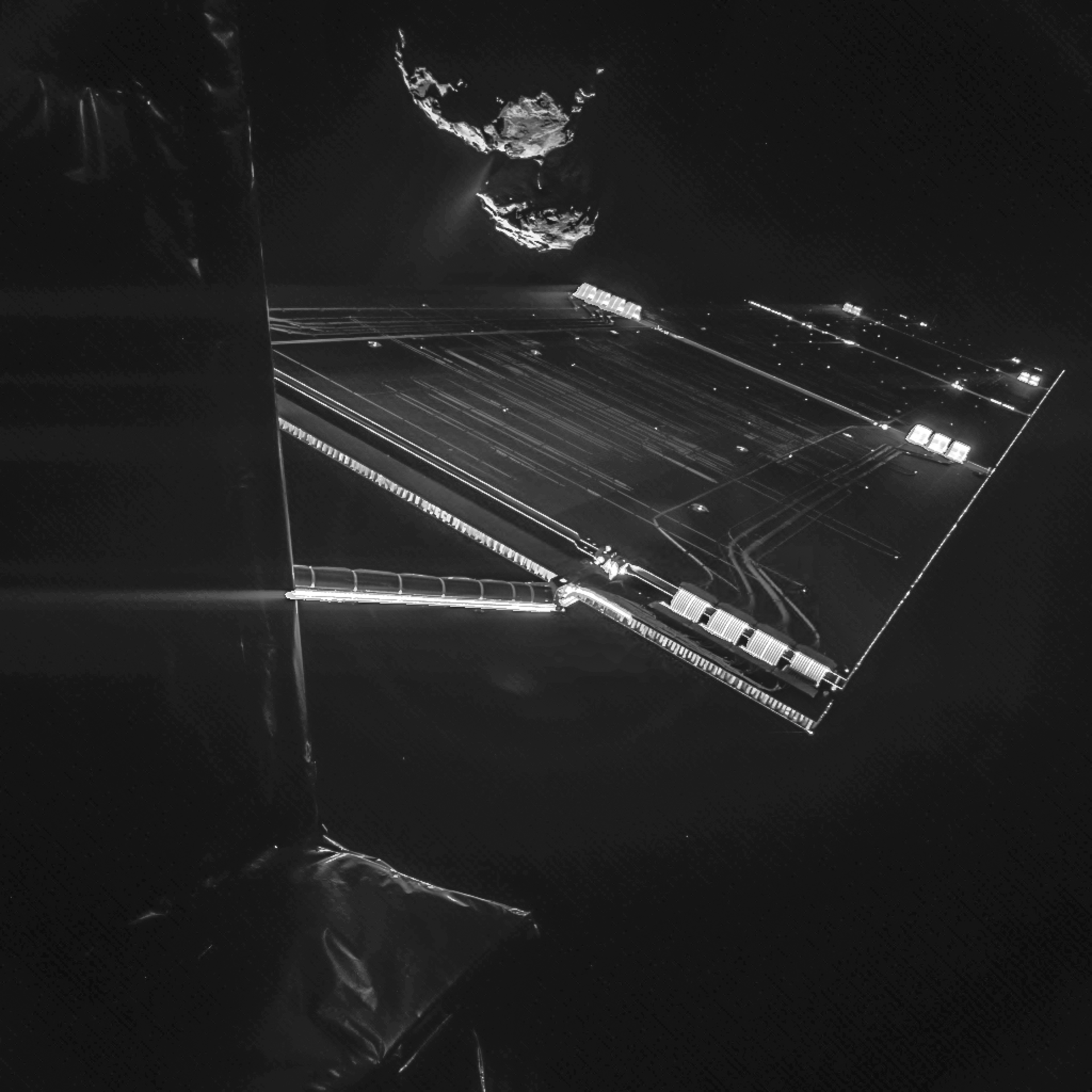
    Rosetta will be the first space mission to journey beyond the main asteroid belt and rely solely on solar cells for power generation, rather than the traditional radio-isotope thermal generators. The new solar-cell technology used on the orbiter's two giant solar panels allows it to operate over 800 million kilometres from the Sun, where sunlight levels are only 4% of those on Earth. Hundreds of thousands of specially developed non-reflective silicon cells generate up to 8700 Watts in the inner Solar System and around 400 Watts for the deep-space comet encounter
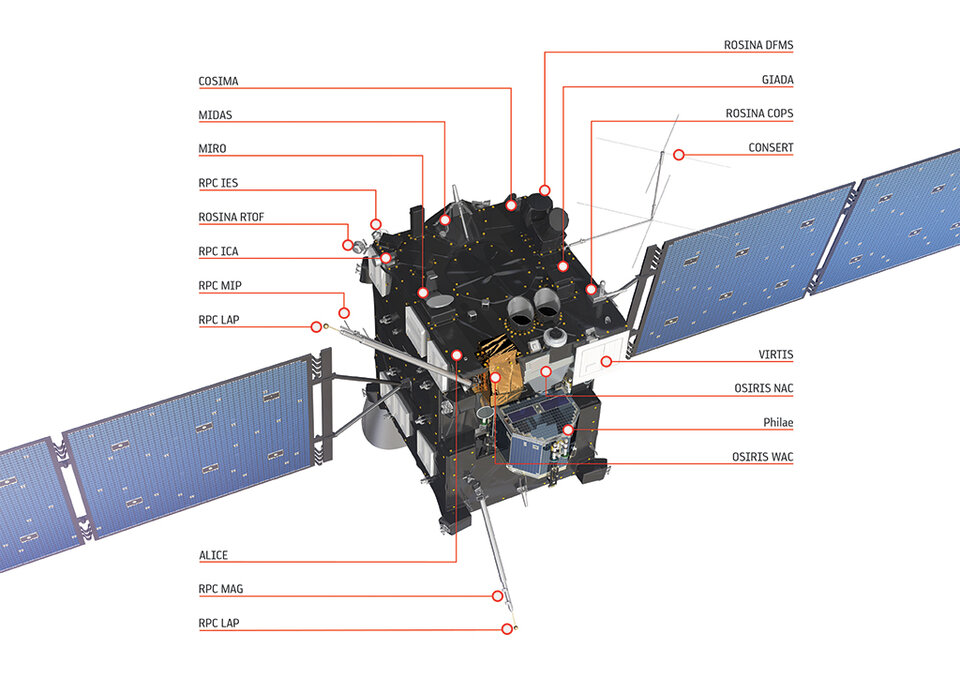
    The Rosetta mission will achieve many historic firsts:

    • Rosetta will be the first spacecraft to orbit a comet's nucleus.
    • It will be the first spacecraft to fly alongside a comet as it heads towards the inner Solar System.
    • Rosetta will be the first spacecraft to examine from close proximity how a frozen comet is transformed by the warmth of the Sun.
    • Shortly after its arrival at the comet, the Rosetta lander will make the first controlled touchdown on a comet nucleus.

    Spacecraft

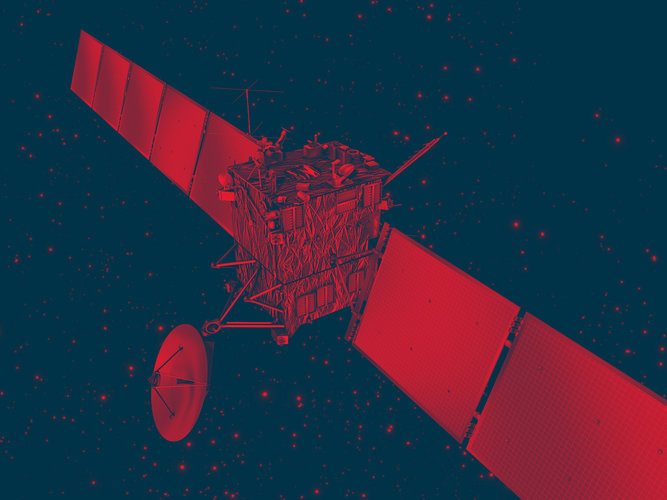
    The main spacecraft measures 2.8 x 2.1 x 2.0 metres, on which all subsystems and payload equipment are mounted. There are two 14-metre solar panels with a total area of 64 square metres. At launch, the vehicle weighs approximately 3000 kilograms (fully fuelled) including 1670 kilograms of propellant, 165 kilograms of scientific payload for the orbiter, and 100 kilograms for the lander.

    The large number of complex scientific instruments needs to be accommodated on one side of the spacecraft, which must permanently face the comet during the operational phase of the mission. Until its release, the lander is carried on the opposite side of the orbiter to the large high-gain antenna dish.
    As it arrives on the comet, the Rosetta lander uses three different techniques (self-adjusting landing gear, harpoons, and a drill) to ensure that once it has arrived on the surface of the comet, it stays there.

    As soon as it touches down, two harpoons will anchor the probe to the surface, the self-adjusting landing gear will ensure that it stays upright, even on a slope and then the lander's feet will drill into the ground. These devices will help counteract the fact that there is very low gravity on a comet. The lander will focus on the study of the composition and structure of the comet nucleus material. Goals include the determination of the elements that exist, traces of minerals and isotopic composition of the comet's surface and immediate subsurface. The comet's surface strength, density, texture, porosity, ice phases and thermal properties will also be studied. Texture investigations will include microscopic studies of individual grains.

    Journey

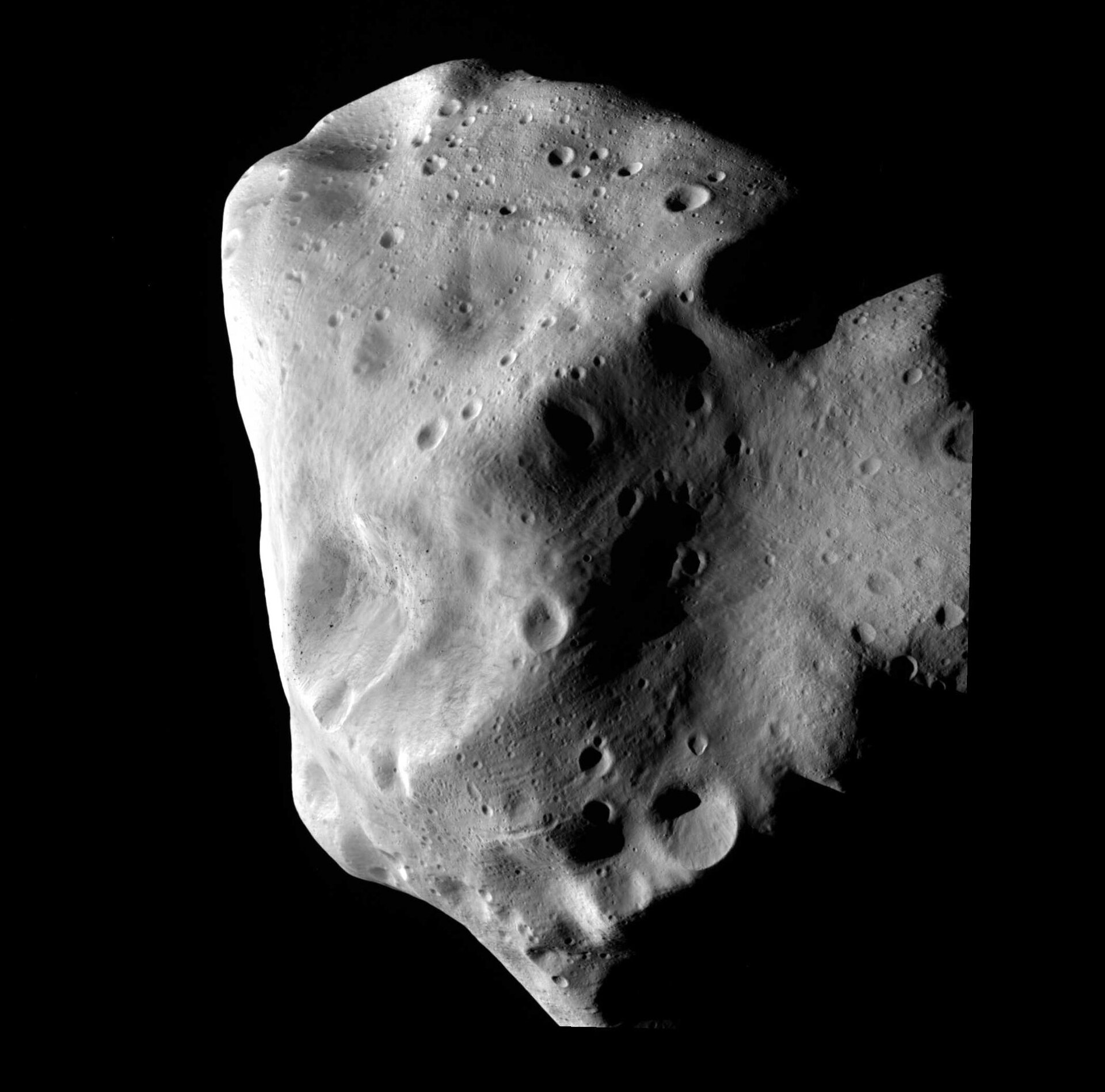
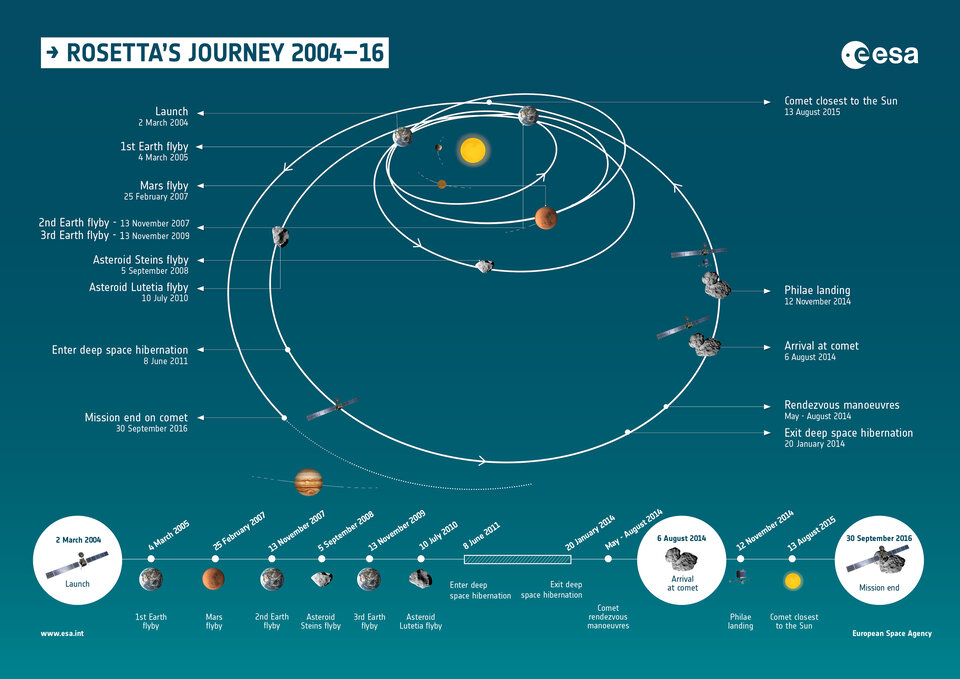
    The journey to Rosetta's final destination will involve complex fly-bys of other planets.

    Partnerships

    The orbiter's scientific payload includes 11 experiments and the small lander which is equipped with its own payload of scientific instruments. Scientific consortia from institutes across Europe and the United States have provided these state-of-the-art instruments.

    The lander is provided by a European consortium headed by the German Aerospace Research Institute (DLR). Other members of the consortium are ESA, CNES and institutes from Austria, Finland, France, Hungary, Ireland, Italy, and the United Kingdom.
    Last update: 2 March 2004

    • ESA's comet chaser
    • More about...
      • Rosetta factsheet
        • XMM-Newton factsheet
          • Hubble factsheet
          • NASA Deep Impact
          • ESO Deep Impact news
          • Related articles
            • Life of a comet
              • Tempel 1: Biography of a comet
                • Rosetta monitors Deep Impact
                  • XMM-Newton to observe Deep Impact
                    • Hubble sees outburst from Deep Impact comet
                      • ESA observes Deep Impact from Earth
                        • Dust and gas from Comet 9P/Tempel 1 seen by ESA OGS
                          • Tempel 1 is weak X-ray source, XMM-Newton confirms

    Connect with us

    • RSS
    • Youtube
    • Twitter
    • Flickr
    • Google Buzz
    • Subscribe
    • App Store
    • ESA Science Twitter

    Follow ESA science

    • LATEST ARTICLES
    • · CryoSat hits land
    • · Ariane 5 completes seven launches …
    • · Measuring skull pressure without t…
    • · Malargüe station inauguration
    • · The solar wind is swirly
    • FAQ

    • Jobs at ESA

    • Site Map

    • Contacts

    • Terms and conditions