• → European Space Agency

      • Space for Europe
      • Space News
      • Space in Images
      • Space in Videos
    • About Us

      • Welcome to ESA
      • DG's News and Views
      • For Member State Delegations
      • Business with ESA
      • ESA Exhibitions
      • ESA Publications
      • Careers at ESA
    • Our Activities

      • Space News
      • Observing the Earth
      • Human Spaceflight
      • Launchers
      • Navigation
      • Space Science
      • Space Engineering
      • Operations
      • Technology
      • Telecommunications & Integrated Applications
    • For Public

    • For Media

    • For Educators

    • For Kids

    • ESA

    • SMART-1

    • ESA Science

    • About SMART-1
    • SMART-1 factsheet
    • Towards final impact
    • Approaching the mission end
    • Frequently Asked Questions
    • Ask about the SMART-1 impact
    • Join the SMART-1 impact observation campaign
    • About the journey

      • The magic of ion engines
      • The SMART way to travel
      • A spiral pathway to the Moon
    • About the mission

      • Masterpieces of miniaturisation
      • What do all the instruments do?
    • About the Moon

      • Welcome to the double planet
      • Lunar science - still plenty left to do!
      • Where did the Moon come from?
    • Multimedia
    • SMART-1 images
    • SMART-1 videos
    • SMART-1 animations
    • 3D Flash 'model'
    • SMART-1 wallpaper
    • Launch replay
    • Services
    • Comments

    ESA > Our Activities > Space Science > SMART-1

    Welcome to the double planet

    Binary system Earth-Moon
    5 October 2003

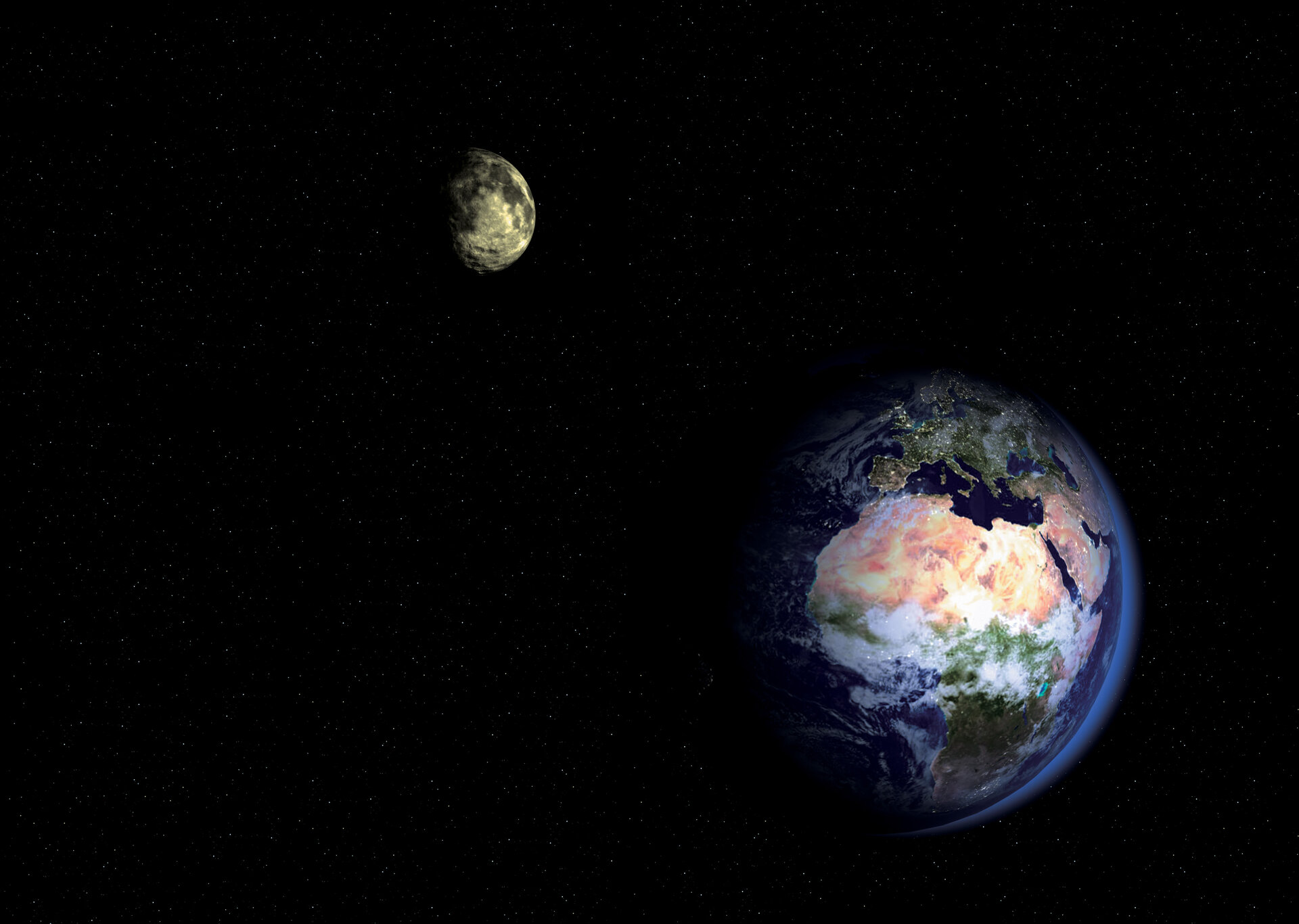
    SMART-1 is Europe's first mission to the Moon. Scientists taking part will soon have a 21st Century view of our companion in space, which makes our connection with it more intimate than ever.

    The Moon is already no longer seen merely as a satellite, but as Earth's daughter, forming a 'double planet'.

    When humans first went to sea, many thousands of years ago, they monitored the phases and motions of the Moon to know the state of the tide in various harbours. More subtle shifts, up and down the sky, fascinated prehistoric experts who wanted to predict eclipses.

    Computing the first Full Moon after the spring equinox defined Easter in the Christian calendar. And before modern lighting, convenors of meetings chose dates with predictable moonlight, to help participants on their way.

    Such ancient technical interest in the Moon never conflicted with the admiration for its beauty, from pagan worshippers of Diana the Huntress to writers of modern pop songs. Nor need it do so now.

    The fact that humans have walked on the Moon, and will again, should not diminish but enhance the sense of wonder. In the modern perspective, seeking a lunar foothold for science and technology could be a natural step after establishing bases in the harsh but splendid landscapes of Antarctica.

    Future activities on the Moon

    Beauty and science go hand in hand. The artist Leonardo da Vinci was perhaps the first to figure out 500 years ago that the subtle glow on the dark part of a crescent Moon is due to light from Earth.

    Now astronomers and space scientists measure that 'earthshine' to gauge variations in our planet's cloudiness, and the role of clouds in climate change.

    The Moon is almost as wide as the planet Mercury, and 27% of the width of Earth. Compared with its planet, it is relatively far larger than any other moon in the Solar System.

    Our neighbour Mars has two small moons, and Venus none at all. The geology of those planets is totally different from ours. So it is not far-fetched to ask whether the Moon's existence gives Earth qualities especially suited to life.
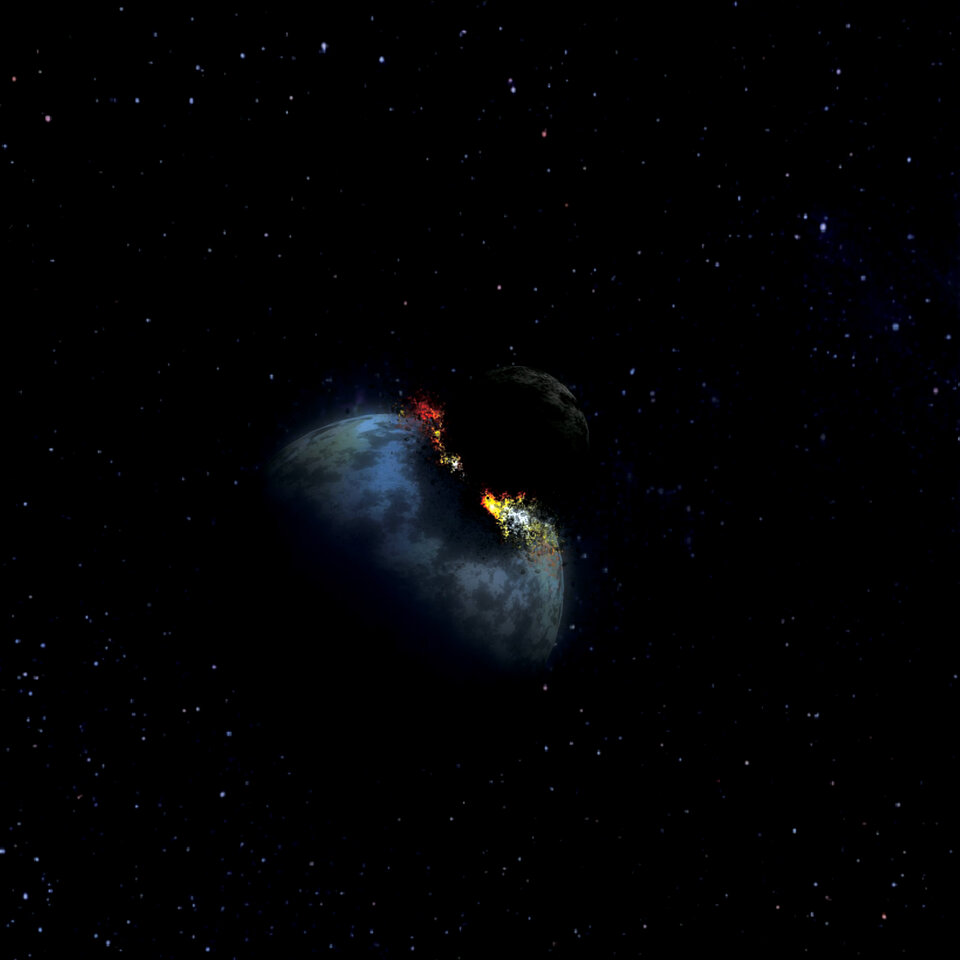

    A shocking birth for the Moon?
    A shocking birth for the Moon?

    According to a leading theory, the Moon was formed by a collision with a huge object when Earth was very young. SMART-1 will investigate this idea. The spacecraft will also examine the craters of the Moon that chronicle a prolonged bombardment of the double planet by comets and asteroids.

    There is a particularly large basin near the Moon's south pole, which SMART-1 will scrutinise. Our own planet suffered even more severely from such impacts.

    Earth and Moon have shared a common history for 4500 million years. Knowing the Moon more thoroughly will help scientists to understand our home in space. Then we may be better able to safeguard it.
    Rate this

    Views

    Share

    • Currently 4 out of 5 Stars.
    • 1
    • 2
    • 3
    • 4
    • 5
    Rating: 4/5 (1 votes cast)

    Thank you for rating!

    You have already rated this page, you can only rate it once!

    Your rating has been changed, thanks for rating!

    29
    facebook
    twitter
    reddit
    google plus
    digg
    tumbler
    digg
    blogger
    myspace
    • SMART-1
    • SMART-1 artist's impression
      SMART-1 artist's impression
      Looking at the Moon
    • More about...
      • SMART-1 factsheet
      • Related articles
        • Welcome to the double planet
          • Lunar science - still plenty left to do!
            • Where did the Moon come from?
              • Smart approach to the Moon: An interview with Emilie Evrard
                • Ion drives: Science fiction or science fact?
                • Related links
                • Views of the moon

    Connect with us

    • RSS
    • Youtube
    • Twitter
    • Flickr
    • Google Buzz
    • Subscribe
    • App Store
    • LATEST ARTICLES
    • · CryoSat hits land
    • · Ariane 5 completes seven launches …
    • · Measuring skull pressure without t…
    • · Malargüe station inauguration
    • · The solar wind is swirly
    • FAQ

    • Jobs at ESA

    • Site Map

    • Contacts

    • Terms and conditions