


SMART-1
Objective
First of ESA's small missions to test new technology, SMART-1 is also the first European spacecraft to go to the Moon. Its main objective is to test solar-electric primary propulsion for future deep-space missions.

For more in-depth scientific and technical details of our Space Science Programme and missions, follow this link.
Mission

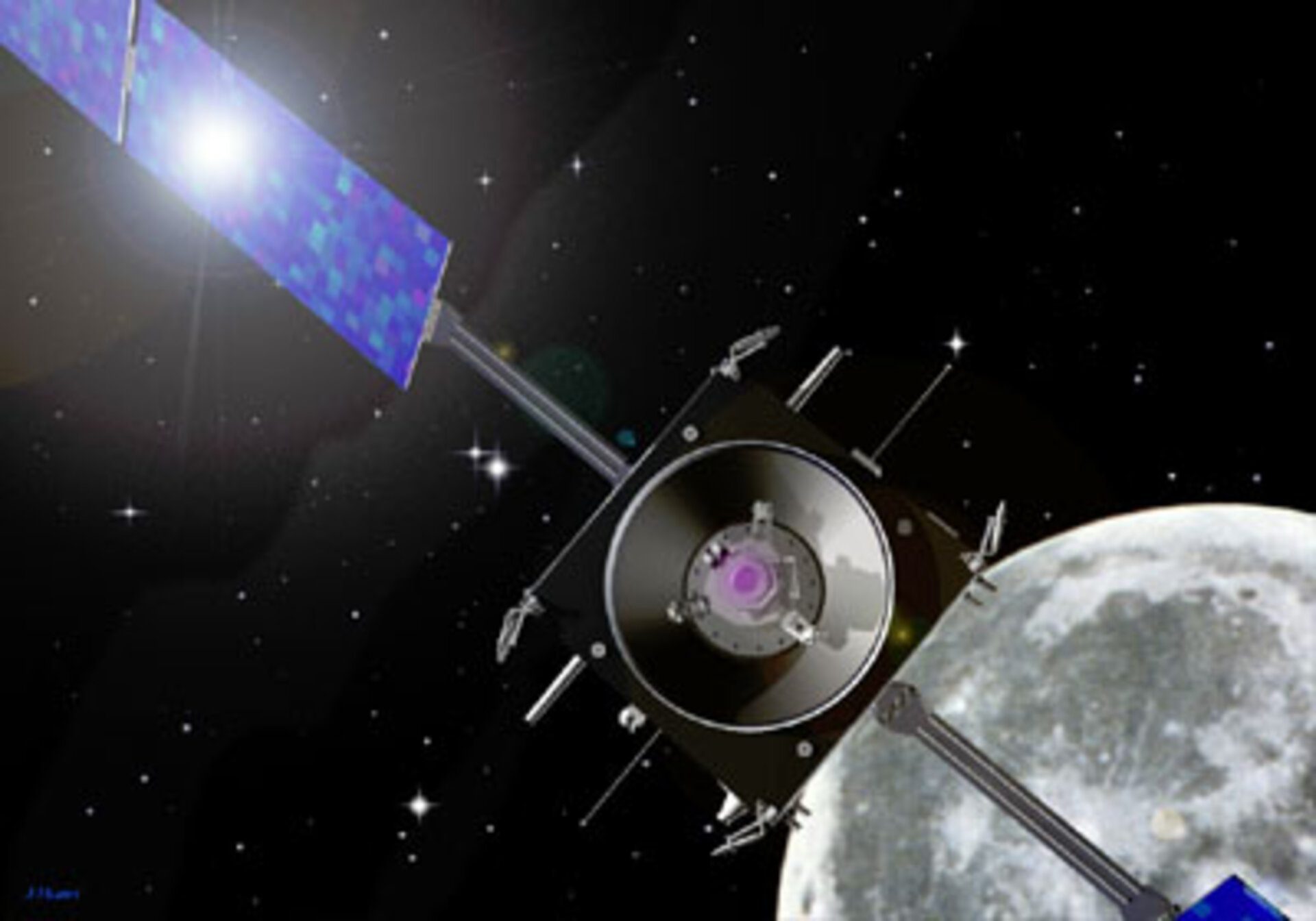
SMART-1 is the first of ESA's 'Small Missions for Advanced Research in Technology'. It is heading for the Moon using revolutionary propulsion techniques and carry a battery of miniaturised instruments.
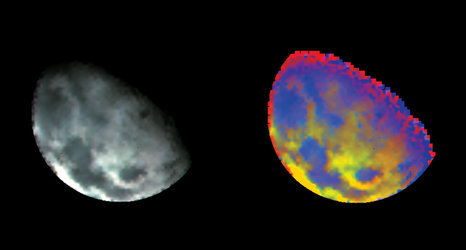
As well as testing new technology, SMART-1 will make the first comprehensive inventory of key chemical elements in the lunar surface. It will also investigate the theory that the Moon was formed following the violent collision of a smaller planet with Earth, four and a half thousand million years ago.
What’s special?
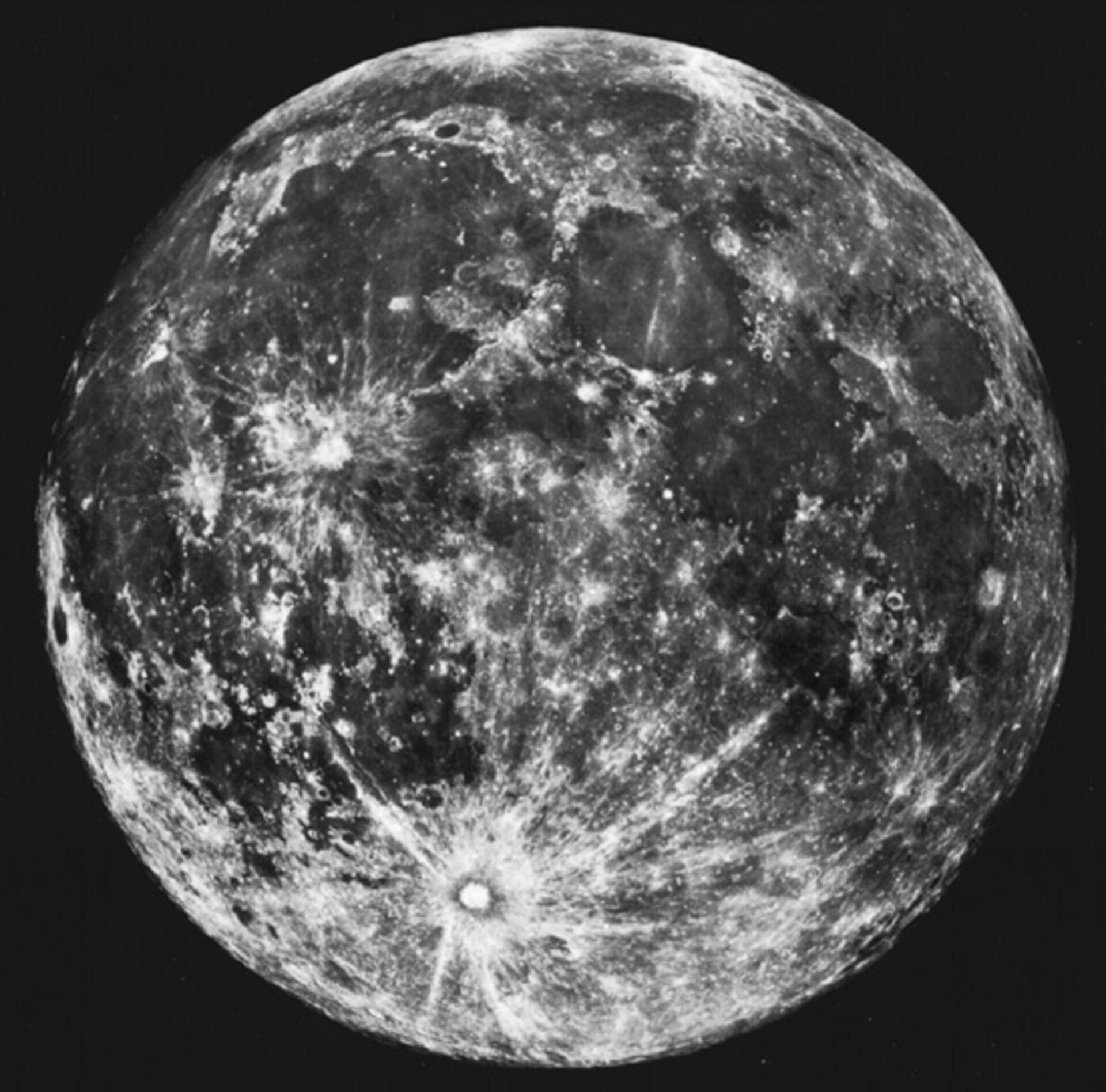
Over 30 years after the last Apollo mission visited the Moon in 1972, there is still much that we do not know about our nearest satellite. For example, how was it created? What role did it play in the formation and evolution of Earth? SMART-1 may help to answer these questions.
The main purpose of the SMART-1 mission is to flight-test the new solar-electric propulsion technology – a kind of solar-powered thruster that is ten times more efficient than the usual chemical systems employed when travelling in space. If all goes well, such a system could be providing the propulsion system for future ESA missions into deep space, such as BepiColombo.
However, in the process, the mission will be providing some fascinating science. For example, SMART-1 will be mapping the lunar surface chemical composition more accurately than ever before. Apollo spacecraft carried hand-held cameras to photograph the lunar surface. SMART-1 will be leading the way in the latest imaging techniques. Images taken from many different angles and X-ray and infrared detection work will allow scientists to draw up new three-dimensional models of the Moon’s surface.
SMART-1 will be looking at the darker parts of the Moon's south pole for the first time. It will be mapping the so-called Peak of Eternal Light, an eerie mountaintop that is permanently bathed in sunlight, while all around are dark craters never touched by the Sun. These craters are believed to harbour water-ice in the lunar soil. SMART-1 will also help scientists to confirm if ice is present at the lunar poles, where the temperature never rises above –170°C. Any water on the lunar surface would be very helpful in the creation of permanent bases on the Moon.
Spacecraft
As scientists demand more from space missions travelling to other worlds and beyond, traditional rocket technologies are beginning to show shortcomings. In response to this need, ESA are developing a new type of engine, known as solar-electric propulsion, or an 'ion' engine, which could mark a whole new era of space exploration.
Solar-electric propulsion does not burn fuel as chemical rockets do; instead the technique converts sunlight into electricity via solar panels and uses it to electrically charge heavy gas atoms, which accelerate away from the spacecraft at high speed. This drives the spacecraft forwards. In a chemical rocket, the burning fuel creates gases which are expelled relatively slowly compared to ion thrusters. However, in an ion engine, the gas is ejected at high velocity, which makes it much more efficient and requires less fuel.
Ion engines are very important because their high efficiency makes previously impossible missions achievable. Since they do not need to carry so much fuel, ion engines release room for more scientific instruments. As technology continues to get smaller, the size of instruments decreases and the overall size and mass of the spacecraft decreases, further increasing efficiency.
Further away from the Sun, where the light is weaker, a new power source, such as a nuclear reactor, would be needed. This type of engine could take spacecraft to the Kuiper belt and even farther away. The Kuiper belt extends beyond the planet Pluto. It is a dream destination for many scientists because it contains comets that have been undisturbed since the formation of the Solar System. Beyond Pluto is a mysterious realm of magnetic fields and rarefied gases known as interstellar space. Solar-electric propulsion would make such a mission possible because an ion engine can run almost constantly, so that eventually it outperforms any chemical rocket on such long flights.
Journey
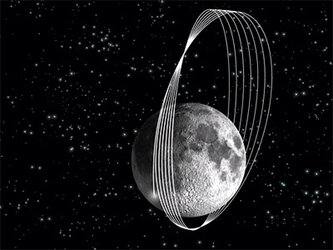
SMART-1 was launched from Kourou, French Guiana, on 27 September 2003. After launch, SMART-1 uses its ion drive to spiral out from the Earth until the Moon's gravity catches it and pulls it towards the Moon. The final operational orbit is a polar elliptical orbit, ranging from 300 to 10 000 kilometres above the Moon's surface.
History
ESA’s Science Programme encompasses the ambitious 'Cornerstone' and medium-sized missions, and also recently dubbed 'Flexi-missions'(small relatively low-cost missions). These have been given the generic name SMART (Small Missions for Advanced Research in Technology). Their purpose is to test new technologies that will eventually be used on bigger projects.
Partnerships
The SMART-1 project is being driven by a team at ESTEC in Noordwijk, The Netherlands. The industrial prime contractor is the Swedish Space Corporation (SSC) through its Science Systems Division. Some 15 subcontractors and suppliers from six European countries are involved in building the spacecraft. For the science and technology payload, co-investigators come from nine European countries, from ESA and from the United States.
The solar-electric primary propulsion that has been selected is a Stationary Plasma Hall-effect thruster, the PPS-1350 developed by SNECMA, France.