• → European Space Agency

      • Space for Europe
      • Space News
      • Space in Images
      • Space in Videos
    • About Us

      • Welcome to ESA
      • DG's News and Views
      • For Member State Delegations
      • Business with ESA
      • ESA Exhibitions
      • ESA Publications
      • Careers at ESA
    • Our Activities

      • Space News
      • Observing the Earth
      • Human Spaceflight
      • Launchers
      • Navigation
      • Space Science
      • Space Engineering
      • Operations
      • Technology
      • Telecommunications & Integrated Applications
    • For Public

    • For Media

      • Media
      • ESA TV
      • Videos for professionals
      • Photos
    • For Educators

    • For Kids

    • ESA

    • Space Science

    • Our Universe
    • About Space Science
    • ESA's 'Cosmic Vision'
    • Science missions
    • Mission navigator
    • Target groups
    • For Media
    • For Scientists
    • For Kids
    • Multimedia
    • Science images
    • Science videos
    • Animations
    • Downloads
    • Sounds from space
    • Resources
    • Reference section
    • Services
    • FAQs
    • Glossary
    • Help
    • Portal terms of use
    • Comments
    • Follow us
    • RSS feeds
    • ESA Sci on Twitter
    • ESA Space Science Images on Flickr
    • ESA 3D on Flickr

    ESA > Our Activities > Space Science


    Eclipse of the Sun at solar maximum
    28 March 2006

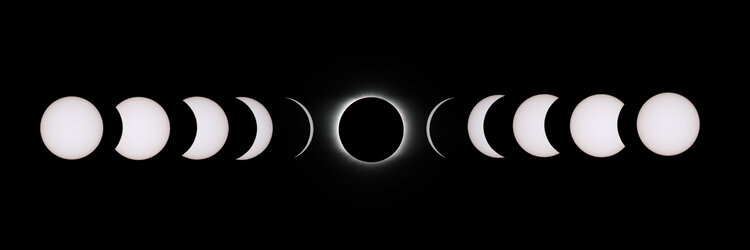
    On Wednesday 29 March 2006, the Moon's shadow will sweep over the surface of Earth during the fourth total solar eclipse of this century.

    The path of the Moon's ‘umbral’ shadow begins in Brazil at 10:35 CEST and crosses the Atlantic reaching Africa about 11:08 CEST, where it will travel over the northern part of the continent. It next crosses the Mediterranean Sea to Turkey, and then central Asia where it ends at sunset in western Mongolia.

    For lucky observers in Egypt, Turkey, Russia, Brazil, Mongolia, Libya, Togo, Nigeria and Chad, the Moon will completely obscure the Sun and cause almost total darkness for a few minutes. This is the total solar eclipse and such an event only happens every few years.

    In addition, many countries in Europe will enjoy the spectacle of a partial eclipse. This partial eclipse will be seen within the much broader path of the Moon's penumbral shadow, which includes the northern two thirds of Africa, Europe, and central Asia.

    A solar eclipse occurs when the Moon comes between the Sun and the observer. This happens when the shadow cone of the Moon intersects the surface of Earth, and is observable by anyone within this shadow zone.

    Take care!

    Sun worshippers at ESTEC
    Do not look directly at the Sun without proper protection!

    You need to take some precautions if you want to enjoy watching the eclipse. Looking directly at the Sun can be very dangerous!

    Looking directly at the photosphere of the Sun (the bright disk of the Sun itself), even for just a few seconds, can cause permanent damage to the eye because of the intense visible and invisible radiation that the photosphere emits. The retina of your eye has no sensitivity to pain, and the damage may not appear for hours, so there is no warning that injury is occurring.


    SOHO and the eclipse
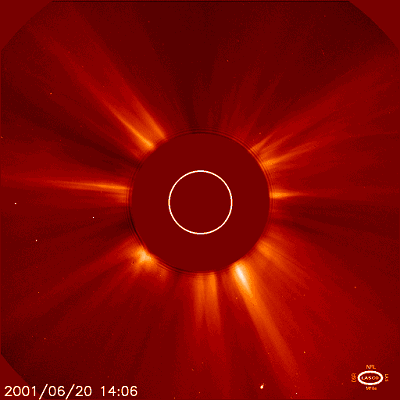
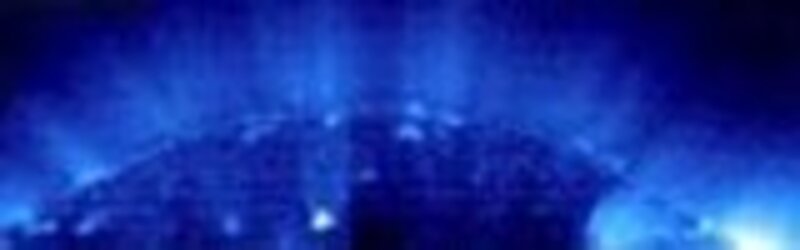
    Soho image of the solar corona
    SOHO LASCO image of the solar corona

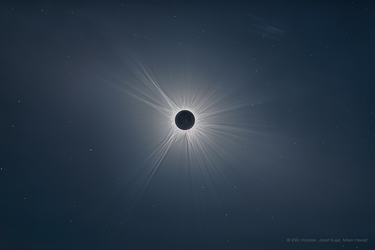
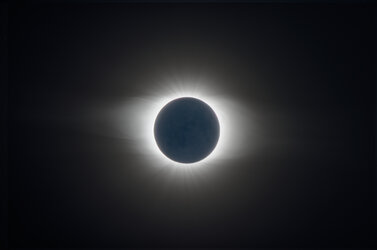
    Any total solar eclipse is an exciting opportunity for unique observations from the ground. Free from the overwhelming glare from the Sun itself, the corona that surrounds it is usually the prime target for the observations.

    So almost invariably during any eclipse, expeditions go out to whatever sites seem favourable, to capture what may be a once-in-a-lifetime observation of phenomena that are otherwise hidden by the brightness of the Sun.

    To make the most of the observations, however, some expeditions are relying on additional data supplied from the ESA/NASA SOHO and other spacecraft, either to determine the pointing of their instruments, for context information to help interpret the data in a broader setting, or both.

    Especially in demand are images from the EIT and LASCO instruments on SOHO. EIT observes the storms in the Sun's atmosphere by ultraviolet light, which is blocked by Earth's atmosphere.

    LASCO is a visible-light coronagraph that keeps the Sun perpetually eclipsed by masks in its telescopes. Viewing a huge volume of space, LASCO can show how features seen close to the Sun, by ground observers during the eclipse, relate to space weather further out.

    Rate this

    Views

    Share

    • Currently 0 out of 5 Stars.
    • 1
    • 2
    • 3
    • 4
    • 5
    Rating: 0/5 (0 votes cast)

    Thank you for rating!

    You have already rated this page, you can only rate it once!

    Your rating has been changed, thanks for rating!

    0
    Tweet
    • More about...
      • SOHO overview
      • Polar plumes as seen by SOHO
        Polar plumes as seen by SOHO
        SOHO 10-year special
      • Related articles
        • What is an eclipse?
          • The science of eclipses
            • The eclipse in history
              • Bad moon rising...
                • Relativity and the 1919 eclipse
                • Related links
                • ESA/NASA SOHO homepage
                • Watch eclipse with ESA
                • Watch eclipse with ESA/NASA's SOHO

    Connect with us

    • RSS
    • Youtube
    • Twitter
    • Flickr
    • G+
    • Facebook
    • Livestream
    • Subscribe
    • App Store
    • ESA Science Twitter

    Follow ESA science

    • LATEST ARTICLES
    • · Rare merger reveals secrets of gal…
    • · Watching for hazards: ESA opens as…
    • · ESA astronaut Timothy Peake set fo…
    • · Space drives e-mobility
    • · Proba-V opens its eyes
    • FAQ

    • Jobs at ESA

    • Site Map

    • Contacts

    • Terms and conditions