• → European Space Agency

      • Space for Europe
      • Space News
      • Space in Images
      • Space in Videos
    • About Us

      • Welcome to ESA
      • DG's News and Views
      • For Member State Delegations
      • Business with ESA
      • ESA Exhibitions
      • ESA Publications
      • Careers at ESA
    • Our Activities

      • Space News
      • Observing the Earth
      • Human Spaceflight
      • Launchers
      • Navigation
      • Space Science
      • Space Engineering
      • Operations
      • Technology
      • Telecommunications & Integrated Applications
    • For Public

    • For Media

      • Media
      • ESA TV
      • Videos for professionals
      • Photos
    • For Educators

    • For Kids

    • ESA

    • Technology

    • Technology Transfer

    • About technology
    • Foundation of innovation
    • A solid investment
    • Going up
    • Competitive edge
    • Supporting science
    • Giant leaps
    • Cross-Cutting Initiatives
    • Strategy and harmonisation
    • About strategy and harmonisation
    • Generic technology programmes
    • Basic Technology Research Programme (TRP)
    • General Support Technology Programme (GSTP)
    • Technology Transfer Programme (TTP)
    • European Components Initiative (ECI)
    • Technology in domain programmes
    • Technology in Domain programmes
    • Services
    • ESA Conferences
    • RSS feeds
    • Subscribe

    ESA > Our Activities > Technology

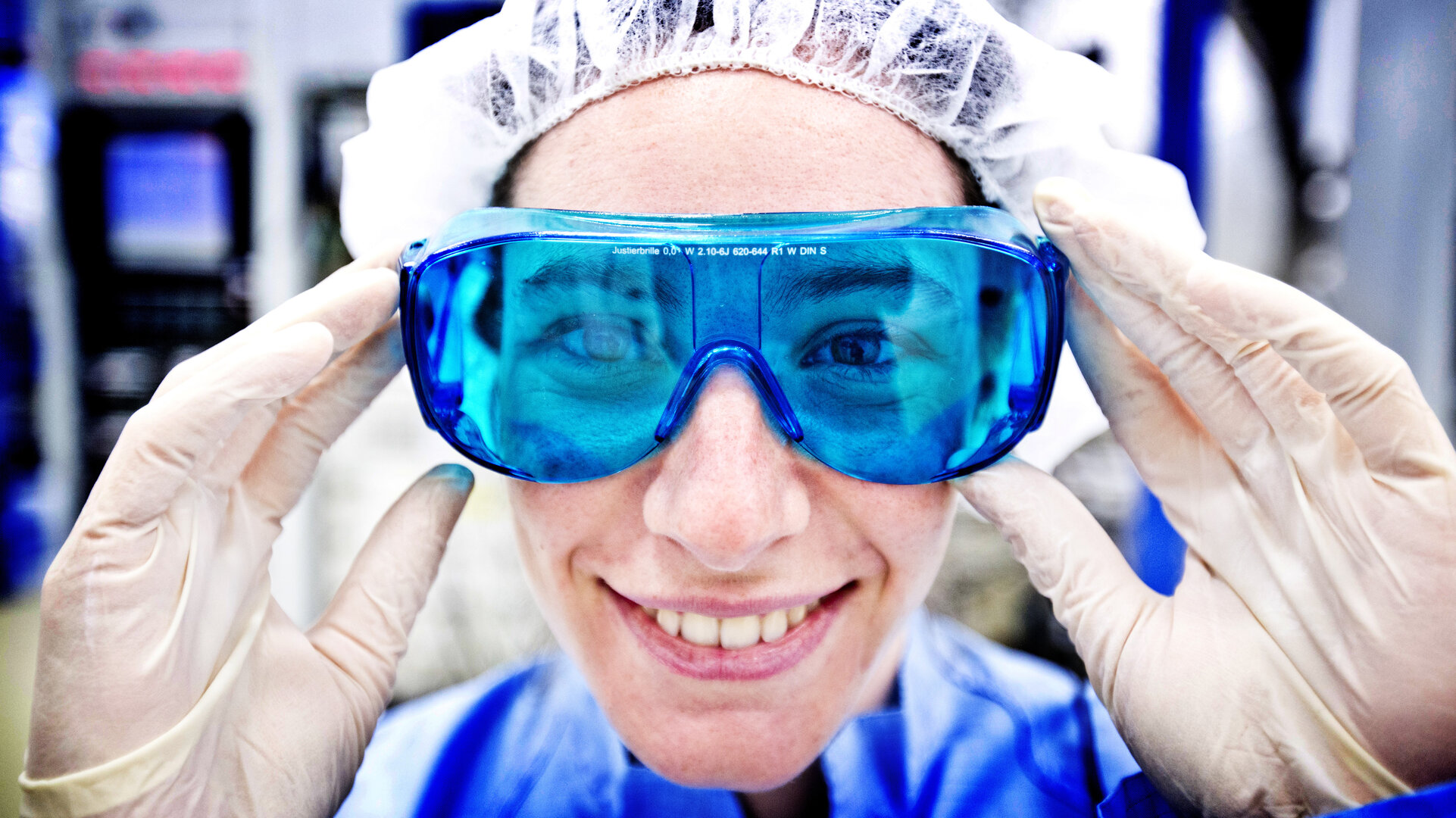
    Protective goggles

    Looking out for lasers

    6 February 2013

    ESA’s laboratories are equipped with a huge range of measuring tools, but the most versatile remains the human eye – and it must be looked after. These protective goggles are worn while using lasers to align plasma-measuring probes, in preparation for test firings of space thrusters in ESA’s Propulsion Laboratory.

    Based at ESA’s technical centre ESTEC in Noordwijk, the Netherlands, the Propulsion Laboratory specialises in the testing of ion engines and other thrusters that operate outside Earth’s atmosphere.

    These are test-fired in specialised vacuum chambers, with diagnostic devices – Faraday and Langmuir probes as well as retarding potential analysers – placed at precise points within the thruster's plumes to gather data on its performance.

    Engineer Giuditta Montesanti is pictured while preparing for a test: the thruster firings themselves take place out of sight, requiring no special protection. The Lab performs testing both for general research and development and in support of European space projects.

    This spring will see testing of the MiniRIT micro-propulsion thruster – research associated with ESA's LISA Pathfinder project. A mission due to launch next year, testing technologies for gravitational wave detection, will be the most precisely controlled spacecraft ever flown, requiring thrusters that are sensitive enough to push back against the force of incoming sunshine.

    Rate this

    Views

    Share

    • Currently 4.5 out of 5 Stars.
    • 1
    • 2
    • 3
    • 4
    • 5
    Rating: 4.61/5 (62 votes cast)

    Thank you for rating!

    You have already rated this page, you can only rate it once!

    Your rating has been changed, thanks for rating!

    2454
    Tweet

    Related articles

    LISA Pathfinder faces technology challenges set by Einstein24 September 2010

    LISA Pathfinder faces technology challenges set by Einstein24 September 2010 LISA Pathfinder is set to be a spacecraft in a class of its own. Officially designated a technology-development mission, its designers are effectively facing the challenge of bringing one of Albert Einstein’s thought experiments to life.

      • ESA Propulsion Laboratory

    Connect with us

    • RSS
    • Youtube
    • Twitter
    • Flickr
    • G+
    • Facebook
    • Livestream
    • Subscribe
    • App Store
    • LATEST ARTICLES
    • · The fast winds of Venus are gettin…
    • · ExoMars 2016 set to complete const…
    • · Herschel ends operations as orbiti…
    • · Europe’s largest spaceship reache…
    • · ATV ready to nose up to Station
    • FAQ

    • Jobs at ESA

    • Site Map

    • Contacts

    • Terms and conditions