• → European Space Agency

      • Space for Europe
      • Space News
      • Space in Images
      • Space in Videos
    • About Us

      • Welcome to ESA
      • DG's News and Views
      • For Member State Delegations
      • Business with ESA
      • ESA Exhibitions
      • ESA Publications
      • Careers at ESA
    • Our Activities

      • Space News
      • Observing the Earth
      • Human Spaceflight
      • Launchers
      • Navigation
      • Space Science
      • Space Engineering
      • Operations
      • Technology
      • Telecommunications & Integrated Applications
    • For Public

    • For Media

    • For Educators

    • For Kids

    • ESA

    • Proba Missions

    • Proba-V at a glance
    • Overview
    • Objectives
    • About the instrument
    • V for Vegetation
    • Serving science
    • Fitting the world in a box
    • About the platform
    • Joining ESA’s Proba family
    • Boxing clever
    • About the mission
    • Made in Belgium
    • On the ground
    • Starting operations
    • New technology
    • Hitching a ride
    • Tracking aircraft from orbit
    • New space semiconductor
    • Detecting radiation
    • Fly by fibre
    • About the launch
    • Launcher
    • Launch site
    • Proba-V launch diary part 1
    • Proba-V launch diary part 2
    • Proba-V launch diary part 3
    • Proba-V launch diary part 4
    • What's next
    • Proba-3
    • Already flying
    • Proba-1
    • Proba-2
    • Multimedia
    • Proba-V images
    • Proba images
    • Proba Earth images
    • Videos
    • Animations
    • Contact
    • Contact us

    ESA > Our Activities > Technology > Proba Missions

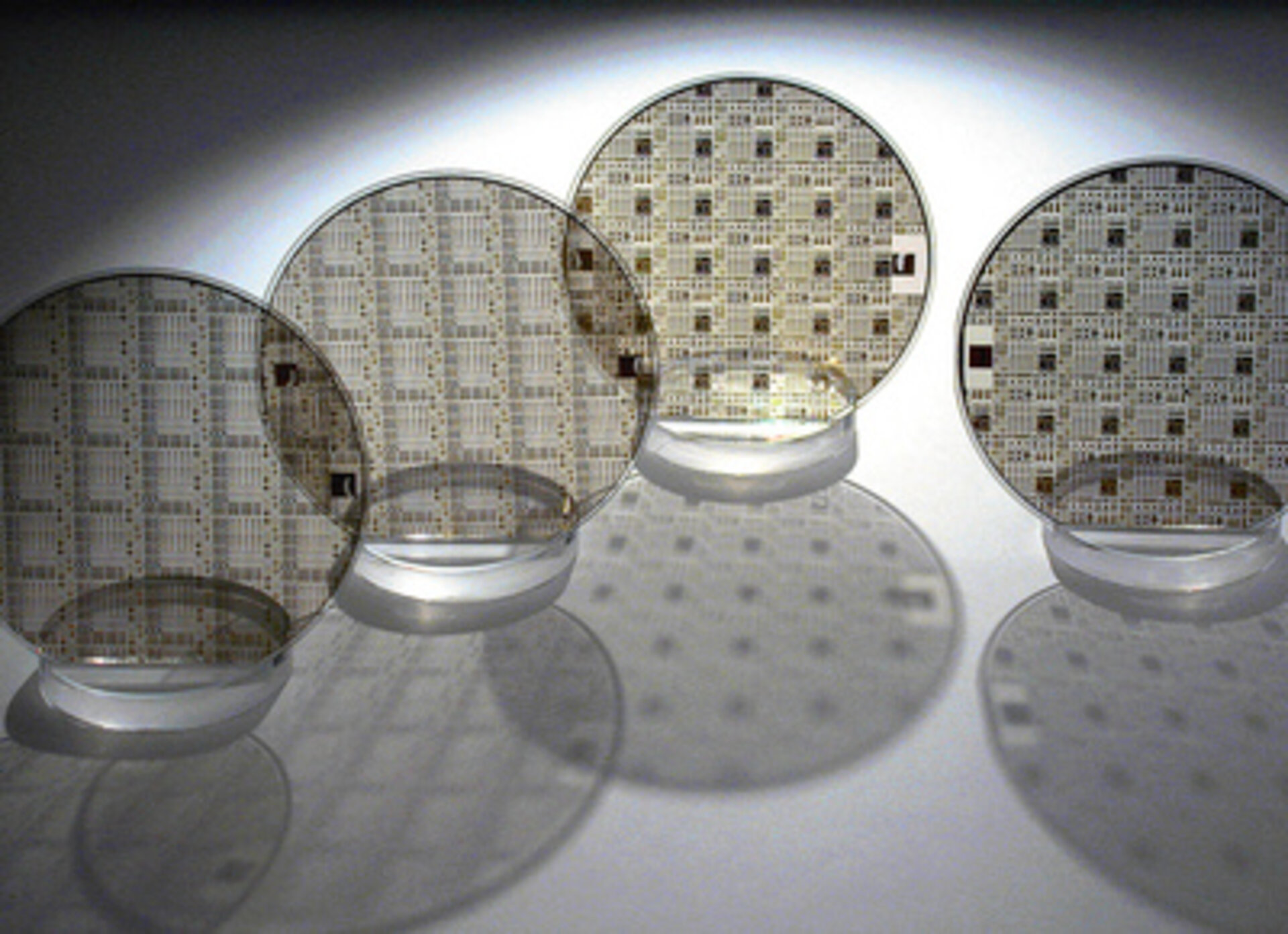
    GaN wafers
    GaN on silicon carbide wafers

    New space semiconductor

    Proba-V’s X-band communication system will include an extra amplifier based on novel gallium nitride technology instead of standard gallium arsenide. Already in everyday use within light-emitting diodes – lighting up Buckingham Palace among other spotlit landmarks – GaN is attracting great interest within the world of integrated circuits.

    ESA has identified GaN as a key enabling technology for space: its high power capacity makes it the most promising semiconductor since silicon. GaN operates reliably at much higher voltages and temperatures than silicon or gallium arsenide, offering a five- to ten-fold increase in communications signal strength without requiring active cooling systems. As an additional advantage for space missions, it is also inherently radiation resistant.

    The X-band transmitter is produced by Syrlinks in France, with the GaN amplifier coming from TESAT in Germany. This amplifier is among the earliest outputs of an ESA-led European consortium to manufacture high-quality GaN devices for space uses: the ‘GaN Reliability Enhancement and Technology Transfer Initiative’ (GREAT2). This novel amplifier also has an adjustable power output, so its use should help to conserve the small satellite’s power consumption while also providing extra redundancy.

    Last update: 1 May 2013

    Rate this

    Views

    Share

    • Currently 4 out of 5 Stars.
    • 1
    • 2
    • 3
    • 4
    • 5
    Rating: 4.2/5 (5 votes cast)

    Thank you for rating!

    You have already rated this page, you can only rate it once!

    Your rating has been changed, thanks for rating!

    313
    Tweet
    • New GaN recipe
    • GREAT2 website
    • Publications
    • Artist view of the Proba-V satellite
      Artist view of the Proba-V satellite
      Prova-V brochure (English)
    • Proba-V fact sheet (French)
    • Proba-V fact sheet (Dutch)
    • Proba-V fact sheet (Italian)

    Connect with us

    • RSS
    • Youtube
    • Twitter
    • Flickr
    • G+
    • Facebook
    • Livestream
    • Subscribe
    • App Store
    • LATEST ARTICLES
    • · Rare merger reveals secrets of gal…
    • · Watching for hazards: ESA opens as…
    • · ESA astronaut Timothy Peake set fo…
    • · Space drives e-mobility
    • · Proba-V opens its eyes
    • FAQ

    • Jobs at ESA

    • Site Map

    • Contacts

    • Terms and conditions