• → European Space Agency

      • Space for Europe
      • Space News
      • Space in Images
      • Space in Videos
    • About Us

      • Welcome to ESA
      • DG's News and Views
      • For Member State Delegations
      • Business with ESA
      • ESA Exhibitions
      • ESA Publications
      • Careers at ESA
    • Our Activities

      • Space News
      • Observing the Earth
      • Human Spaceflight
      • Launchers
      • Navigation
      • Space Science
      • Space Engineering
      • Operations
      • Technology
      • Telecommunications & Integrated Applications
    • For Public

    • For Media

    • For Educators

    • For Kids

    • ESA

    • Technology

    • Technology Transfer

    • About technology
    • Foundation of innovation
    • A solid investment
    • Going up
    • Competitive edge
    • Supporting science
    • Giant leaps
    • Cross-Cutting Initiatives
    • Strategy and harmonisation
    • About strategy and harmonisation
    • Generic technology programmes
    • Basic Technology Research Programme (TRP)
    • General Support Technology Programme (GSTP)
    • Technology Transfer Programme (TTP)
    • European Components Initiative (ECI)
    • Technology in domain programmes
    • Technology in Domain programmes
    • Services
    • ESA Conferences
    • RSS feeds
    • Subscribe

    ESA > Our Activities > Technology

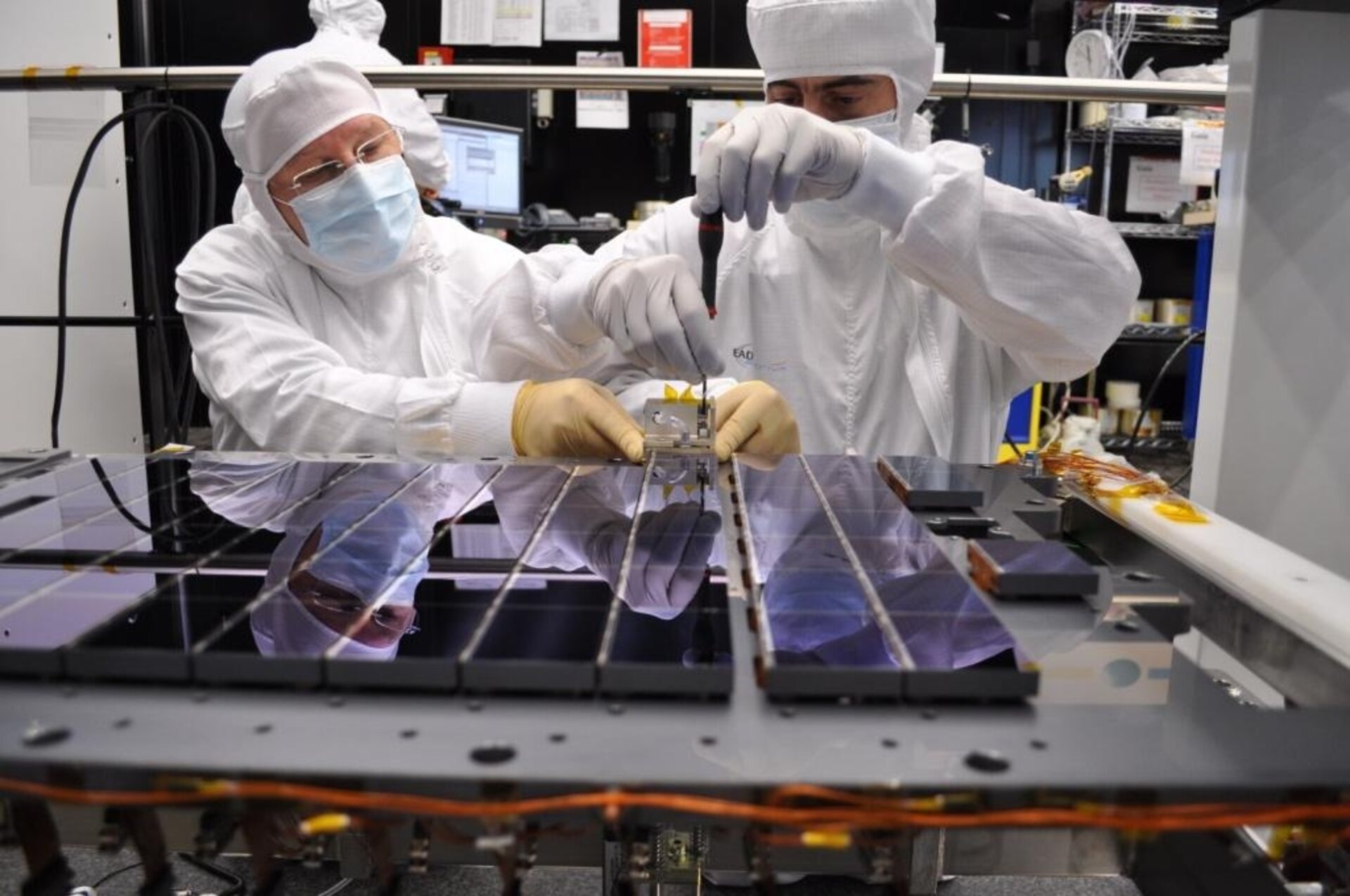
    Gaia camera array

    Supporting science

    From the first time Galileo thought to turn his ‘optik tube’ telescope skywards, scientific discovery has always depended on technological achievement. It required Leeuwenhoek’s microscope to reveal the previously unknown realm of microbiology, while 20th-century radio telescopes opened up the wider Universe.

    The same holds true of modern space science. For many years ahead of each new ESA scientific spacecraft, carefully planned R&D programmes have been taking place to ensure the correct technology ends up being available at a suitable development level at the right time to make the mission feasible.

    BepiColombo

    For instance, ESA’s proposed Athena X-ray observatory is planned to survey a violent Universe of exploding stars, black holes and million-degree gas clouds. But simply focusing X-rays is no easy task: they reflect only side on, like stones skimming along a pond. So ESA has pioneered the new technology of silicon pore optics – the careful robotic stacking of thousands of silicon wafers – to provide improved resolution and a greatly enlarged collecting area compared to current X-ray missions.

    Athena X-ray Observatory

    ESA’s 2015 BepiColombo mission to orbit Mercury required the careful testing of new materials, coatings and thermal control to endure intense sunlight and temperatures topping 450°C on one side, at the same time as the extreme cold of the other side facing deep space. Solar Orbiter, venturing into close orbit around our parent star, will need higher endurance still. And R&D is ongoing for ESA’s 2022 Jupiter Icy Moons Explorer to the Jupiter system. ‘Low intensity low temperature’ (LILT) solar cells and other key spacecraft systems must be tailored to resist the gas giant’s searing radiation belts.

    Last update: 8 December 2012

    Rate this

    Views

    Share

    • Currently 0 out of 5 Stars.
    • 1
    • 2
    • 3
    • 4
    • 5
    Rating: 0/5 (0 votes cast)

    Thank you for rating!

    You have already rated this page, you can only rate it once!

    Your rating has been changed, thanks for rating!

    73
    facebook
    twitter
    reddit
    google plus
    digg
    tumbler
    digg
    blogger
    myspace
    • Tools for tomorrow's science
    • SMOS in orbit
      SMOS in orbit
      Looking back to earth
    • Supporting science
    • Articles
      • Hot stuff: the making of BepiColombo
        • Silicon technology offers extended X-ray vision of high-energy cosmos

    Connect with us

    • RSS
    • Youtube
    • Twitter
    • Flickr
    • Google Buzz
    • Subscribe
    • App Store
    • LATEST ARTICLES
    • · CryoSat hits land
    • · Ariane 5 completes seven launches …
    • · Measuring skull pressure without t…
    • · Malargüe station inauguration
    • · The solar wind is swirly
    • FAQ

    • Jobs at ESA

    • Site Map

    • Contacts

    • Terms and conditions