• → European Space Agency

      • Space for Europe
      • Space News
      • Space in Images
      • Space in Videos
    • About Us

      • Welcome to ESA
      • DG's News and Views
      • For Member State Delegations
      • Business with ESA
      • ESA Exhibitions
      • ESA Publications
      • Careers at ESA
    • Our Activities

      • Space News
      • Observing the Earth
      • Human Spaceflight
      • Launchers
      • Navigation
      • Space Science
      • Space Engineering
      • Operations
      • Technology
      • Telecommunications & Integrated Applications
    • For Public

    • For Media

    • For Educators

    • For Kids

    • ESA

    • Technology

    • Technology Transfer

    • About technology
    • Foundation of innovation
    • A solid investment
    • Going up
    • Competitive edge
    • Supporting science
    • Giant leaps
    • Cross-Cutting Initiatives
    • Strategy and harmonisation
    • About strategy and harmonisation
    • Generic technology programmes
    • Basic Technology Research Programme (TRP)
    • General Support Technology Programme (GSTP)
    • Technology Transfer Programme (TTP)
    • European Components Initiative (ECI)
    • Technology in domain programmes
    • Technology in Domain programmes
    • Services
    • ESA Conferences
    • RSS feeds
    • Subscribe

    ESA > Our Activities > Technology

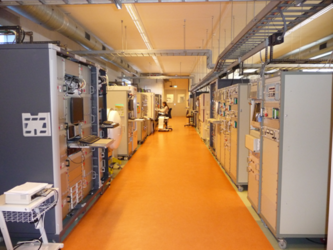
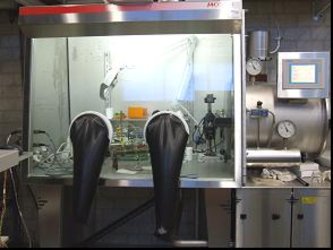
    Vacuum Test Chamber and new decentralised Test Bay Facility

    Test of time - Long-duration testing

    Among the resources ESA makes available to space battery makers is a dedicated Test Battery Centre, enabling detailed battery investigation and testing on the kind of long-term basis required for space applications. A battery intended for a telecommunications satellite requires an effective lifetime of 15 years or more, including thousands of charge/discharge cycles. Novel technologies must be tested to ensure they can meet the mission requirements in term of cycle life, calendar life and resistance to vibration and shocks.

    “Space battery technology is mostly driven by terrestrial developments,” explains Evelyne Simon, Head of the Energy Storage Section. “In the last decade, lithium-ion batteries have supplanted largely older aquaeous alkaline systems because of their high specific energy, excellent cycle life, greater-than-95% energy efficiency and low self-discharge rate.”

    The metal lithium is the most energetic and lightweight material available for use as a negative electrode. Its main drawback is its highly reactive nature – it can burn in the presence of water. So instead of lithium metal, an organic solution containing lithium salts is employed in lithium-ion batteries. Lithium ions move back and forth between ‘intercalation electrodes’ (carbon-based negative electrode and metal oxides-based positive electrode) upon charge and discharge; this is the ‘rocking-chair’ system. Lithium-ion batteries have become commonplace in terrestrial laptops and mobile phones at the same time as finding favour in space.

    ESA’s Proba-1 technology demonstrator, launched in 2001, was among the first space missions to rely entirely on lithium-ion batteries. Tens of thousands of charge cycles later, Proba-1 is still going strong, and lithium-ion power systems have flown on many other ESA missions, including Mars Express, the Rosetta comet-chaser and the initial satellites in Europe’s Galileo satellite navigation system. And due in part to ESA’s research and development support, European companies are at the forefront of the global space-qualified lithium-ion battery market.


    This article continues...
     Previous Next 

    Last update: 4 February 2010

    Rate this

    Views

    Share

    • Currently 0 out of 5 Stars.
    • 1
    • 2
    • 3
    • 4
    • 5
    Rating: 0/5 (0 votes cast)

    Thank you for rating!

    You have already rated this page, you can only rate it once!

    Your rating has been changed, thanks for rating!

    28
    Tweet
    • This article continues...
      • Promise of new materials
      • Back to main article
        • Batteries at the heart of ESA space missions
          • Test of time - Long-duration testing
          • Related links
          • Energy Storage section

    Connect with us

    • RSS
    • Youtube
    • Twitter
    • Flickr
    • G+
    • Facebook
    • Livestream
    • Subscribe
    • App Store
    • LATEST ARTICLES
    • · Proba-V opens its eyes
    • · First new Galileo satellite arrive…
    • · Next destination: space
    • · Leak repaired on International Spa…
    • · After Chelyabinsk: European expert…
    • FAQ

    • Jobs at ESA

    • Site Map

    • Contacts

    • Terms and conditions