Belated success for DELTA Mission HEAT experiment
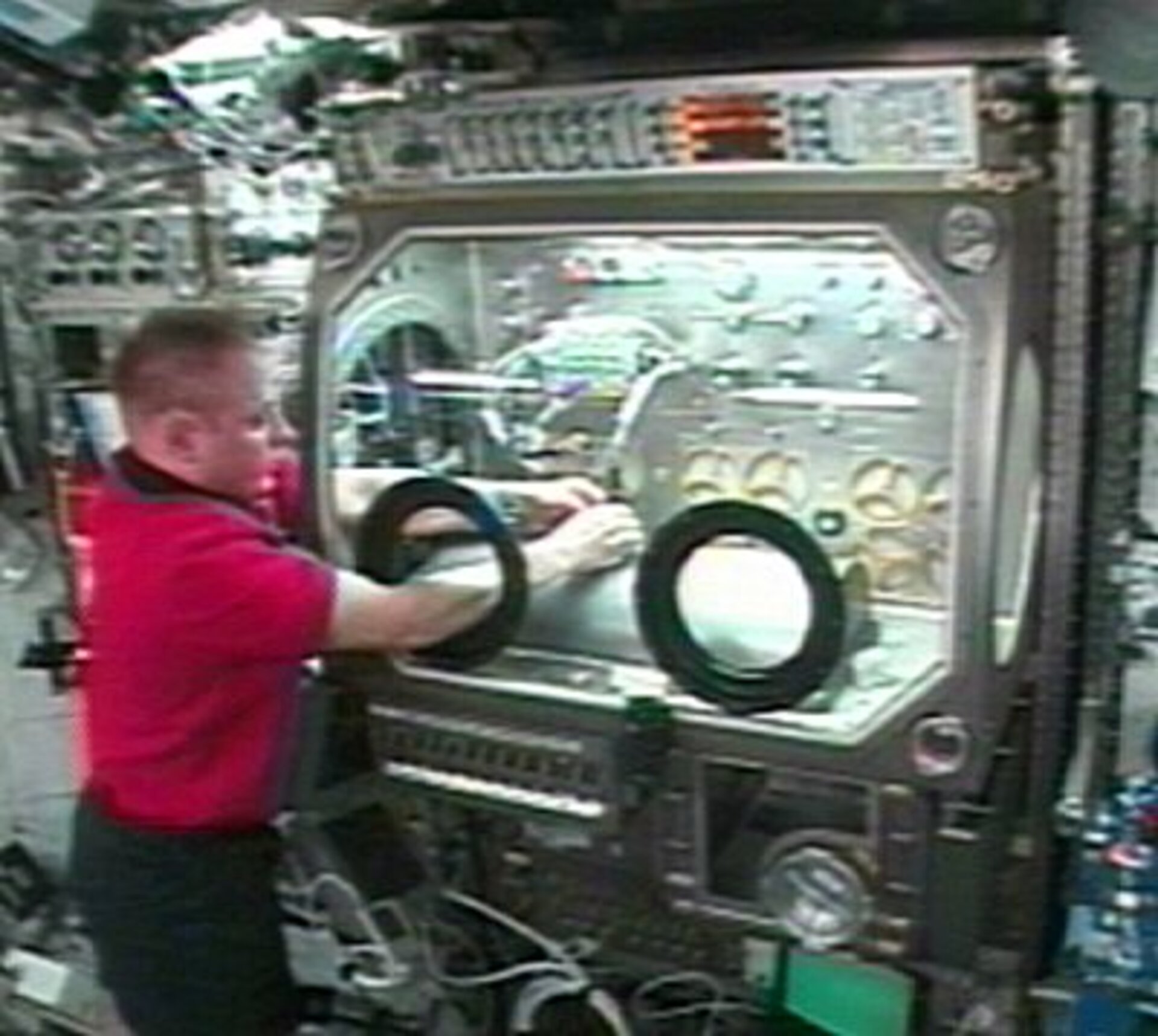
NASA astronaut Mike Fincke has successfully performed the HEAT experiment on board the International Space Station (ISS).
The experiment, which investigates how heat is transferred in space, was originally part of the Dutch Soyuz DELTA Mission to the ISS with ESA astronaut André Kuipers in April 2004. The results of HEAT are relevant for thermal control in satellites.
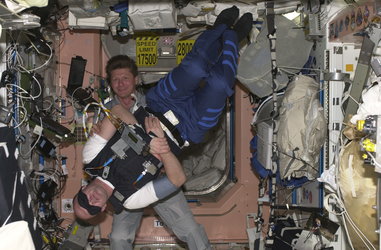
During the DELTA Mission difficulties were encountered with the HEAT experiment. The problems were thought most likely to be due to a loose connection with the heating plate. Although the solution was fairly straightforward, there was no time to repeat the experiment during Kuipers' mission (19-30 April). Consequently ESA requested that Kuipers' NASA colleague Mike Fincke repeat the experiment. Kuipers and Fincke flew to ISS together with Russian cosmonaut Gennadi Padalka in April.
The HEAT experiment performed flawlessly. "It really was perfect", explains Marc Heppener, ESA's head of ISS scientific research.

"HEAT was an important experiment in the package of experiments during the DELTA Mission, and I am very pleased that it has now been successfully completed. This is another important accomplishment for the DELTA Mission. Overall we can now say that 85% of the experiment programme has been successful."
André Kuipers is also delighted; "It really was disappointing there was no time to solve the problem back in April, so I am pleased that Mike has been able to work on it. Thanks Mike!"
In space, just as on Earth, equipment needs to be cooled. In space this is often done using so-called heat pipes. Through capillary action cooling-fluids are drawn through the pipes past, for example, electronic switches. The fluids then cool and condensate elsewhere, dissipating the heat. After condensation, the fluids are drawn back to the areas that are in need of cooling.
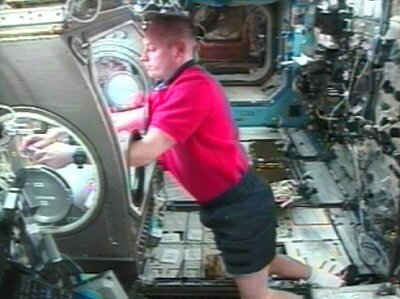
Together with Euro Heat Pipes SA (Belgium) and Dutch Space (The Netherlands), researchers from l'Université Libre de Bruxelles (ULB, Belgium), are working on a new generation of heat pipes. The HEAT experiment looks at how effective these are in space. According to expectations, weightlessness will influence the effectiveness, but as yet it is unclear to what magnitude. The results of the experiment will make it possible to anticipate how many heat pipes are required for any desired cooling effect. Ultimately this could lead to weight reductions, which then translates to lower costs.