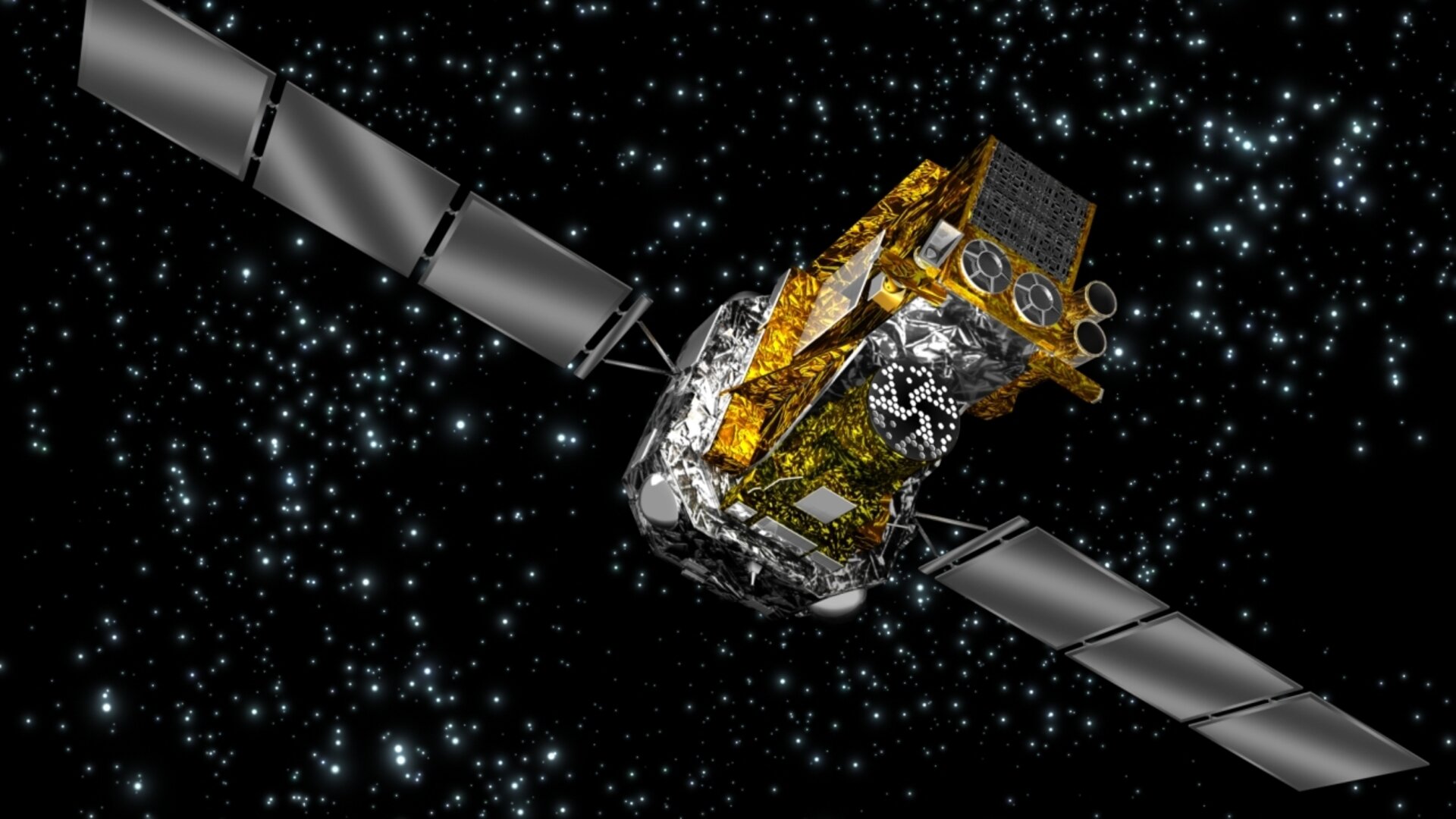
Integral operations
Editor's note: The Integral mission concluded its active science phase in March 2025. The spacecraft will continue to be actively monitored until its atmospheric reentry in 2029.
This page is no longer being updated, but will be preserved as a record of the mission's remarkable achievements and scientific contributions over the last two decades. All Integral data will remain accessible for future research and analysis in the ESA science archives.
“Thanks a lot, Integral, for all the great science and discoveries. We are excited to accompany you on the final stage of your journey, all the way to your reentry in 2029!” - Integral Spacecraft Operations Manager, Dr Jutta Huebner.
Thank you for your support and interest in the Integral mission!
The Integral mission is providing new insights into the Universe's most violent and exotic objects, such as black holes, neutron stars, active galactic nuclei and supernovae.
Integral is making important contributions to understanding processes such as the formation of new chemical elements and the mysterious gamma-ray bursts, the most energetic phenomena in the Universe.
The mission
Gamma rays are even more powerful than the X-rays used in medical and dental examinations. Fortunately, the Earth's atmosphere protects us from this dangerous cosmic radiation. However, this also means that gamma rays from deep space can only be detected by satellites.
Integral is a truly international mission with the participation of various ESA member states plus the United States, Russia, the Czech Republic and Poland. The four instruments are exploited by teams led by scientists in Italy, France, Germany, Denmark and Spain. A Russian Proton rocket placed the spacecraft into orbit, while ESA and INTA ground stations stay in touch from Earth.
The Mission Operations Centre (MOC) is located at ESOC, Darmstadt, Germany; the Science Operations Centre (SOC) at ESAC in Spain; and Switzerland hosts the Integral Science Data Centre (ISDC).
| ROLE | Gamma-ray astrophysics observatory |
| LAUNCH DATE | 17 Oct 2002 |
| LAUNCHER/LOCATION | Proton/Baikonur, Kazakhstan |
| LAUNCH MASS | 4000 kg |
| ORBIT | 146,000 km/3500 km - 64 hr elliptical |
| NOMINAL MISSION | Two years - presently extended to 31 December 2024 |
| ++ Detecting some of the most energetic radiation that comes from space ++ | |
The Flight Control Team
Integral Spacecraft Operations Manager, Dr Jutta Huebner, oversees the Flight Control Team (FCT), which comprises spacecraft operations engineers, data analysts and satellite controllers. The FCT at ESOC operates from a Dedicated Control Room (DCR) co-located with the XMM-Newton and Euclid DCR. Since late 2007, the XMM-Newton and Integral FCTs have been merged such that Integral team members provide back-up support to XMM-Newton and vice versa. The after-hours engineering on-call rota is also shared, with just one engineer having responsibility for both missions outside normal working hours. Additionally, both missions are now controlled in parallel together with the EUCLID mission by just one Spacecraft Controller.
Additional ESOC teams provide ongoing support to Integral in the areas of Flight Dynamics, Ground Facilities and Software Support, among others.
Rescuing Integral
On 22 September 2021, around midday, Integral went into emergency Safe Mode. One of the spacecraft’s three active reaction wheels had turned off without warning and stopped spinning, causing a ripple effect that meant the satellite itself began to rotate. As a result of the spacecraft turning, only sporadic data were reaching ground control and the batteries were quickly discharging. With just a few hours of power left, it seemed possible that the 19-year-old mission could be lost.
The Integral Flight Control Team, together with Flight Dynamics and Ground Station teams at ESOC, teams at ESAC and Airbus Defence & Space, set to work. With quick thinking and ingenious solutions, they found the problem and rescued the mission. Click here for more info on this story.
Mission operations overview
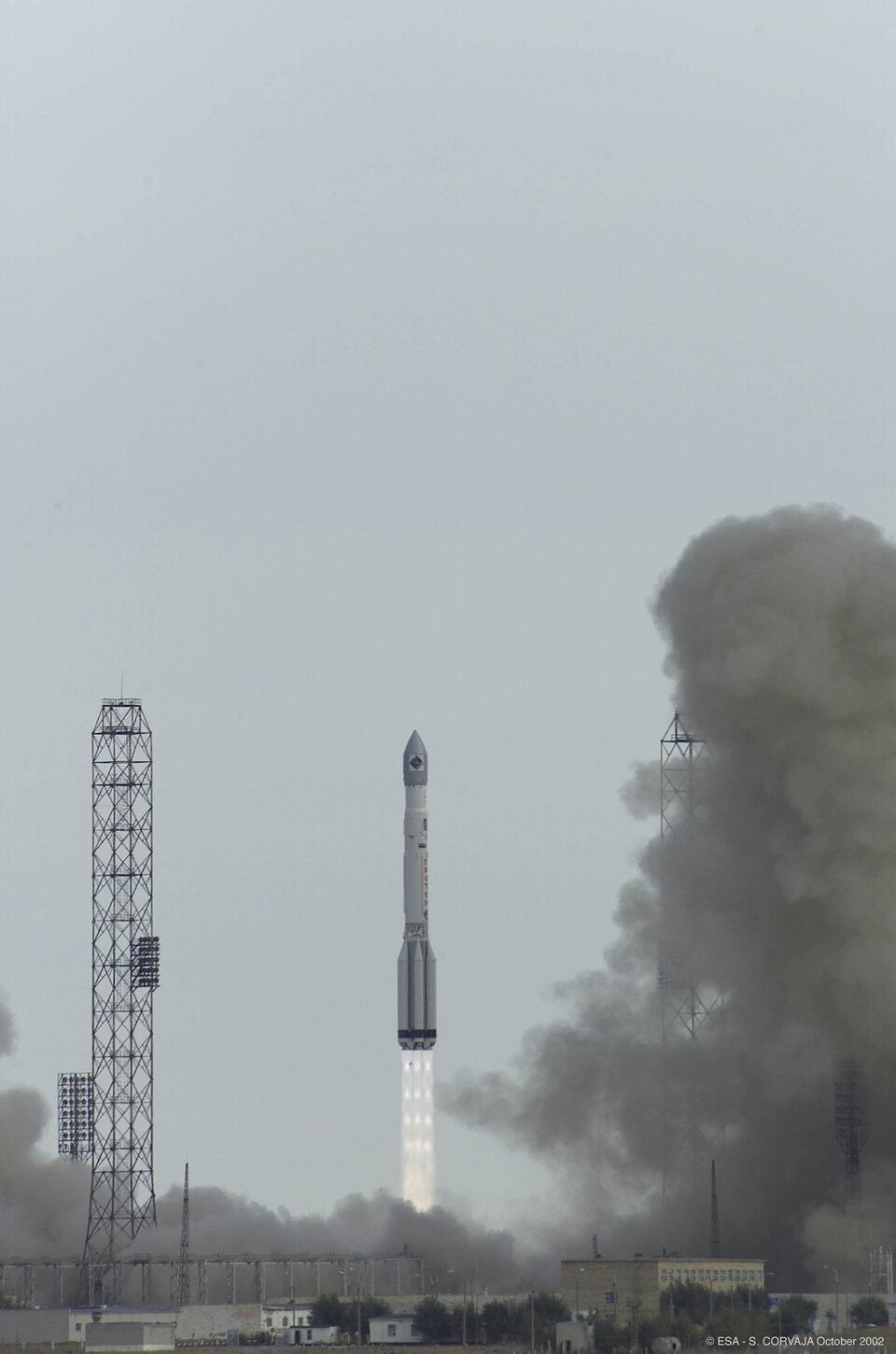
Integral was launched on 17 October 2002 at 06:41 CET by a Russian Proton rocket from Baikonur, Kazakhstan. The launch sequence, involving a delayed injection of the rocket upper stage 50 minutes after lift-off, was nominal.
The satellite was placed in a 66-hour high elliptical orbit with an apogee of 153 000 km, a perigee of 690 km, and an inclination of 51.6°. The satellite was acquired, as planned, 1 hour and 32 minutes after lift-off by the ESTRACK station at ESA/ESAC and 3 minutes later by Redu station.
Launch and Early Operations Phase - LEOP
LEOP included raising the orbit perigee from 690 to 9000 km and lasted, as planned, for six orbits. It involved five perigee-raising propulsion burns at apogee 3, 4, and 5, and an apogee adjustment manoeuvre at perigee 6 to adjust the geo-synchronicity of the orbit to 72 hours. During the LEOP, the instruments were switched on and checked out.
Commissioning Phase
The commissioning phase of the mission started on 4 November 2002 and lasted until 17 December when the mission entered officially its routine phase. During commissioning, calibration of the spacecraft platform took place, the main instrument's high-voltage power was switched on, and scientists and principal investigators (PIs) at the MOC measured initial instrument performance before moving to the ISDC to assist with in-flight calibration of the instruments.
Routine science operations began, as planned, at the end of 2002. The performance of the ground and space segments continues to be excellent and exceed the original mission specifications.
Extended Mission
In 2015, Integral performed a series of four thruster burns carefully designed to balance its scientific life with a safe re-entry in 2029. Detailed planning and teamwork will ensure that the satellite’s eventual entry into the atmosphere will meet the Agency’s guidelines for minimising space debris.
The ground stations
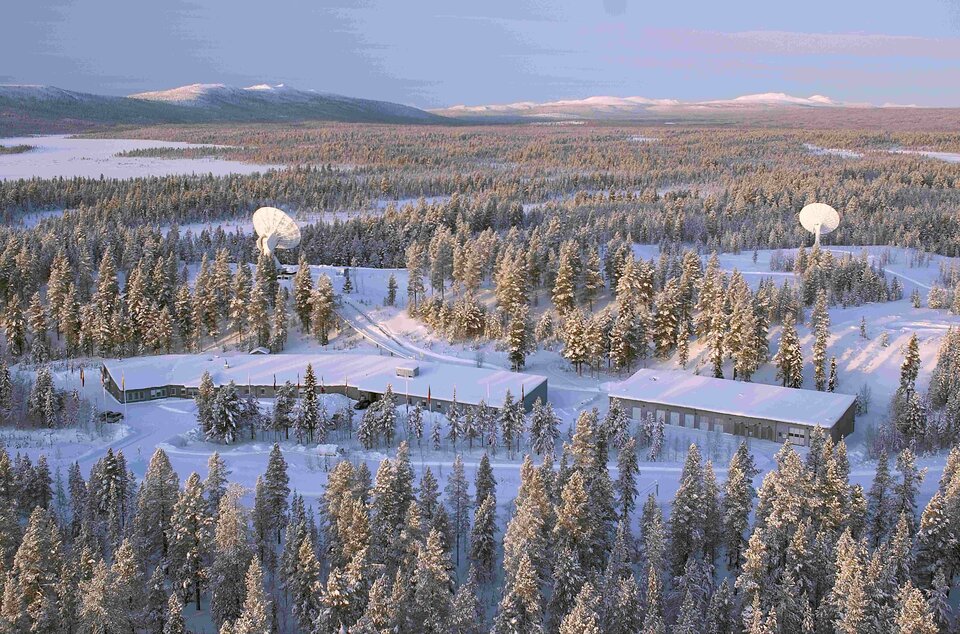
Routine communications for Integral are provided by the ESA ground station at Kiruna, Sweden, and by the DLR station at Weilheim, Germany.
Ground segment & mission control system
The Integral ground segment uses the SCOS-2000 mission control system.

The MOC at ESOC is responsible for the operation of the spacecraft and instruments, for ensuring the spacecraft safety and health, for the maintenance of the satellite's on-board software, for the provision of flight dynamics support including determination and control of the satellite's orbit and attitude and for provision of all telemetry and auxiliary data to the ISDC.
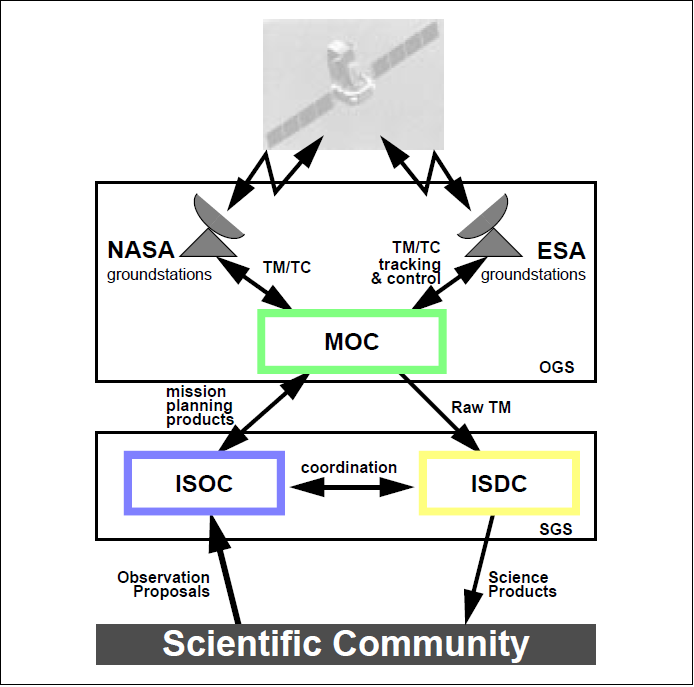
Integral operations are executed using an automated time line. The time line is generated on a revolution-by-revolution basis, i.e. one time line covers the period from perigee passage to the next perigee passage, which is approximately three days.
The MOC maintains the on-board software and the operational database and is responsible for the short- and long-term archiving of the telemetry, telecommands and auxiliary data. The archive is consolidated (filling of data gaps) with the satellite playback telemetry received from the ground stations when required. In addition to the real-time link to the ISDC that provides the majority of the TM data within seconds, the consolidated data are provided offline to ensure data completeness.
The platform and payload
The platform is three-axis stabilised and to a large extent identical to that of XMM-Newton. All operations must be executed in real time, as no on-board time-line execution or storage of telemetry is available.
The main payload consists of the Spectrometer on Integral (SPI) and Imager on board Integral (IBIS).
These are complemented by two monitor instruments in the X-ray (JEM-X) and optical ranges (OMC), co-aligned with the main instruments, and a radiation monitor for real-time measurement of the radiation environment and safeguarding of the instruments.
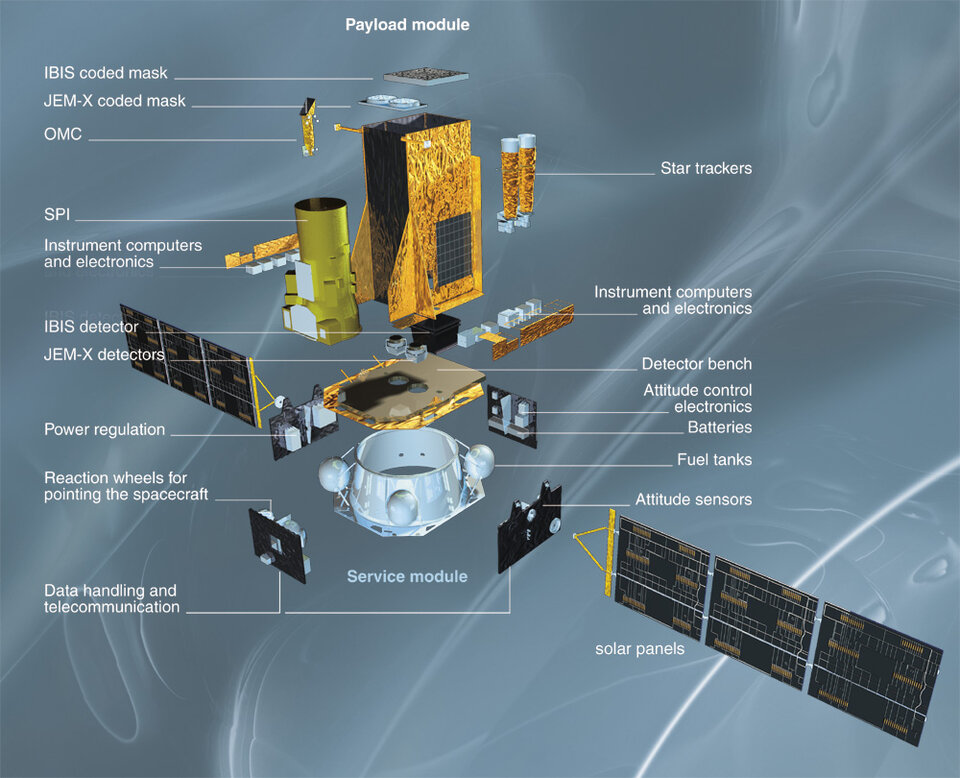
SPI, IBIS, and JEM-X are provided with coded masks, allowing source localisation to an accuracy of better than one arc minute.
The payload, designed and built by European scientific institutes, provides the science community with an unprecedented combination of imaging and fine spectroscopy over a very wide range of wavelengths from gamma ray to optical.