Proba-1 operations
Editor's note: This page is no longer being updated, but will be preserved as a record. Click here for the latest information on Proba-1.
ESA's Proba (Project for On-Board Autonomy) satellite was originally launched as a technology demonstration mission, funded within the frame of ESA's General Support Technology Programme and providing in-orbit demonstration and evaluation of new hardware, software, on-board operational autonomy and new Earth observation and space environment monitoring instruments.
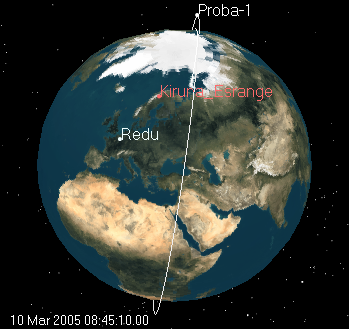
However, Proba has also enjoyed spectacular success providing EO images and is now operated as an EO mission. Unlike larger, more complex ESA missions controlled from ESOC, Proba is controlled via a automated Mission Control System and a dedicated tracking terminal established at ESA's Redu station, in Belgium.
The mission
Proba-2 was initially operated as a technology demonstration mission but is now managed as an Earth observation mission.
| ROLE | Technology demonstration and Earth observation (EO) |
| LAUNCH DATE | 22 Oct 2001 |
| LAUNCHER/LOCATION | Antrix ISRO PSLV-C3/Shriharikota launch base, India |
| LAUNCH MASS | 94 kg |
| ORBIT | Sun-synchronous, polar, 570-670 km |
| PERIOD | 96.97 minutes |
| NOMINAL MISSION | Ongoing |
| + ESA's first microsatellite with 'smart' processing & self-control + | |
The Flight Control Team
There is no traditional flight control team.
Proba is ESA's first spacecraft with fully autonomous capabilities; it is designed to operate virtually unaided, performing everyday tasks like navigation and payload and resource management with little involvement by engineers at the Redu station.
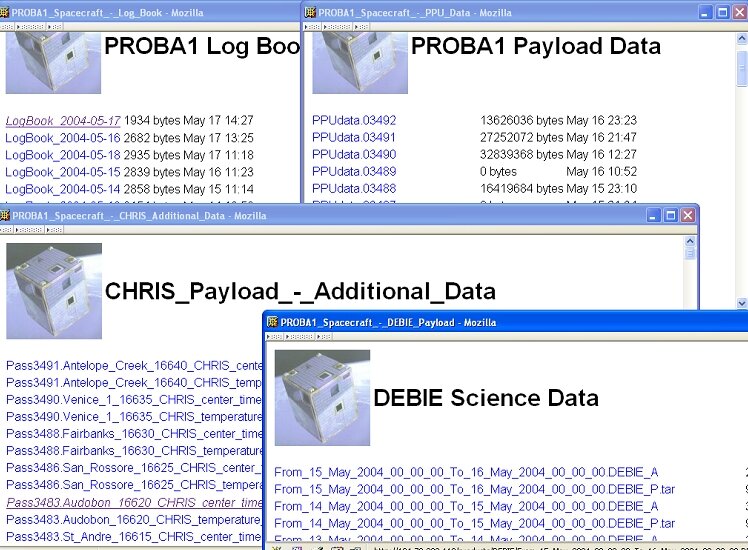
The ground segment is largely automated, permitting unsupervised passes with automatic uplink of telecommands, reception and processing of telemetry, extraction and distribution of payload products to a server.
Mission operations overview
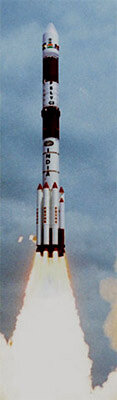
Proba was launched on board India's Polar Satellite Launch Vehicle (PSLV) from India's Shriharikota launch base as a piggyback payload on 22 October 2001.
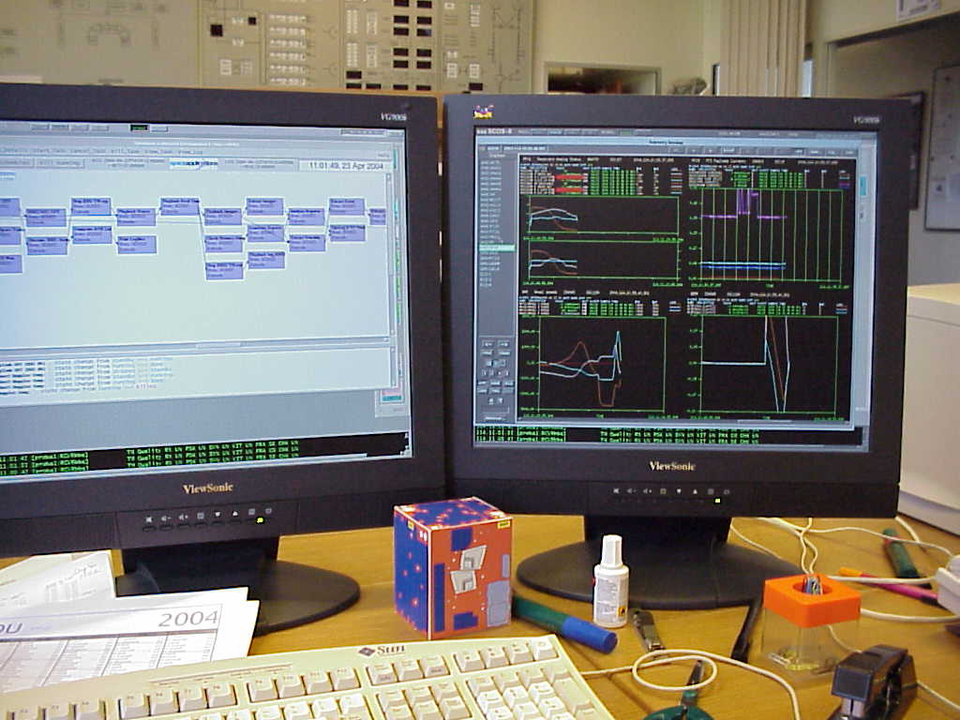
The main elements of the ground segment are a fully steerable 2.4m S-band antenna, baseband equipment, a control system based on ESA's SCOS II mission control system, a planning system and a data server.
A unique script language allows interfacing with the telemetry and the telecommand server of the control system and control all satellite pass activities, from the preparation to the post-processing phase.
The innovative design and operating systems were the result of ESA's collaboration with prime contractor QinetiQ Space nv (formerly Verhaert Design and Development, Belgium, working alongside other European companies and universities.
Proba's payload was designed to be controlled by a computer system 50 times more powerful than its counterpart on board ESA's full-size solar observing satellite, SOHO, allowing the micro-satellite to combine in-orbit technology demonstration, such as an on-board mission planning and on-board navigation and failure detection, with some useful monitoring of the Earth's environment.
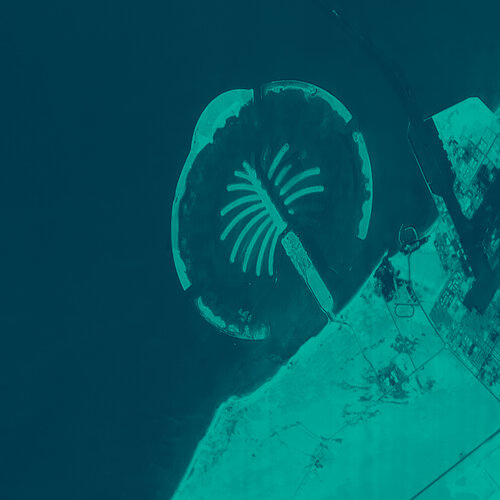
The instruments include CHRIS (Compact High Resolution Imaging Spectrometer, from SSTL UK - formerly Sira Technology UK), DEBIE (Debris In-Orbit Evaluator, from Patria Finnanvitec/FIN) and SREM (Standard Radiation Environment Monitor, from Contraves/CH). PROBA also carries two imagers, a Wide Angle Camera (WAC) and a High Resolution Camera (HRC) with a 8-metre resolution, both built by OIP of Belgium.
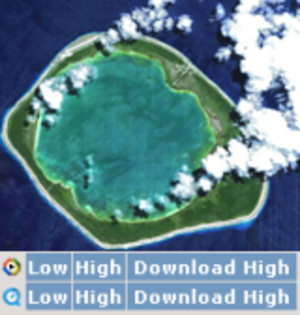
Images of the Earth and other data gathered by Proba are sent direct to a Web server located at Redu station, from which project scientists, industry and principal investigators are able to access the information over the Internet as soon as it is delivered from the satellite.