Cluster II operations
Editor's note: This page is no longer being updated, but will be preserved as a record. Click here for the latest information on Cluster.
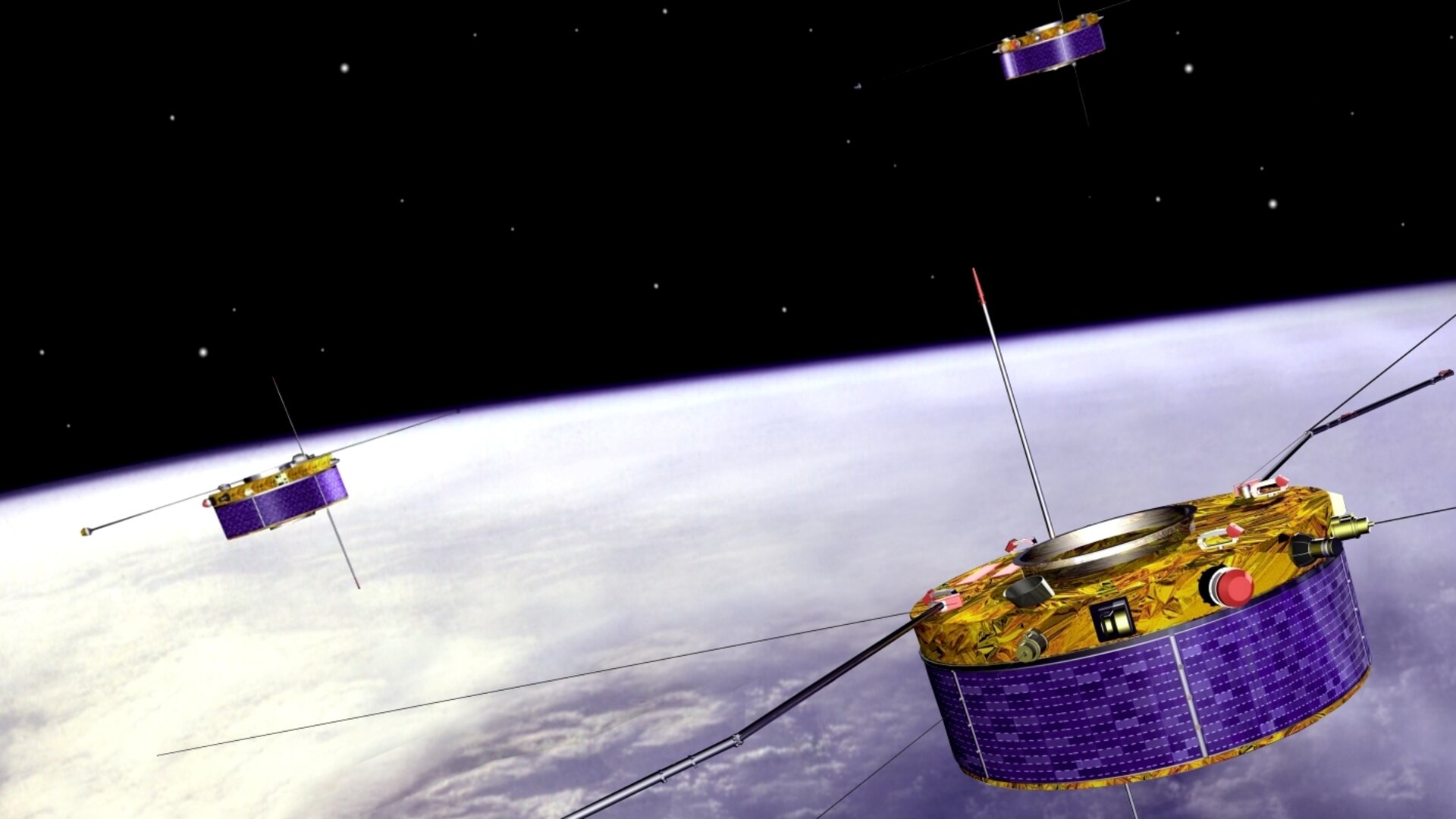
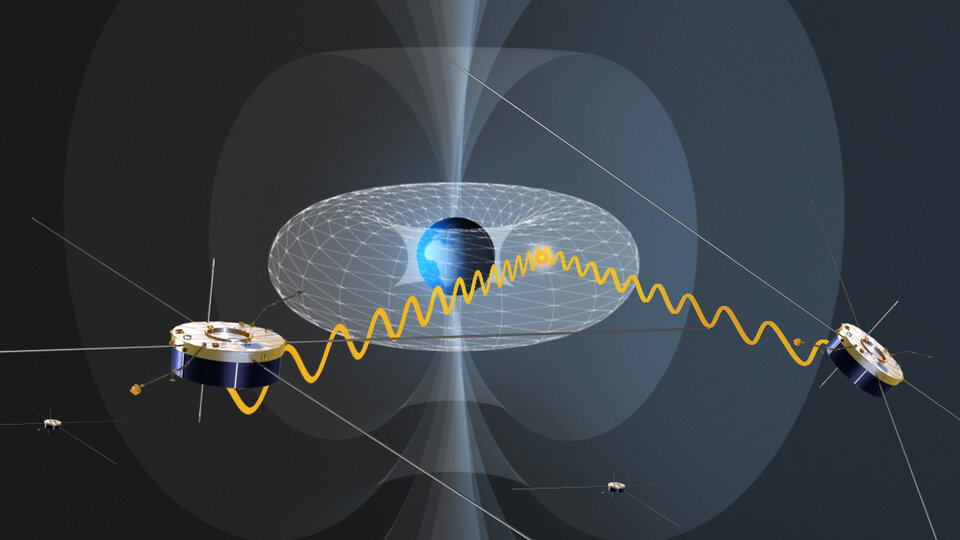
The Cluster mission comprises four satellites flying in a tetrahedral formation and collecting the most detailed data yet on small-scale changes in near-Earth space, and on the interaction between the charged particles of the solar wind and Earth’s magnetosphere.
This is enabling scientists to build a 3D model of Earth's magnetosphere and to better understand the processes taking place inside it. The four satellites carry identical sets of 11 instruments to investigate charged particles and electrical and magnetic fields.
Cluster was first proposed in November 1982 and was ready for launch in 1996. Unfortunately, the first four satellites were lost during the Ariane 501 ascent from Kourou, French Guiana, on 4 June 1996.
The second Cluster mission was launched in two sets of two satellites each on 16 July and 9 August 2000. In 2015, the mission celebrates 15 years in orbit and is one of ESA’s missions that have generated the highest amount of scientific publications. The four Cluster satellites are numbered C1 through C4 and are named Rumba, Salsa, Samba and Tango, respectively.
| ROLE | In-situ investigation of Earth's magnetosphere |
| LAUNCH DATES | 16 July & 9 August 2000 |
| LAUNCHER/LOCATION | Soyuz (2 x dual launches) Baikonur, Kazakhstan |
| LAUNCH MASS | 1200 kg (each) |
| ORBIT | Highly elliptical; between 20 000 km perigee & 111 000 km apogee; 135º inclination; 54 hr duration |
| NOMINAL MISSION | Two years; extended currently to end 2016 |
| + Studying the Solar Wind and the relationship between the Sun and Earth's magnetic environment + | |
The Cluster Mission Operations Centre (MOC) is located at ESOC, Darmstadt, Germany.
The Flight Control Team
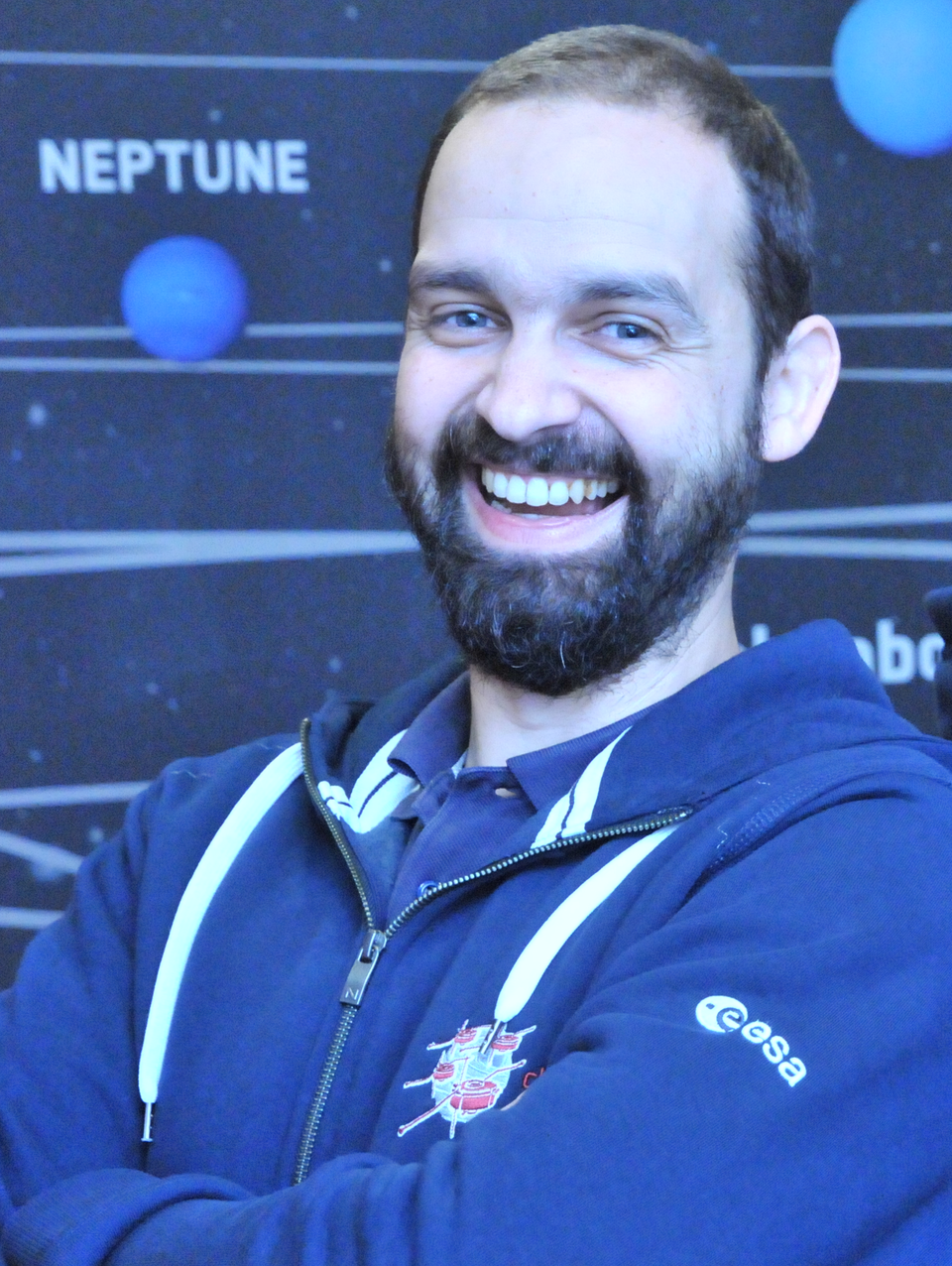
Spacecraft Operations Manager Bruno Sousa oversees a team of engineers dedicated to the mission, who are supported by an extended ‘team of teams’ at ESOC. These include specialists from flight dynamics, ground facilities, tracking stations and mission data systems.
The main task of the team is to ensure spacecraft safety and operational availability at all times as well as to maximise the amount of data generated simultaneously by the four satellites. The team are responsible for mission planning and scheduling, realtime monitoring and control during ground station contacts and post-operations review and analysis of results.
The team work to ensure that the 15-year-old fleet performs all assigned science observations, often involving complex formation manoeuvres. In 2013, two of the Cluster quartet made their closest-ever approach to each other – just 4 km separation in space – and in 2015, satellites 3 and 4 (Samba and Tango) were brought to just 6 km separation in space, to observe activity at Earth’s ‘bow shock’ – the region where the solar wind decelerates from super- to subsonic speeds before being deflected around our planet.
Mission operations overview
One of the most challenging aspects of Cluster is to control four identical satellites, often simultaneously. The day-to-day operation of the satellites is carried out from a Dedicated Control Room (DCR) at ESOC in Darmstadt, Germany.
Day-to-day operations
Receipt of spacecraft telemetry (information on the health and status of the satellites), commanding and tracking are performed by ESA ground stations in Maspalomas and Villafranca (Spain), Perth and New Norcia (Australia) and Kourou (French Guiana).

Scientific measurements are planned by the team and carried out autonomously by the satellites, with the corresponding data collected later during regular ground station contact periods. One payload instrument (the Wide Band Data – Plasma Wave Investigation) performs measurements and delivers data in real time via a separate ground station (Panska Ves in the Czech Republic).
Spacecraft platform operations, including routine maintenance and correction of anomalies, are carried out by the Flight Control Team mostly in real time during ground station contact.
Special activities
The Cluster satellites regularly perform manoeuvres to adjust and trim their formation according to requirements set by the Cluster Joint Science Operations Centre.
The most critical times of the mission, however, are the seasons when the orbit crosses the shadow of the Earth and thus the satellites are in eclipse. For the past few years, the batteries, which were designed to last for a much shorter mission, have all failed. This has forced the Flight Control Team to develop a new strategy to completely power off the satellite before entering an eclipse and switch it back on after exiting back into sunlight. The satellites are booted up each time this happens just as when they first entered orbit after launch and a lot of configuration work is required to achieve an operational mode restart science observations, until the next eclipse.

Recently, in conjunction with the ESA Tracking (Estrack) station network team at ESOC, Cluster has pioneered using a tracking station for a new ground-to-space communication technique called Multiple Spacecraft per Aperture (MPSA). Unlike the traditional technique, which includes one ground station tracking one satellite at a time, this technique allows tracking two (or more) satellites simultaneously with the same ground station. Initiated just as an engineering experiment, this technique is now mature and well proven, and is now part of the Flight Control Team's routine operational approach.
As part of planning for its ultimate disposal, the team at ESOC executed a long (~30 minute) thruster burn for Cluster 1 in March 2015. This manoeuvre ensured that the satellite will reenter Earth’s atmosphere in 2025, around the same time as the rest of the constellation, and in very low-density populated area in the southern hemisphere. The critical aspect of this manoeuvre was related to the uncertainty in the amount of fuel left in the tanks and the possibility that the induced torque would alter the spin axis orientation in such way that it would cause shadowing (blocking sunlight, thus causing an unacceptable power loss) by one of the booms in the solar arrays. Fortunately, and with excellent planning and teamwork, these risks were well managed and the team were content with the outcome.
Ground segment
The Cluster ground segment – the hardware and software on ground – is used to monitor and control the four satellites, and to receive, archive and distribute the science data.
The Cluster mission is one of the first missions at ESOC to support fully automated and unattended ground station contacts with the satellites, thus allowing for manpower savings.
Another area where Cluster shows its appetite for innovation is in the domain of planning and scheduling. Cluster operations planning and engineering are supported by an advanced suite of the latest generation web-based tools, fostering collaboration and providing an optimal overview of past-present-future operation scenarios. These tools include:
- ClusterWeb: An operations portal, completely developed by the Cluster Flight Control Team, that supports ground-contact planning and realtime monitoring, and aggregates other web-based tools
- LiveFOP: An electronic browser for the Flight Operations Plan
- DBSearchTool: A search engine to find anything in our operational database.
- MUST: A graphical engineering and analysis tool to plot telemetry parameters.
- Überlog: An electronic logbook to collect relevant occurrences and interactions with the satellites during ground contacts with the ability to generate categorised alarms.
- WaveOps: A platform for collaboration and discussion of operations-related occurrences (prototype).
- ARTS: A platform for recording and managing anomalies, minutes and change requests.
Cluster is at the forefront in deploying artificial intelligent (AI) agents to optimise the ground station contact scheduling process, based on the ESA-developed Advanced Planning and Scheduling Initiative (APSI).
At Cluster, we also pay specific attention to human factors in operations and have been collaborating intensively with the University of Delft in improving the ergonomics of our systems, in particular in the area of audio alarms.
The platform
The Cluster satellites resemble giant LEGO® sets, assembled by hand from thousands of individual parts. Each one is shaped like a giant disc, 1.3-m high and 2.9-m across. In the centre is a cylinder with an aluminium honeycomb structure covered with a skin of carbon-fibre reinforced plastic. The equipment panel inside this cylinder supports the main engine, two high-pressure fuel tanks and other parts of the propulsion system.

Six spherical fuel tanks made from titanium are attached to the outside of this central cylinder. The fuel they carry accounted for more than half the launch weight of each satellite. Most of this fuel was consumed soon after launch, during the complex manoeuvres required to reach the operational orbits. Each satellite also carries eight 10 N thrusters for smaller changes of orbit.
The satellites are equipped with S-band transponders – radio transmitter/receivers – that ensure communication at a rate of up to 262 kbit/s. All the data produced onboard outside of a ground station communication pass are stored in a solid state memory with a capacity of 1 GByte.
Ranging and Doppler measurements of the radio signals received from the Cluster satellites allow the Flight Dynamics team to determine and propagate the location (orbit) of the quartet and the Sun sensors and starmappers provide sufficient data to determine their orientation at any instant as they orbit Earth.
The payload
The satellites carry identical sets of 11 instruments to investigate charged particles and electrical and magnetic fields. These were built by European and American instrument teams led by lead scientists, the Principal Investigators.


Access the video
The Cluster scientific community includes the ESA Project Scientist, 11 Principal Investigators, and more than 250 co-investigators from ESA Member States, the United States, Canada, China, the Czech Republic, Hungary, India, Israel, Japan and Russia.
Access details on Cluster instruments and science results via http://sci.esa.int/cluster.