European Space Agency to probe asteroid blind spot
In the past five weeks two asteroids have passed close by Earth, at distances of 1.2 and 3 times the distance to the Moon. Another asteroid has recently been shown to have a 1 in 300 chance of colliding with Earth in 2880.
Monitoring known asteroids allows astronomers to predict which may collide with Earth. But that is only true for the asteroids we know of. What about those that lie in the asteroid blind spot between the Sun and Earth? The European Space Agency is studying ways in which its missions can assist in monitoring these unseen but potentially hazardous asteroids.
It is difficult to estimate the danger posed by asteroids. This is, in part, because astronomers do not yet know how many asteroids there are. A recent discovery, made using data from ESA's Infrared Space Observatory (ISO), showed that there could be nearly two million asteroids larger than one kilometre in the main asteroid belt, between Mars and Jupiter. That is more than twice as many as previously thought.
In addition, even when an asteroid is identified many observations must be made before it is known whether or not it will come close to, or even collide with, Earth.
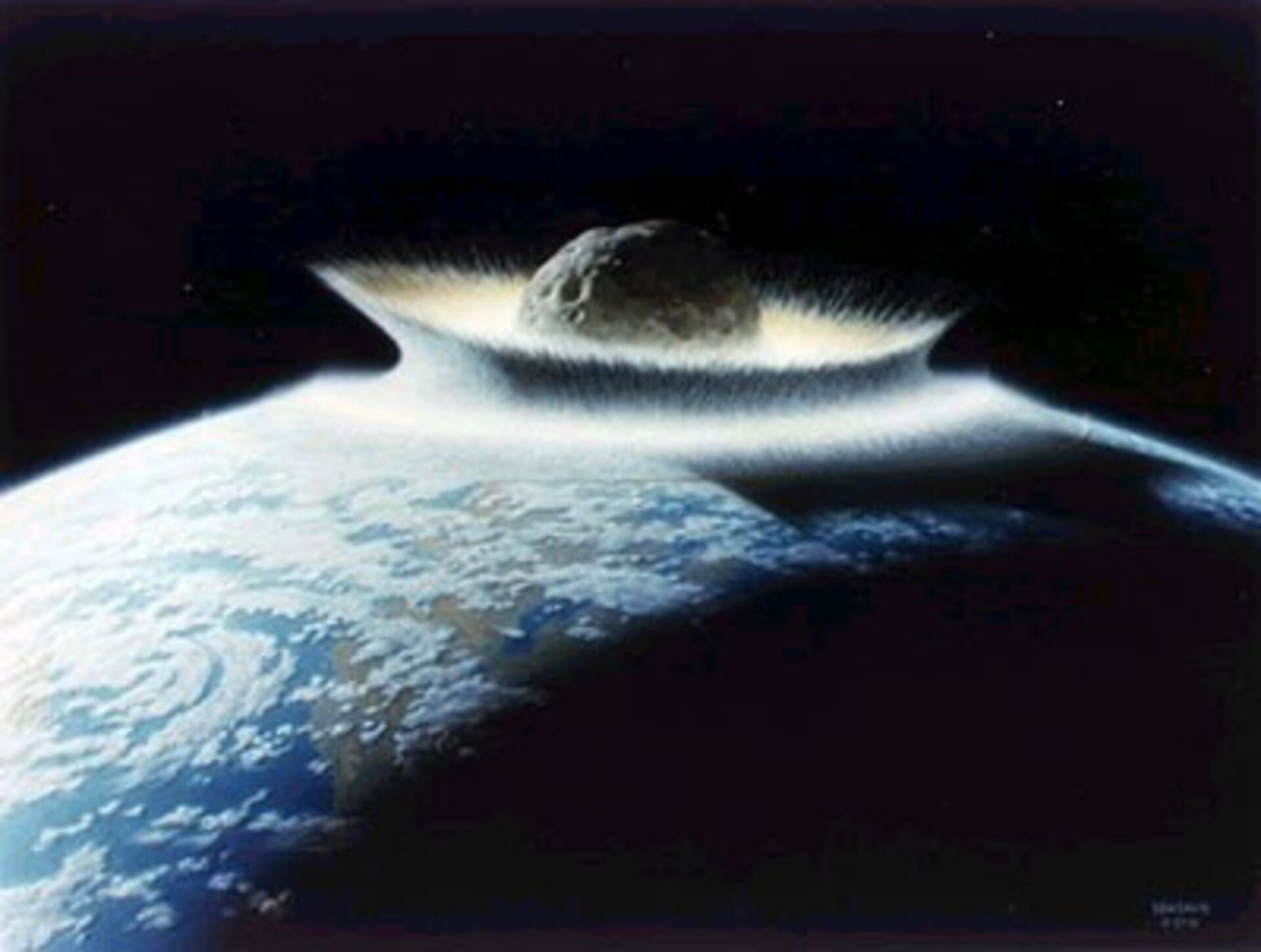
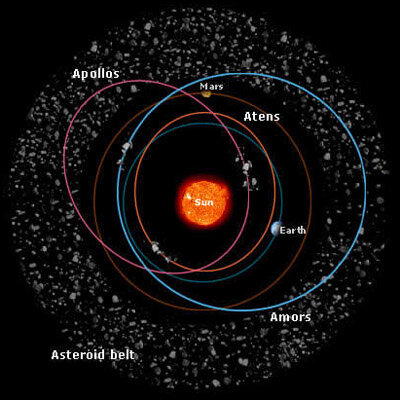
If the asteroids remained in the main-belt, they would pose no danger to Earth. However, they can be thrown into different orbits by collisions with other asteroids or by the influence of Jupiter's gravitational field. If their new orbits cross the Earth's orbit, they could one day collide with our planet, inflicting unprecedented devastation.
A number of ground-based searches are already underway to find as many potentially hazardous asteroids (PHAs) as possible but there is a notorious 'blind spot' that telescopes on Earth can never peer into. It is the region of space inside Earth's orbit, towards the Sun. From Earth, astronomical observations close to the Sun are almost impossible because it means observing during the daytime when only the brightest celestial objects stand out from the blue sky. That means asteroids lurking in this region of space can 'sneak up' on the Earth undetected. Asteroid 2002 EM7, which passed close by the Earth on 8 March this year, was one such object and was only detected after it crossed Earth's orbit to appear briefly in the night sky, before it crossed back into the glare of the Sun.

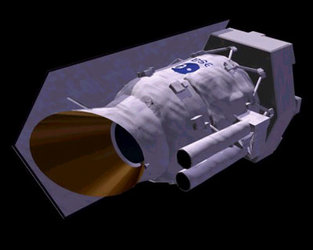
About 550 similar asteroids are known. They are called the Atens and spend most of their time inside Earth's orbit, close to the Sun. Traditional estimates suggest there may be several thousand in total and tracking them from Earth is next to impossible. However, a study performed for ESA has shown that the Gaia spacecraft will be able to see clearly into this 'blind spot' and keep precise track of the Aten population.
François Mignard of Observatoire de la Côtes d'Azur, France, conducted the study. He found that Gaia would be ideal because it is designed to measure the position of celestial objects with unprecedented accuracy. In addition, since there is no atmosphere in space to scatter the Sun's rays and create a blinding blue sky, Gaia can see close to the Sun without disturbance.
Gaia is expected to be launched around 2010. Even if ground-based searches have spotted more Atens by that time, the mission still has an essential role to play because it will reveal their orbits to a precision 30 times better than any observation from the ground, thus identifying whether any pose a danger to Earth.
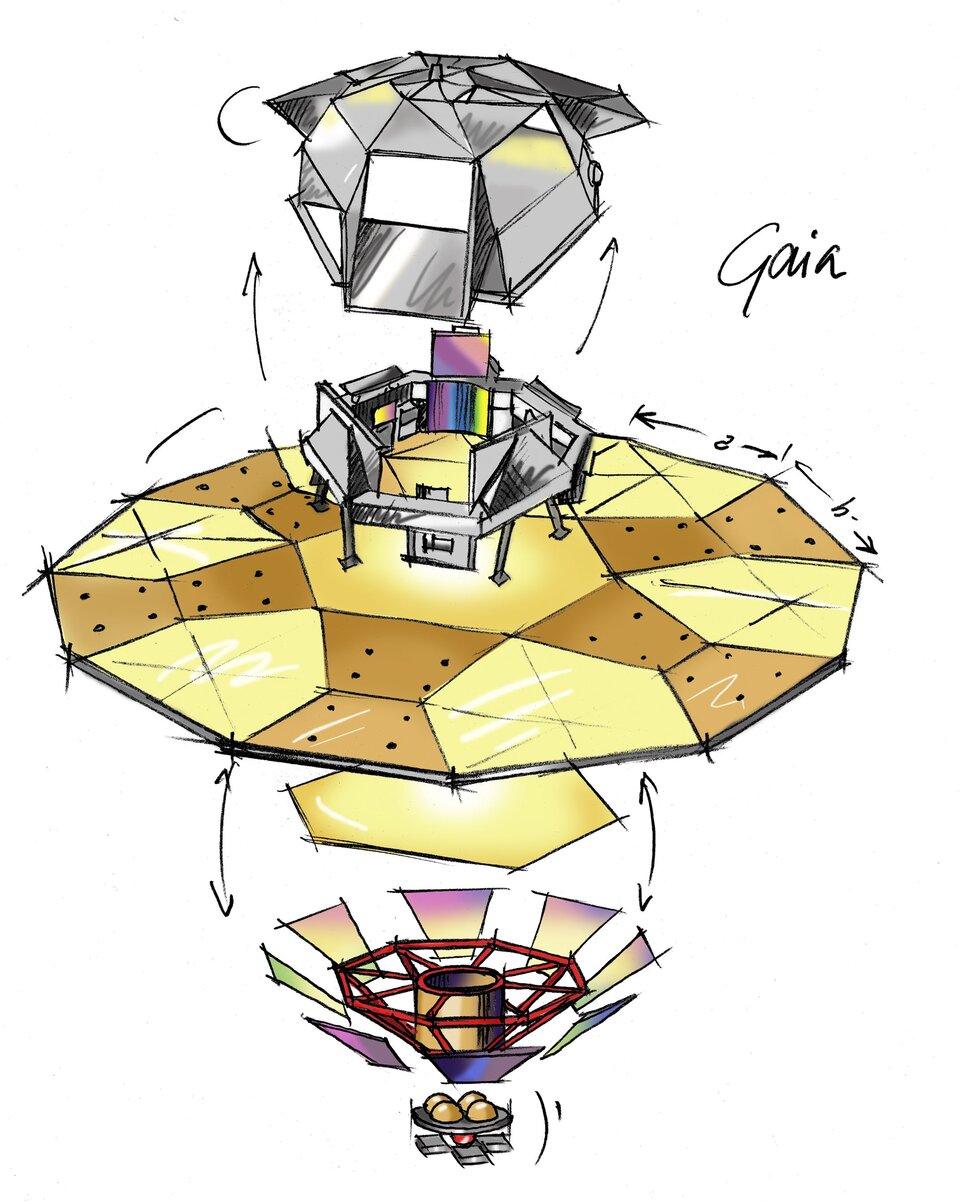
"To know how close these objects will come to Earth is very dependent on how accurately one can measure their orbits. That's the main contribution that Gaia can be expected to make," says Michael Perryman, project scientist for Gaia, at ESA's European Space Research and Technology Centre in the Netherlands.
Gaia's data will also provide astronomers with a first estimate of these objects' composition. This knowledge could help to determine methods to divert or destroy asteroids that are set on a collision course with Earth.
Several ESA missions are contributing, or will contribute, to our understanding of minor bodies of the Solar System: these include ISO, Gaia and Rosetta, which will study asteroids Siwa and Otawara. ESA is also considering the addition of an asteroid spotting telescope to its BepiColombo mission.