ESA extends Envisat satellite mission
ESA Member States have unanimously voted to extend the Envisat mission through to 2013. Envisat – the world’s largest and most sophisticated satellite ever built – has been providing scientists and operational users with invaluable data for global monitoring and forecasting since its launch in 2002.
"The decision to extend the Envisat mission operations, taken during the last ESA Earth Observation Programme Board meeting, is a recognition of the success of the mission, in terms of the wide number of scientific and operational users served and the good technical status of the satellite after seven years of operations," Envisat Mission Manager Henri Laur said.
Envisat, short for environmental satellite, has a unique combination of 10 different instruments which collect data about Earth’s atmosphere, land, sea and ice – providing scientists with the most detailed picture yet of the state of the planet.
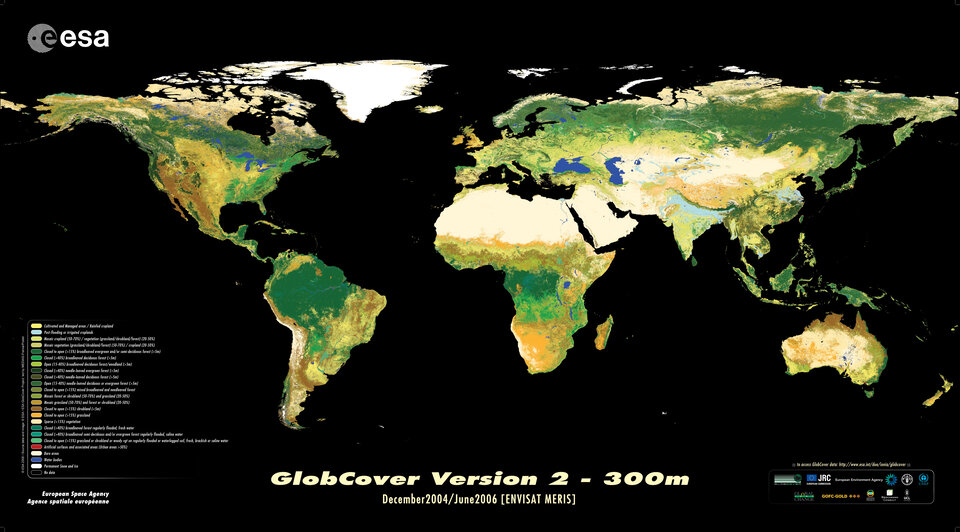
Envisat data have never been in more demand than today, and many of these established services rely upon being able to access near-real time (NRT) data. The data are being increasingly used for routine applications, such as monitoring sea ice, oil slicks and illegal fisheries, which require the fastest possible access to the data so that quick decisions can be made.
Envisat NRT data make it possible to provide daily sea surface temperatures, worldwide fire maps, UV radiation levels and ozone forecasts, accessible through Today’s Earth check-up on ESA’s Earth observation website.
Another reason the mission was extended is the need for scientists to be able to access data over long periods of time in order to identify and analyse long-term climatic trends and changes (such as greenhouse gas concentrations, sea surface temperature, sea levels, sea-ice extent).
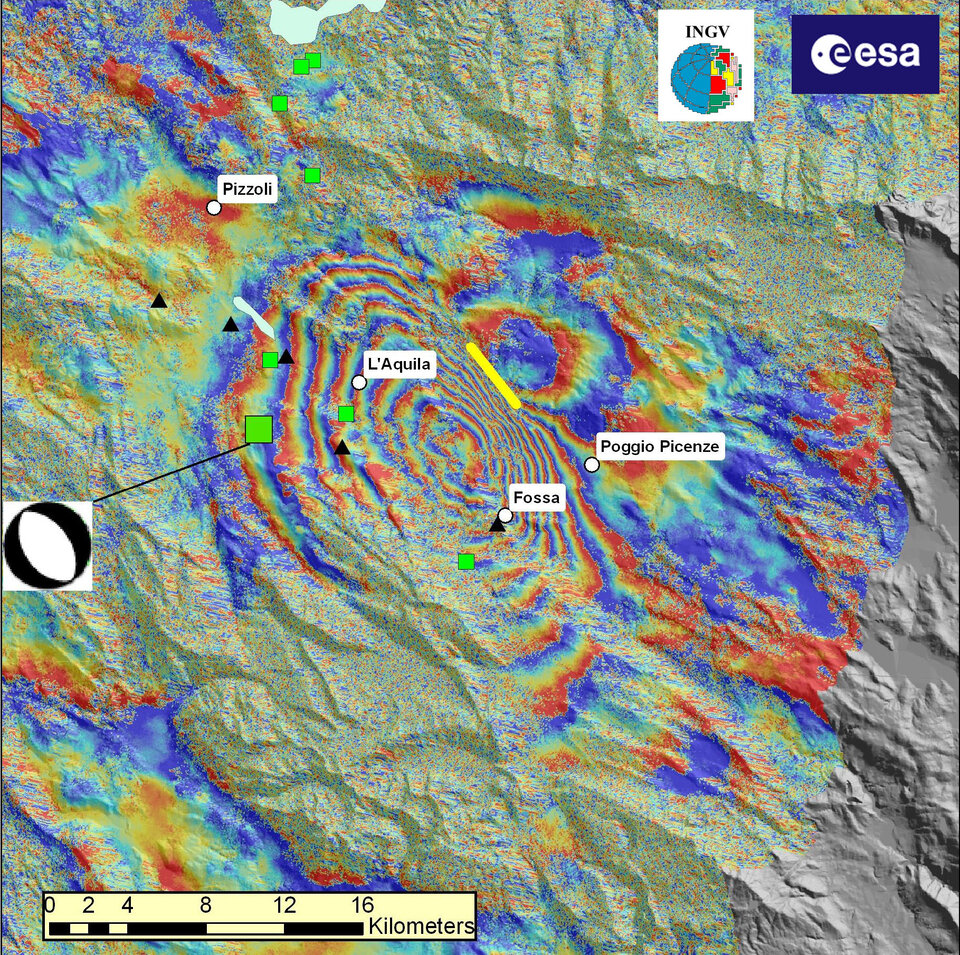
Envisat affords this by providing continuity of data initiated in the early 1990s with previous ESA satellites, ERS-1 and ERS-2. With the extension, Envisat will bridge the gap in data supply until the launch of the Sentinel satellites that will be launched as part of the Global Monitoring for Environment and Security (GMES) initiative.
Sentinel-1 will ensure the continuity of radar imaging. Sentinel-3 will ensure continuity with Envisat’s radar altimeter and optical sensors. Sentinel-5’s precursor mission will ensure continuity with Envisat’s atmospheric sensors.
The Envisat mission generates a large amount of daily data through its European-wide network of acquisition stations and processing centres. Access to Envisat data has continuously been upgraded since its launch, with an increasing amount of data available online free of charge.