One Soyuz launcher, two Galileo satellites, three successes for Europe
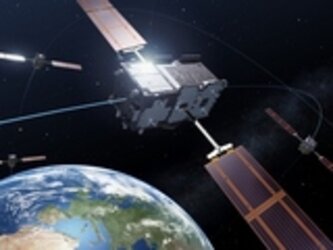
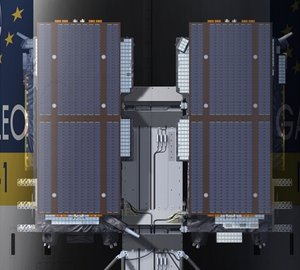
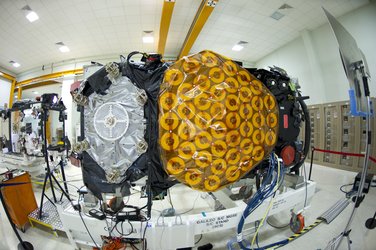
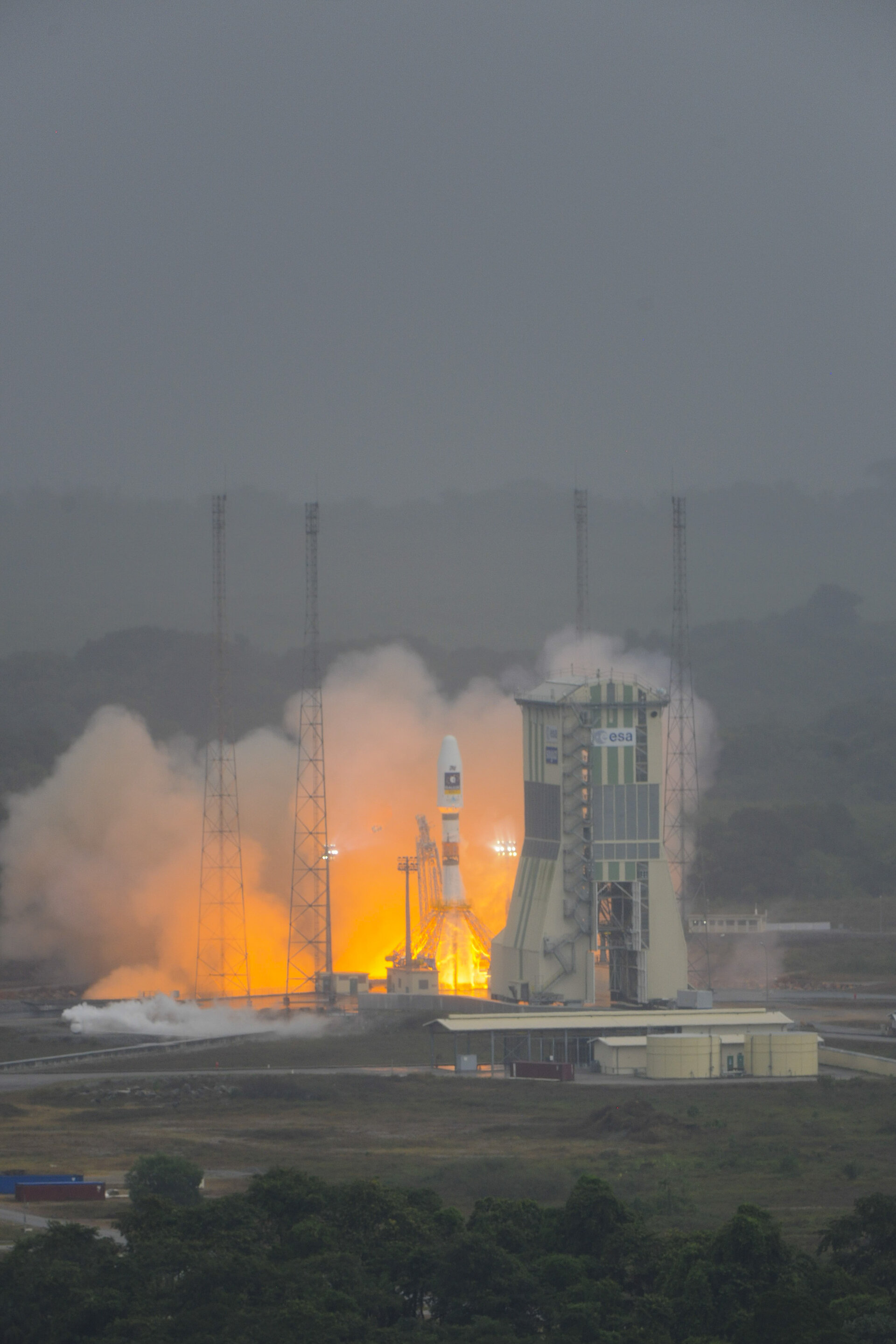
PR 29 2011 - The first pair of satellites for Europe's Galileo global navigation satellite system has been lofted into orbit by the first Russian Soyuz vehicle ever launched from Europe's Spaceport in French Guiana in a milestone mission.
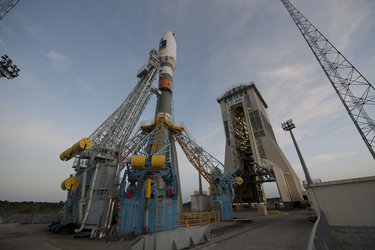
The Soyuz VS01 flight, operated by Arianespace, started with liftoff from the new launch complex in French Guiana at 10:30 GMT (12:30 CEST) on 21 October.
All of the Soyuz stages performed perfectly and the Fregat-MT upper stage released the Galileo satellites into their target orbit at 23 222 km altitude, 3 hours 49 minutes after liftoff.
"This launch represents a lot for Europe: we have placed in orbit the first two satellites of Galileo, a system that will position our continent as a world-class player in the strategic domain of satellite navigation, a domain with huge economic perspectives," said Jean-Jacques Dordain, Director General of ESA.

"Moreover, this historic first launch of a genuine European system like Galileo was performed by the legendary Russian launcher that was used for Sputnik and Yuri Gagarin, a launcher that will, from now on, lift off from Europe's Spaceport.
"These two historical events are also symbols of cooperation: cooperation between ESA and Russia, with a strong essential contribution of France; and cooperation between ESA and the European Union, in a joint initiative with the EU".
"This launch consolidates Europe's pivotal role in space cooperation at the global level.
"All that has been possible thanks to the vision and commitment of ESA member states."
This was also the first Soyuz to be launched from a site outside of Baikonur in Kazakhstan or Plesetsk in Russia.
A new site for Soyuz in French Guiana, operated by Arianespace, adds to the flexibility and competitiveness of Europe's fleet of launchers.
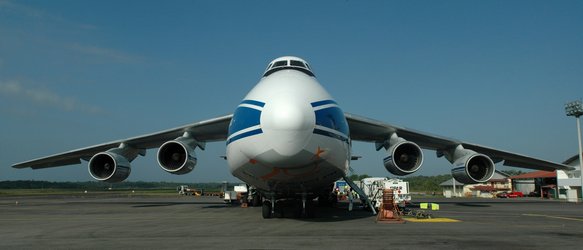
Soyuz is a medium-size vehicle, complementing ESA's launchers: Ariane 5 handles large payloads, and the new Vega, planned to debut in 2012, will lift smaller satellites.
Launching from close to the equator allows the European Soyuz to offer improved performance. From French Guiana, Soyuz can carry up to 3 tonnes into the 'geostationary transfer orbit' typically required by commercial telecommunications satellites, compared to the 1.7 tonnes that can be delivered from Baikonur.
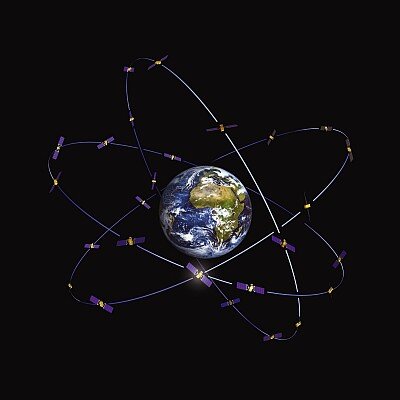
The two Galileo satellites riding the Soyuz are part of the In-Orbit Validation (IOV) phase that will see the Galileo system's space, ground and user segments extensively tested.
The satellites are now being controlled by a joint ESA and CNES French space agency team in Toulouse, France. After these initial operations, they will be handed over to SpaceOpal, a joint company of the DLR German Aerospace Center and Italy's Telespazio, to undergo 90 days of testing before being commissioned for the IOV phase.
The next two Galileo satellites, completing the IOV quartet, are scheduled for launch in summer 2012.
For further information, please contact
ESA Media Relations Office
Communication Department
Tel: + 33 1 53 69 72 99
Fax: + 33 1 53 69 76 90
Email: media@esa.int