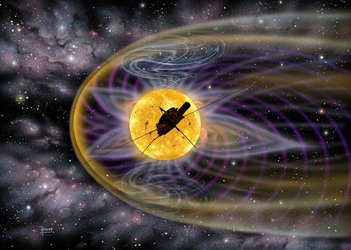
Ulysses hanging on valiantly
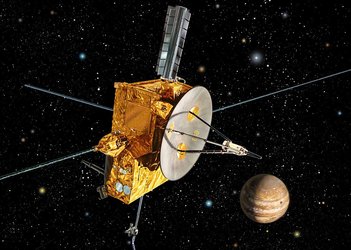
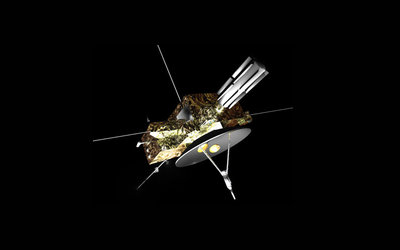
The Ulysses spacecraft, whose mission was expected to end on 1 July 2008, is hanging on valiantly as spacecraft controllers wait for a sign of the fuel freeze that would end the mission. This could happen any time now.
Controllers will know that the fuel needed to keep the antenna pointing towards Earth has started to freeze when Earth-pointing manoeuvres become less efficient and the radio signals from the spacecraft grow weaker.
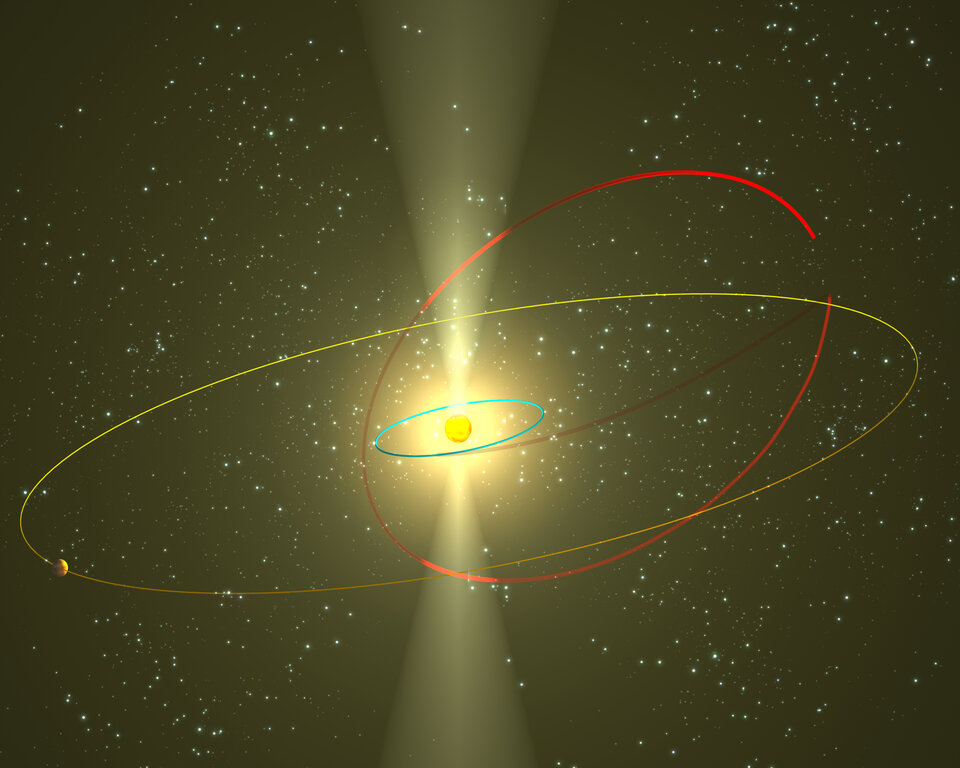
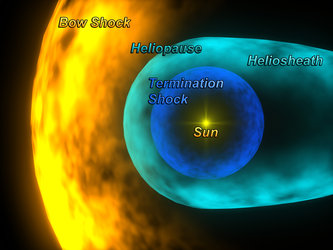
In the meantime, Ulysses is still providing important science data as it pursues its exploration of the heliosphere, the sphere of influence of our star.
Although the spacecraft can now transmit data only in real time, the amazing 17.5-year-old mission is using all the time it has left to add to the wealth of information collected so far.
Notes for editors:
Ulysses is a joint mission between ESA and NASA. ESA provided the spacecraft, built by Astrium GmbH, Friedrichshafen, Germany (formerly Dornier Systems). NASA provided the Space Shuttle launch, the inertial upper stage and the payload assist module to put Ulysses into its correct orbit. NASA also provided the Radioisotope Thermoelectric Generator (RTG) to power the craft and its payload.
ESA’s European Space Research and Technology Centre (ESTEC) and European Space Operations Centre (ESOC) have been managing the mission in coordination with NASA’s Jet Propulsion Laboratory (JPL). Ulysses is tracked by NASA’s Deep Space Network. A joint ESA/NASA team at JPL has overseen spacecraft operations and data management. Teams from universities and research institutes in Europe and the United States provided the 10 instruments on board.
For more information:
Richard Marsden, ESA Ulysses Mission Manager and Project Scientist
Email: Richard.Marsden @ esa.int