L'ESA va relever un nouveau défi : contribuer à un tour du monde à bord d'un avion alimenté par l'énergie solaire
L'ESA doit fournir des technologies avancées pour aider l'aventurier Bertrand Piccard à effectuer un tour du monde à bord d'un avion à pilote unique alimenté à l'énergie solaire, ce qui constituera la démonstration la plus innovante du potentiel des vols non polluants.
Déjà en 1999, Piccard et son co-pilote Brian Jones avaient été les premiers à réaliser un tour du monde sans escale à bord d'une montgolfière. Piccard lance maintenant Solar Impulse pour renouveler son tour du monde, cette fois-ci dans un avion non polluant alimenté à l'énergie solaire.

Cet ambitieux projet va être présenté lors du "32ème Salon international des inventions, des techniques et des produits nouveaux" qui ouvre ses portes à Genève, en Suisse, cette semaine.
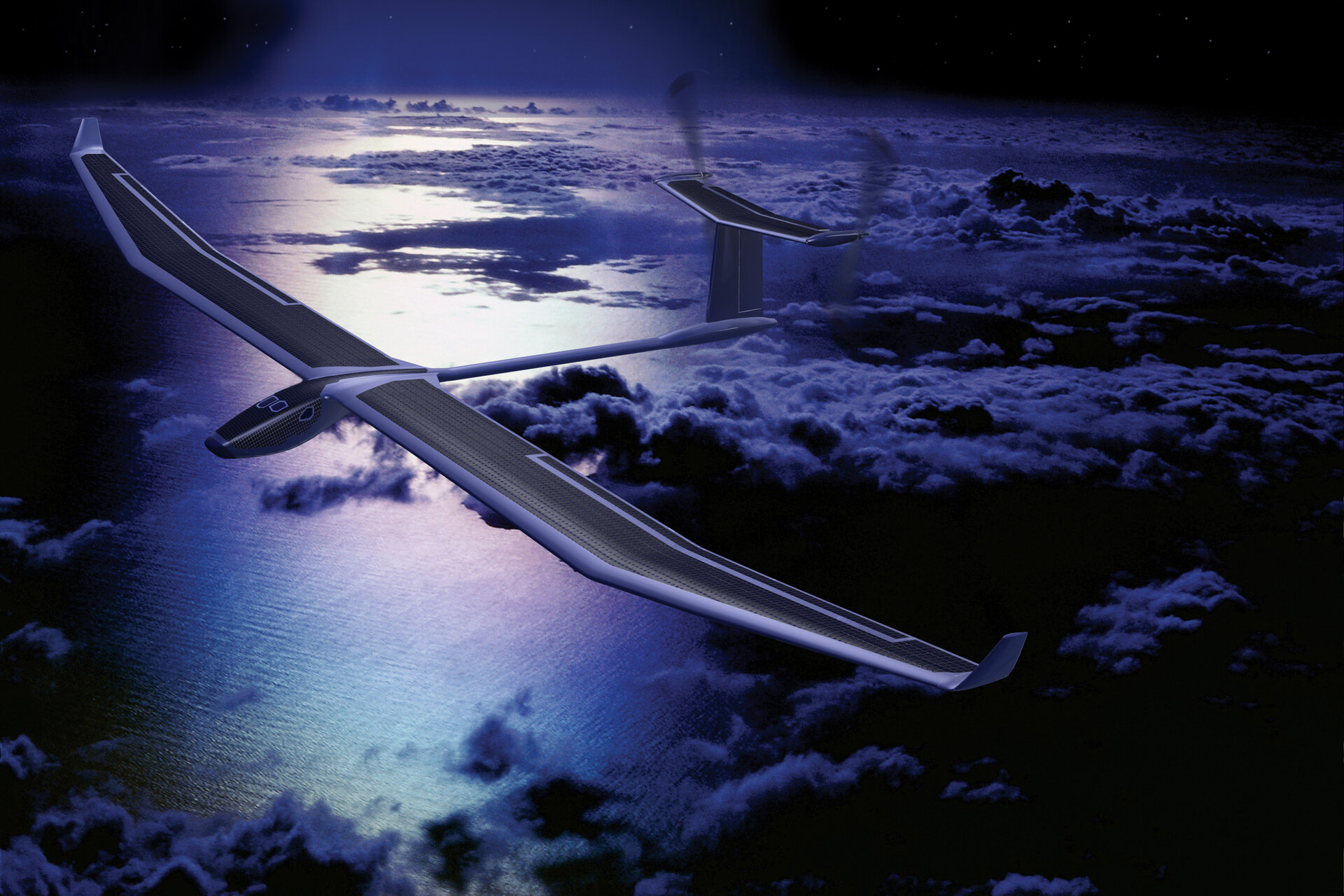
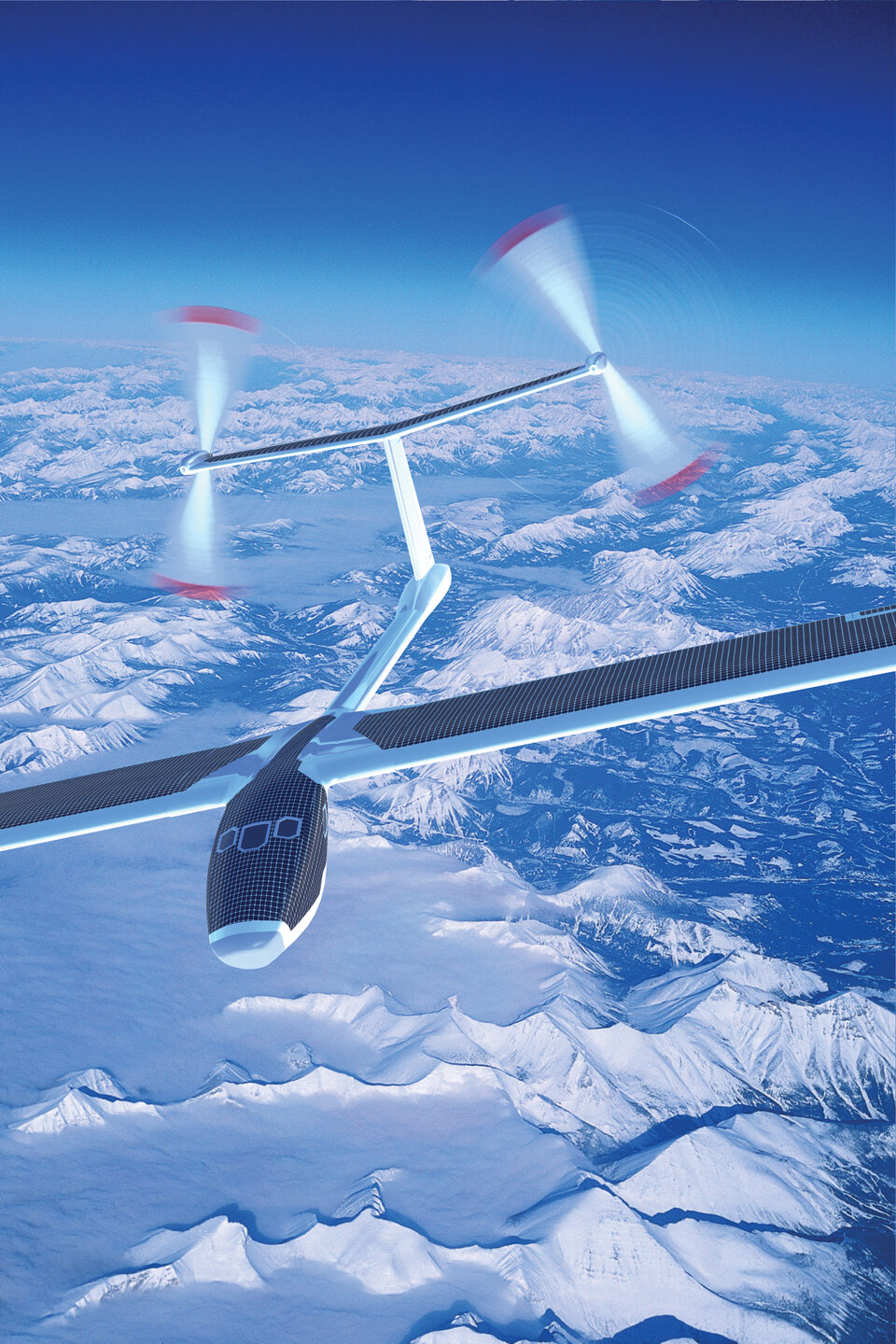
L'avion proposé ressemble à un planeur, mais avec une envergure géante de 70 mètres, plus grande que celle d'un Boeing 747. Entièrement recouvert de panneaux solaires et vraisemblablement équipé de deux moteurs à hélice situés sur la queue, l'aéronef sera capable de décoller sans assistance et transportera à son bord les batteries nécessaires pour pouvoir voler la nuit.
Plusieurs domaines dans lesquels l'ESA pourrait apporter des technologies de dernier cri ont déjà été identifiés : il s'agit des batteries et des panneaux solaires, des systèmes de gestion de l'énergie, des structures en matériau composite ultra-léger et des systèmes de surveillance destinés à contrôler la bonne santé du pilote.
Le ciel constitue la limite du développement durable

Pour le projet Solar Impulse, Piccard fait de nouveau équipe avec Brian Jones, son co-pilote à bord de la montgolfière Breitling Orbiter 3 qui a battu le record il y a cinq ans. Il a nommé l'ingénieur et pilote André Borschberg chef de projet et troisième pilote de l'équipe.
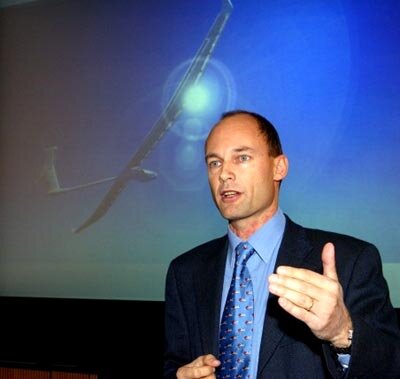
"Le défi, cette fois-ci, consiste à influencer l'histoire du transport aérien en exploitant de nouvelles technologies qui répondent aux demandes de notre ère pour un développement durable et l'utilisation exclusive de formes d'énergies renouvelables", explique Piccard.
Le programme de transfert de technologie de l'ESA apporte son soutien technologique tandis que l'Institut fédéral suisse de la technologie (EPFL) de Lausanne joue le rôle de "Conseiller scientifique officiel" du projet.
"La première source d'énergie de nos satellites est le Soleil, tout comme l'avion de Piccard", déclare Pierre Brisson, Responsable du Programme de transfert de technologie de l'ESA. "Nous avons développé certains des meilleurs panneaux solaires du monde et des systèmes de gestion et de stockage d'énergie à la pointe de la technologie, qui équipent nos vaisseaux spatiaux. Ils constitueront un bon point de départ pour le défi de Piccard".
L'EPFL vient de terminer une étude de faisabilité concernant le projet en analysant les technologies existantes. Yves Perriard, directeur du Laboratoire d'actionneurs intégrés (LAI) de l'EPFL et l'un des principaux scientifiques de l'étude, a confirmé : "Nous savons qu'il est possible de créer une structure entièrement alimentée par l'énergie solaire." L'EPFL a constitué un choix évident pour cette étude. L'institut a mené les recherches thermodynamiques pour le vol en montgolfière couronné de succès de Piccard-Jones en 1999 et est le conseiller scientifique officiel de l'équipe de voile Swiss Alinghi, l'actuel détenteur de la Coupe de l'America.
Un avion alimenté à 100% par l'énergie solaire, volant en continu à 10 km d'altitude

L'avion Solar Impulse, alimenté à l'énergie solaire, doit rester au-dessus des nuages pour capturer toute la lumière solaire disponible, à une altitude de 10000 à 11000 mètres, là où la température se situe autour de –55 °C.
Son cockpit devra peut-être être pressurisé pour de plus longues missions et sa construction nécessitera l'utilisation des technologies les plus récentes en matière de matériaux ultra-légers. Le défi le plus important sera de construire cet avion avec une structure ultra-légère pouvant néanmoins transporter suffisamment de batteries pour le vol de nuit. Les besoins électriques constituent un autre défi d'importance pour les ingénieurs : comment stocker suffisamment d'énergie solaire pendant la journée pour continuer à voler pendant toute la nuit ?

Perriard explique : "C'est une véritable guerre menée contre toutes les pertes dans le système d'énergie depuis les panneaux solaires jusqu'aux moteurs."
L'étude de l'EPFL précise que les batteries au lithium-ion actuellement disponibles sur le marché fournissent un peu moins de 200 Watts-heures par kilogramme (Wh/kg), assez pour répondre aux besoins d'un avion à pilote unique, alors qu'une solution à deux pilotes nécessiterait une capacité d'au moins 300 Wh/kg.
Le calendrier du projet prévoit la conception et la construction du premier prototype d'avion en 2004-2005, avec les premiers vols d'essai en 2006. La prochaine étape consistera à effectuer les vols de nuit en 2007, d'une durée d'au moins 36 heures comprenant une nuit entière. À partir de là, la longueur des vols sera progressivement augmentée. . Des solutions innovantes seront nécessaires pour stocker la nourriture et l'eau nécessaires tout en limitant le poids au strict minimum – un problème habituel pour les ingénieurs de l'ESA qui conçoivent des missions spatiales.
Quand Solar Impulse sera-t-il en mesure d'effectuer son tour du monde sans escale ? “La traversée de l'Atlantique est prévue pour 2008 et un vol autour du monde avec escales devrait être effectué en 2009,” déclare André Borschberg, “Le vol autour du monde sans escales dépend grandement de la rapidité avec laquelle nous auront à notre disposition des batteries dotées d'une plus grande quantité d'énergie…mais en tout état de cause pas avant 2009.”