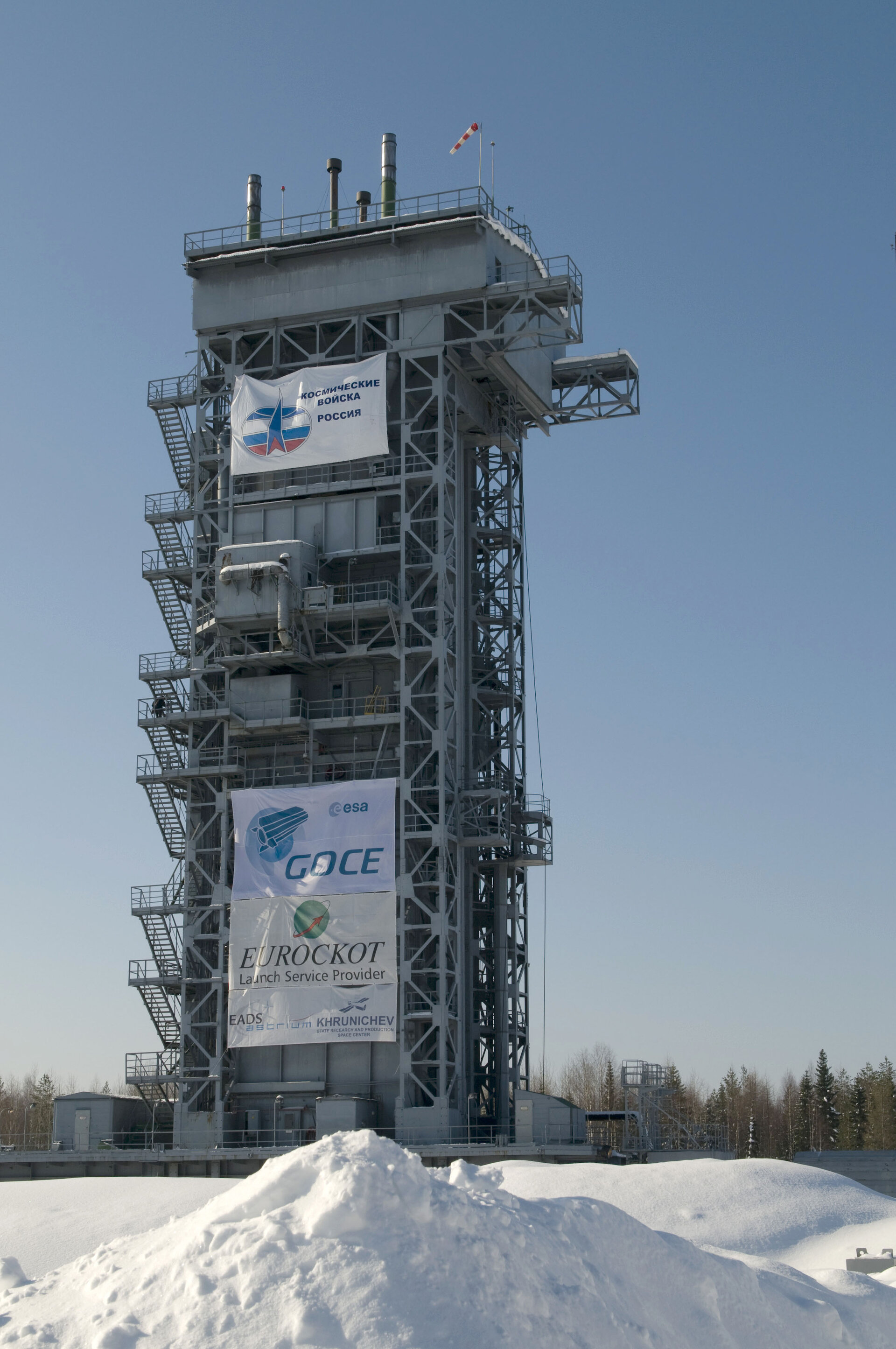
ESA's gravity satellite moves to launch pad
With liftoff just five days away, ESA's GOCE spacecraft – encased in the protective half-shells of the launcher fairing – has been transported from the cleanroom and installed in the launch tower at the Plesetsk Cosmodrome in northern Russia.
The Upper Composite, which comprises the Gravity field and steady-state Ocean Explorer (GOCE) satellite joined to the Breeze-KM Upper Stage of the Rockot launcher and sealed within the fairing, was protected by a thermal cover and transported by rail from the cleanroom to the launch pad 5 km away. The weather conditions in Plesetsk are very cold at the moment – the ground covered in snow and temperatures well below freezing. However, these conditions do not hamper operations.

The next step was to hoist the Upper Composite to the seventh floor of the service tower where it has been joined to the rest of the Rockot launcher. Operations will continue over the coming days in readiness for launch on Monday 16 March at 15:21 CET (14:21 GMT, 17:21 local time).
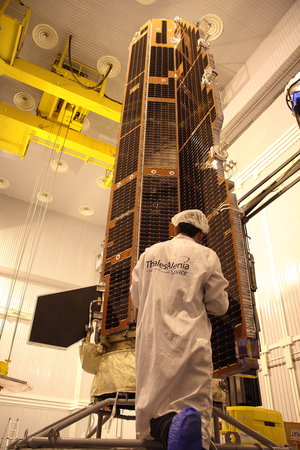
GOCE has been undergoing preparations for launch since it was taken out of storage around three weeks ago. These launch campaign activities included a series of mechanical and electrical tests, mating to the Upper Stage and finally encapsulation in the launcher fairing.
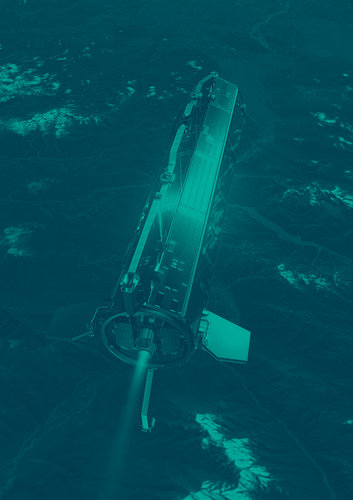
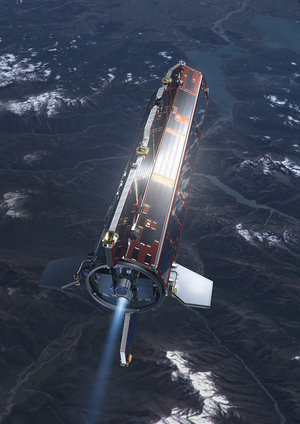
GOCE is ESA's first Earth Explorer mission to be placed in orbit and will map global variations in the gravity field with extreme detail and accuracy. This will result in a unique model of the geoid, which is the surface of equal gravitational potential defined by the gravity field.
This model of the gravity field is crucial for deriving accurate measurements of ocean circulation and sea-level change, both of which are affected by climate change. GOCE-derived data are also much needed to understand more about processes occurring inside Earth and for use in practical applications such as surveying and levelling.