Widening Envisat's InSAR view
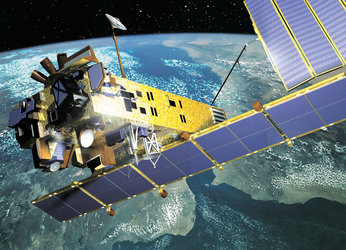
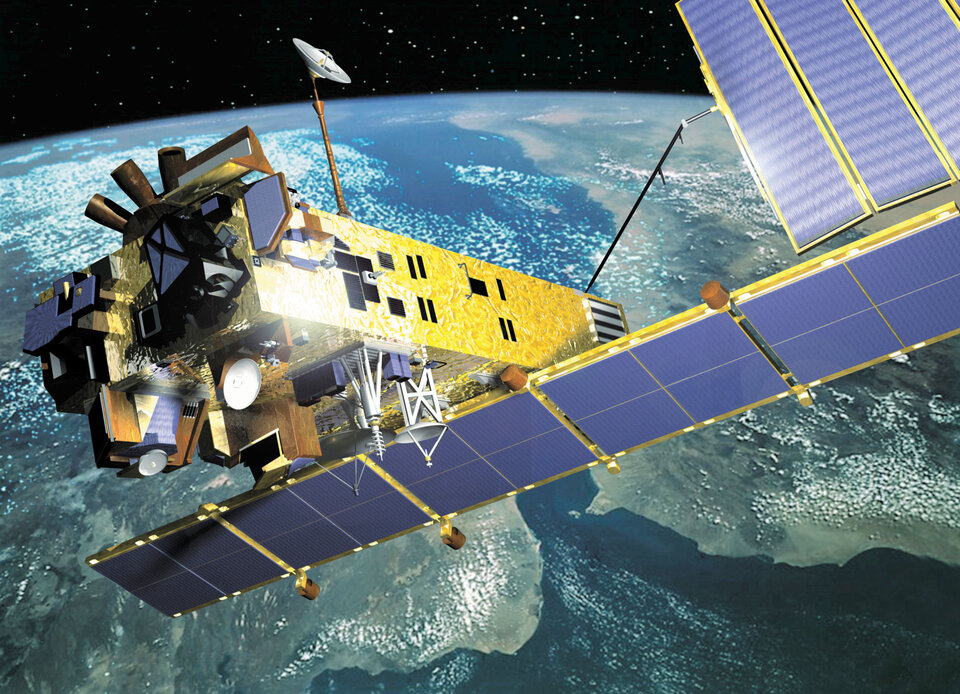
One of the most remarkable abilities of ESA's ten-instrument Envisat satellite is being able to precisely measure elevation, and potentially detect tiny millimetre-scale movements of our planet's surface, using a technique called radar interferometry, or InSAR for short.
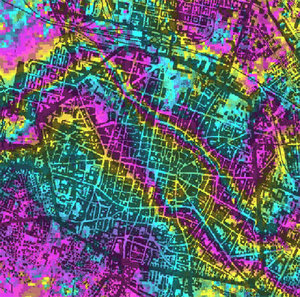
InSAR amounts to a radar-based version of spotting the difference. Combining multiple images of the same scene acquired by its Advanced Synthetic Aperture Radar (ASAR) highlights any slight change that may have occurred between acquisitions (For more information see link: How does interferometry work?).
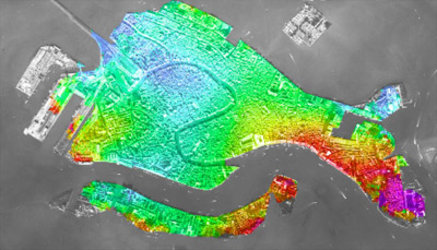
InSAR enables the swift creation of landscape digital elevation models (DEMs), plus precision monitoring of the slow creep of glaciers, landslides and man-made subsidence, identifying underground water aquifers, tracking the extraction of oil and gas supplies, spotting earthquake faults and active volcanoes, and following the slow drift of continental plates.
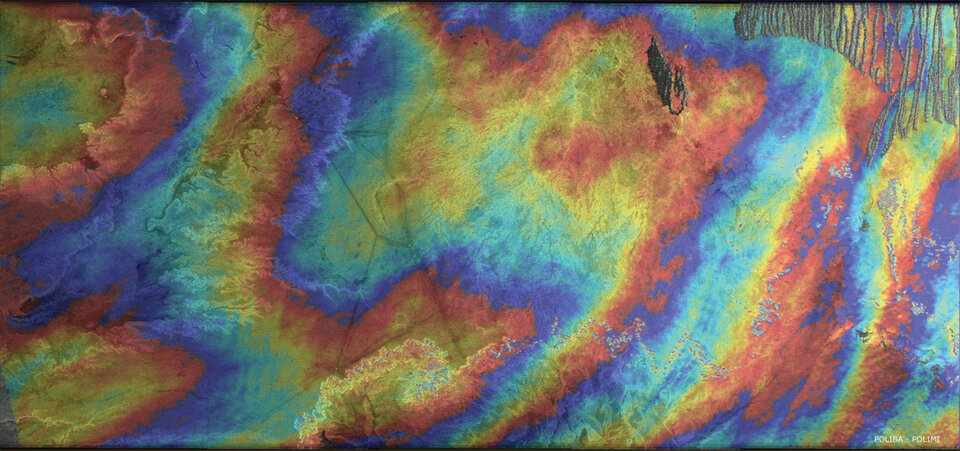
However InSAR only becomes possible with repeat images of an area of interest, implying the widest-area satellite coverage possible. In an extremely promising development, a team from Italy's Politecnico di Milano (Polimi) and Politecnico di Bari (Poliba) has succeeded in performing interferometry that employs the Envisat's ASAR instrument's 400-km Wide Swath Mode (WSM) instead of the 100-km-swath Image Mode (IM) normally used for InSAR.
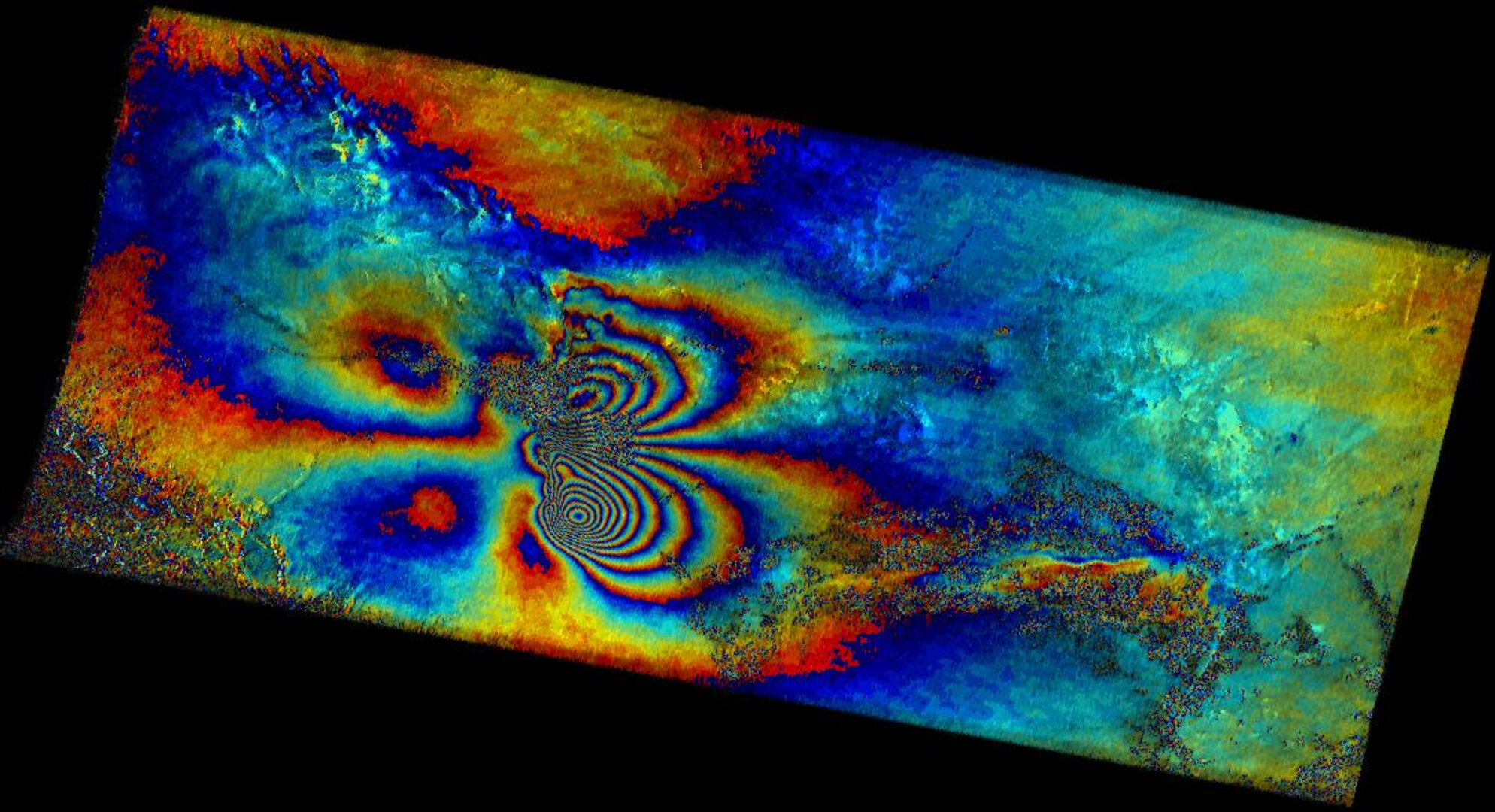
"For the first time we have managed to create WSM/IM interferograms, and also WSM/WSM interferograms," said Andrea Monti Guarnieri of the Politecnico di Milano. "These different ASAR modes were not designed to be routinely compatible in this way but we decided to give it a try with what products we had available.
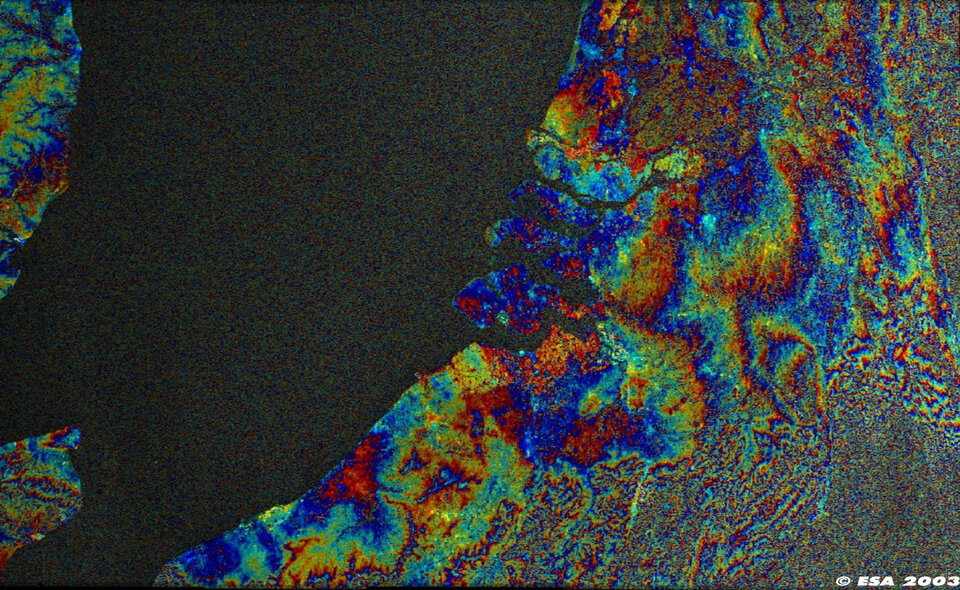
"We are very happy with this achievement because by widening the width of the strip being acquired it potentially enlarges InSAR possibilities by a factor of four, although in practical terms this depends on the mission plan. Of course the resolution is not as good but researchers will see just the same type of fringes, and can use WSM interferograms to study much larger-scale structures.
"In particular WSM/WSM was thought to be very difficult because WSM images are put together by cyclically scanning individual sub-swaths, and this scanning sequence has to be the same for each WSM image for successful InSAR. It will only succeed for WSM images that are synchronised.
"In theory the odds were just one in five of it working each time, but what we found is that three out of five images were compatible in this way. It is a finding that surprised us, but suggests that Envisat's ASAR is more stable or the orbit more precise than pessimism suggested."
The Polimi and Poliba team used two test sites for WSM/WSM interferometry: the coasts of England and Holland – a calibration sensor was sited in the latter country, meaning numerous WSM acquisitions had been carried out here – and also the high-coherence Tademait Plateau in the Algerian desert. InSAR images were successfully created for both sites.
"For the future we are most interested in WSM/WSM interferometry," added Monti Guarnieri. "Envisat actually has multiple ASAR modes, with WSM the default over the sea and coastal areas. While seascapes are not relevant to interferometry, coastlines and islands certainly are.
"And looking ahead to future spacecraft missions, it is likely that radar sensors will operate in WSM mode by default - having been designed to work with synchronisation to make InSAR feasible at all times - switching to full resolution when required."