Vital stats
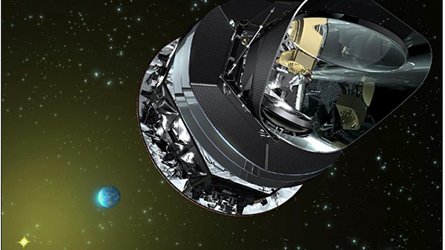
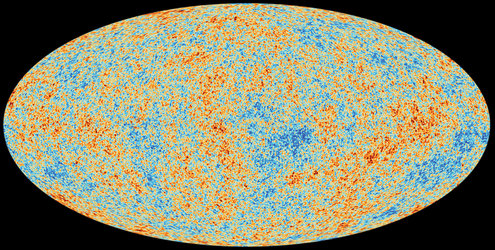
Planck offered vastly improved performance in measuring the Cosmic Microwave Background (CMB) radiation compared to balloon-borne and ground-based experiments and exceeded the performance of any previous space-based instruments of this kind.
The spacecraft revolved about its Sun-pointing axis once per minute to stabilise its attitude. Planck used this stabilisation spin to scan the sky, observing at least 95% of it through two separate observation periods in a span of 15 months.
| The Planck spacecraft | |
|---|---|
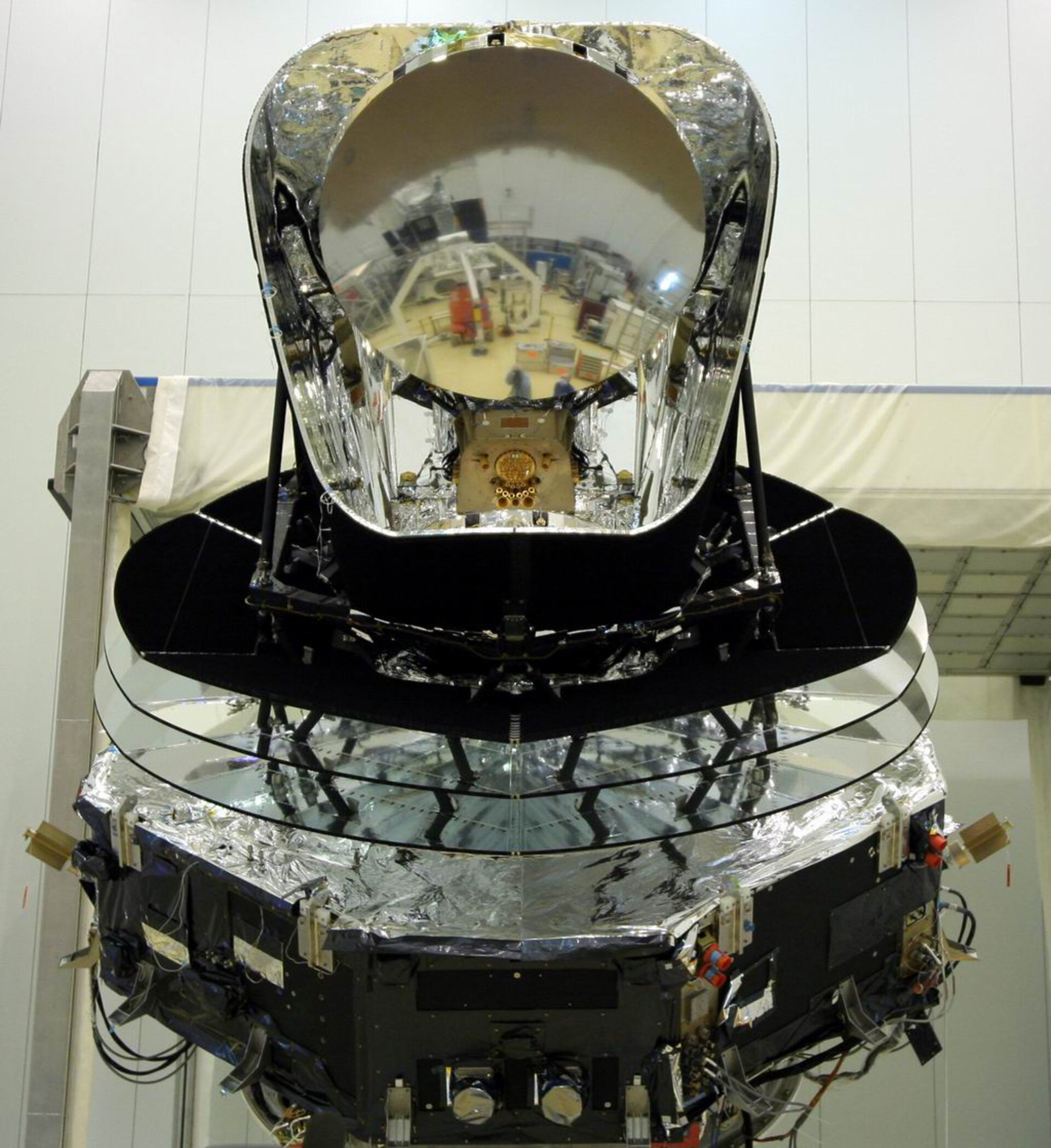
| Dimensions | 4.20 x 4.22 m (height x width) |
| Mass | 1.95 tonnes at launch |
| Spacecraft | Spin stabilised, 1 rpm |
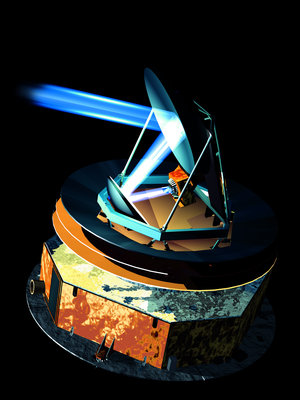
| Telescope mirror | 1.9 x 1.5 m primary reflector |
| Telescope mass | 205 kg with focal plane unit |
| Lifetime | A minimum of 15 months, limited by degradation of cooling system |
| Operational orbit | Lissajous orbit at an average distance of 400 000 km from L2 |
| Propulsion | Hydrazine, 12 thrusters x 20 N each, 4 thrusters x 1 Newton each |
| Solar arrays | Flat, fixed triple-junction Gallium-Arsenide cell panels on rear of spacecraft |
| Solar array area: 13m2 | |
| Batteries | 39 Ah lithium ion batteries |
| Communication |
3 x low gain antennae 1 x medium gain antenna |