
Planck overview
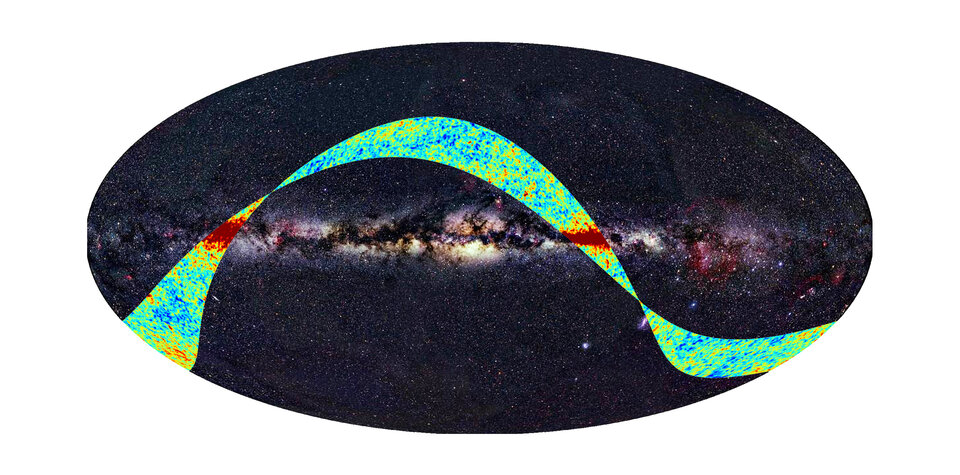
Launched: 14 May 2009
Status: Completed
Objective: To map the relic radiation from the Big Bang with improved sensitivity and resolution, and testing theories on the birth and evolution of the Universe
Mission
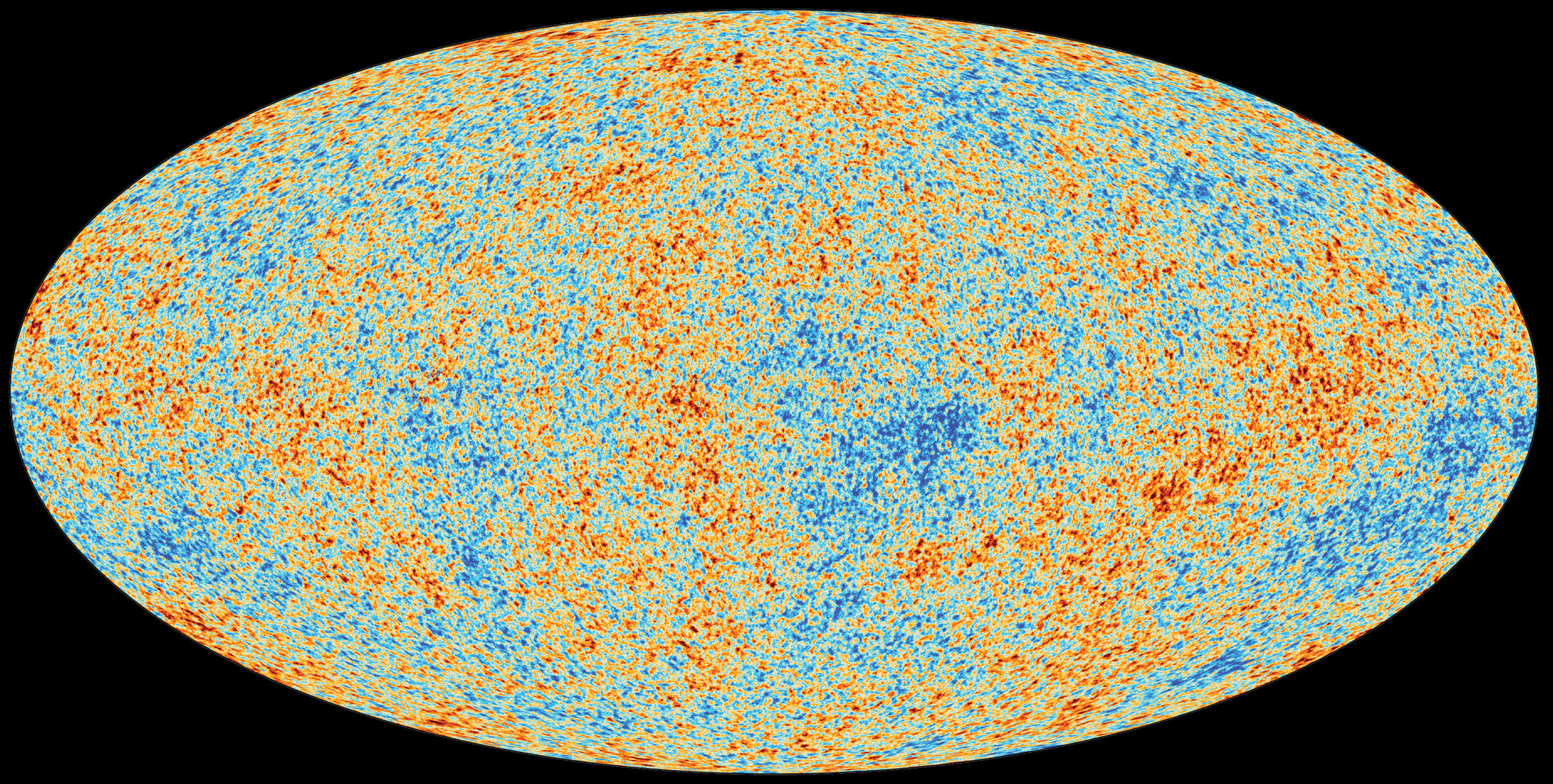
Planck was ESA’s time machine, looking back to the dawn of time close to the Big Bang, about 13.7 billion years ago. Planck's objective was to analyse, with the highest accuracy ever achieved, the remnants of the radiation that filled the Universe immediately after the Big Bang – observed today as the Cosmic Microwave Background (CMB).
The mission's results helped astronomers decide which theories on the birth and evolution of the Universe are correct, for example, did the Universe start its life with a rapid period of expansion?
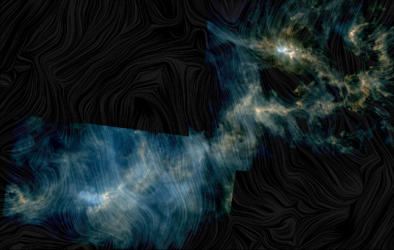
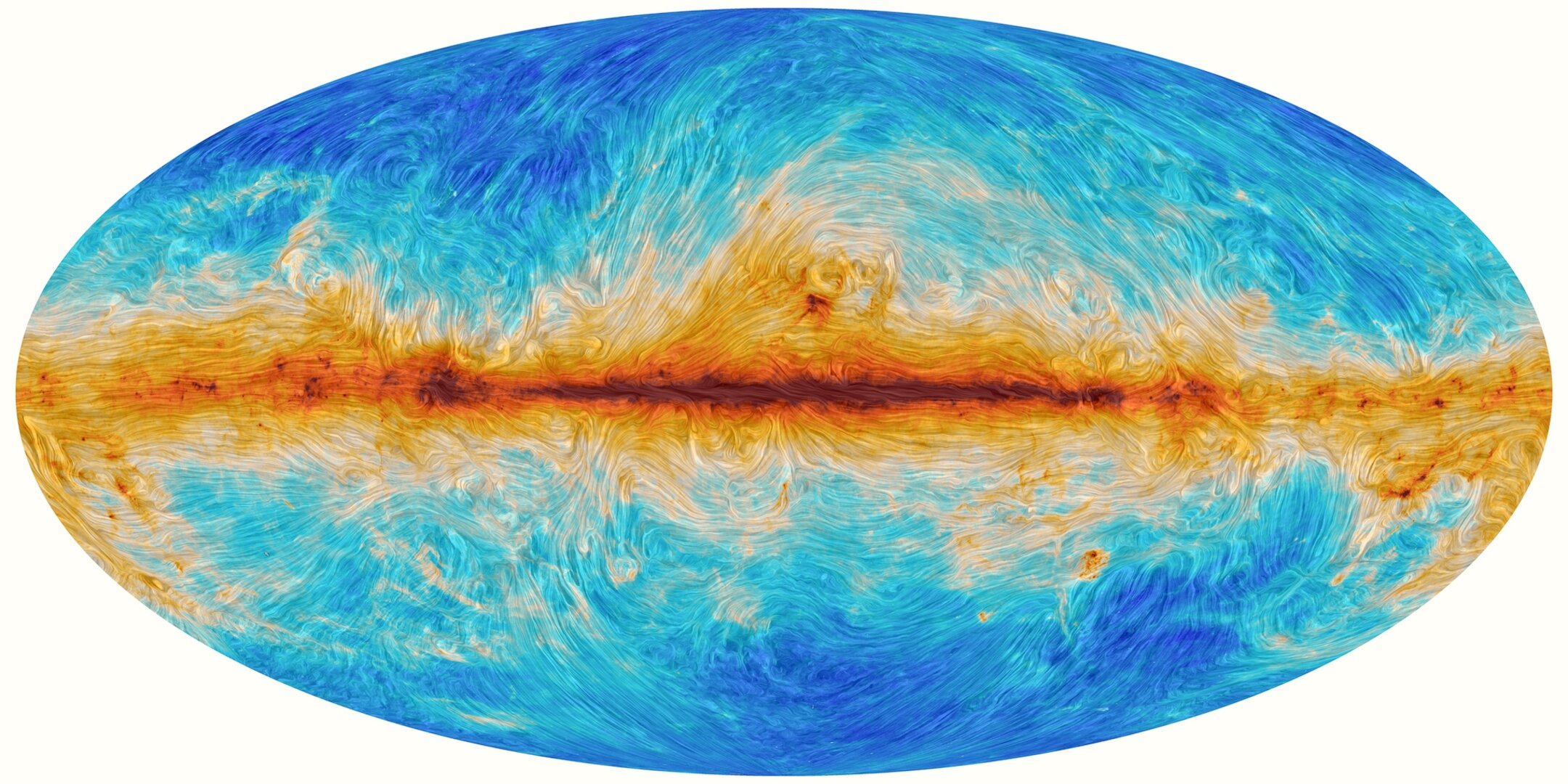
But first, Planck had to detect and understand the foreground emissions that lie between us and the Universe’s first light. Planck’s first scientific data and results were released in January 2011, and its first cosmological results were published in March 2013.
What’s special?
Planck was Europe's first mission to study the relic radiation from the Big Bang.
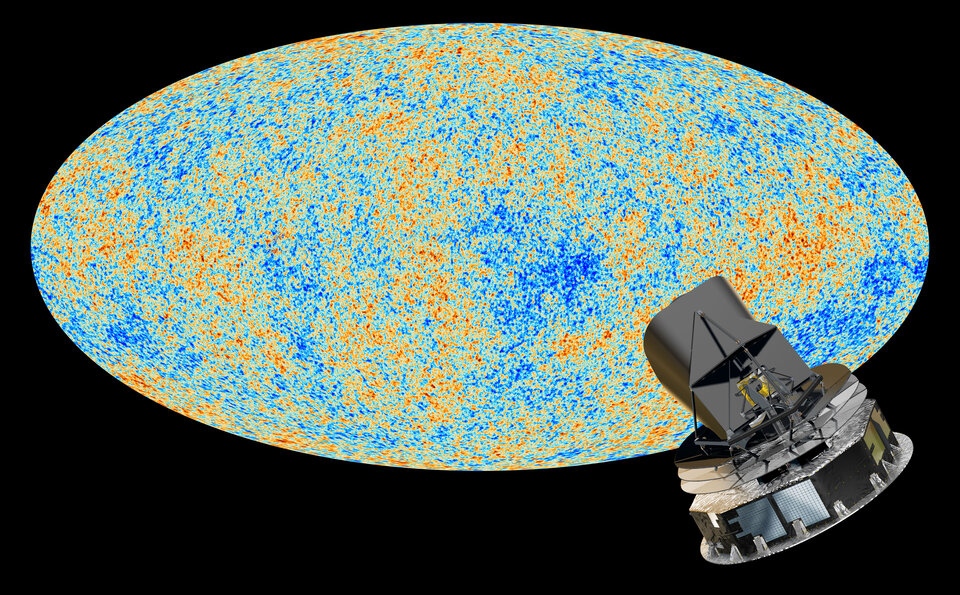
The temperature of this CMB radiation had already been measured as approximately 2.7 K, but Planck provided even more precise measurements with an accuracy set by fundamental astrophysical limits. In other words, it will be impossible to ever take better images of this radiation than those obtained from Planck.
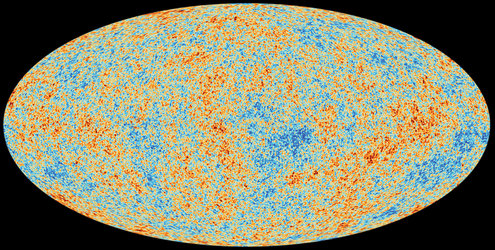
Scientists also know from previous observations that slightly hotter or colder patches – anisotropies – appear in the sky, different by one part in 100 000. These differences in temperature are the imprints left in the CMB by the primeval 'seeds' of today's huge concentrations of matter – galaxies and galaxy clusters, for example. Planck's high sensitivity resulted in the best ever map of anisotropies in the CMB, enabling scientists to learn more about the evolution of structure in the Universe.
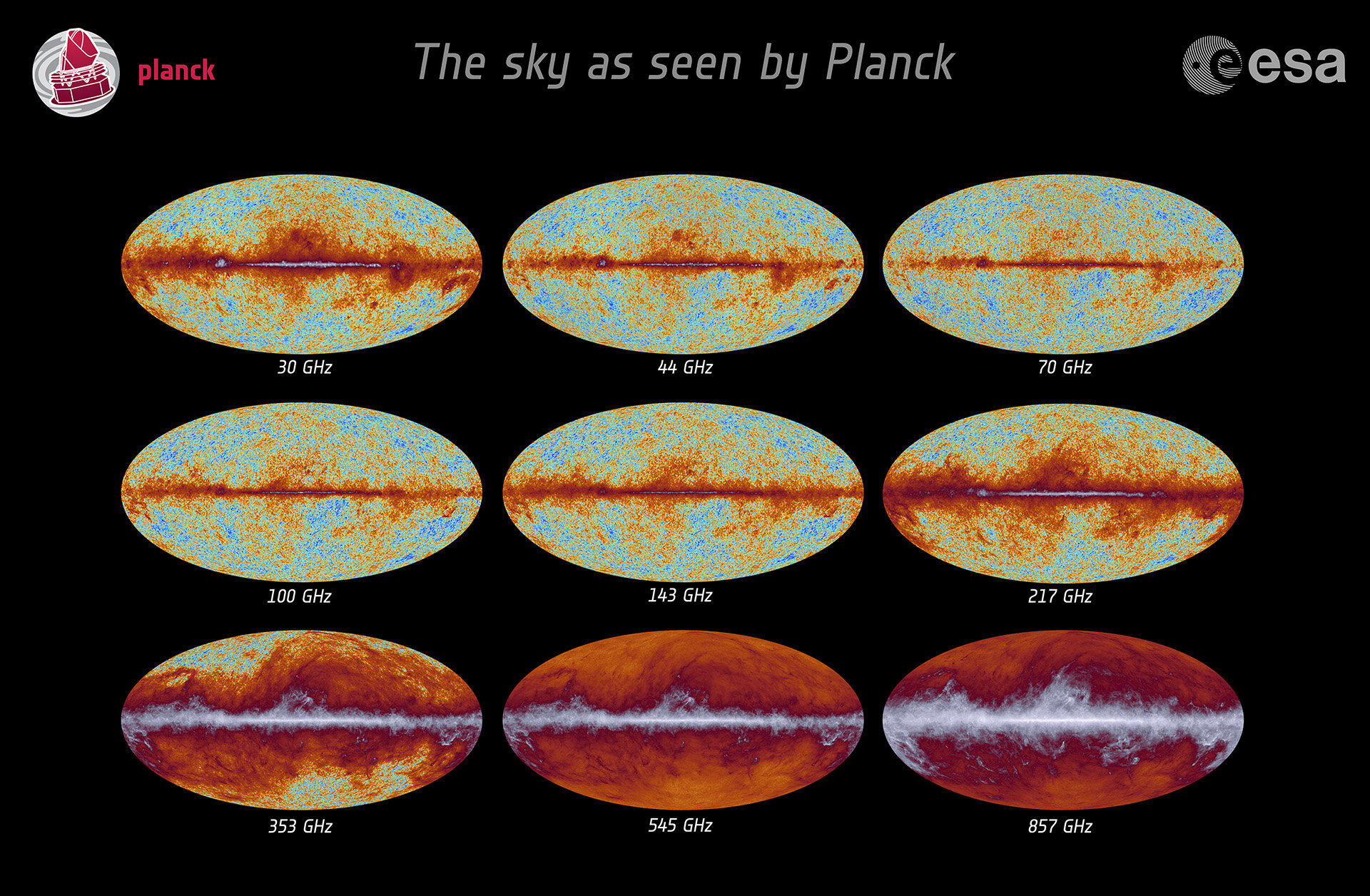
To complete these highly sensitive measurements, Planck observed in nine wavelength bands, from one centimetre to one third of a millimetre, corresponding to a range of wavelengths from microwaves to the very far infrared. Planck’s detectors were cooled to temperatures very close to the absolute zero, otherwise their own emission of heat would spoil the measurements.
Spacecraft
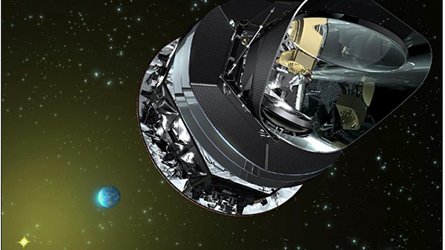
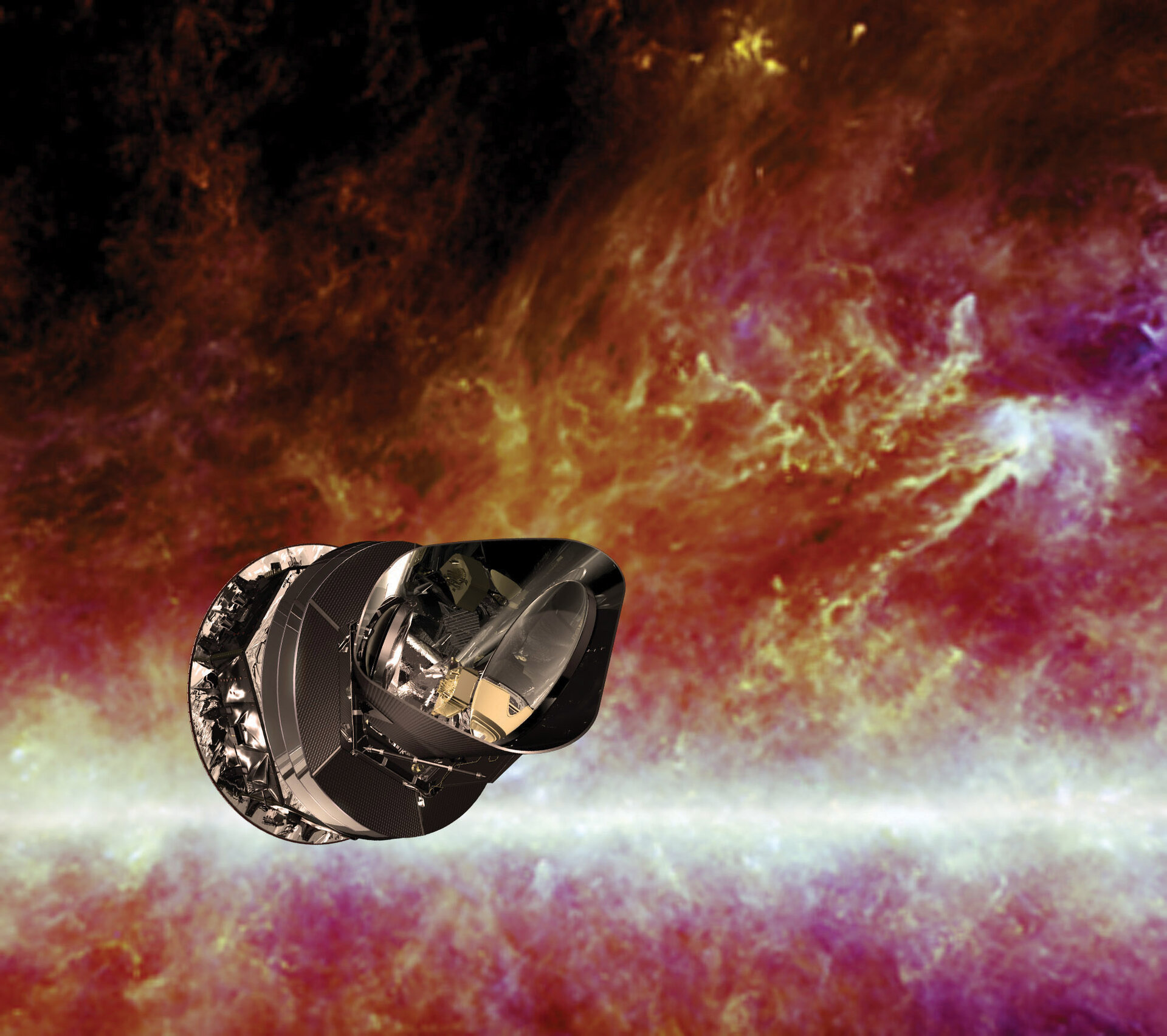
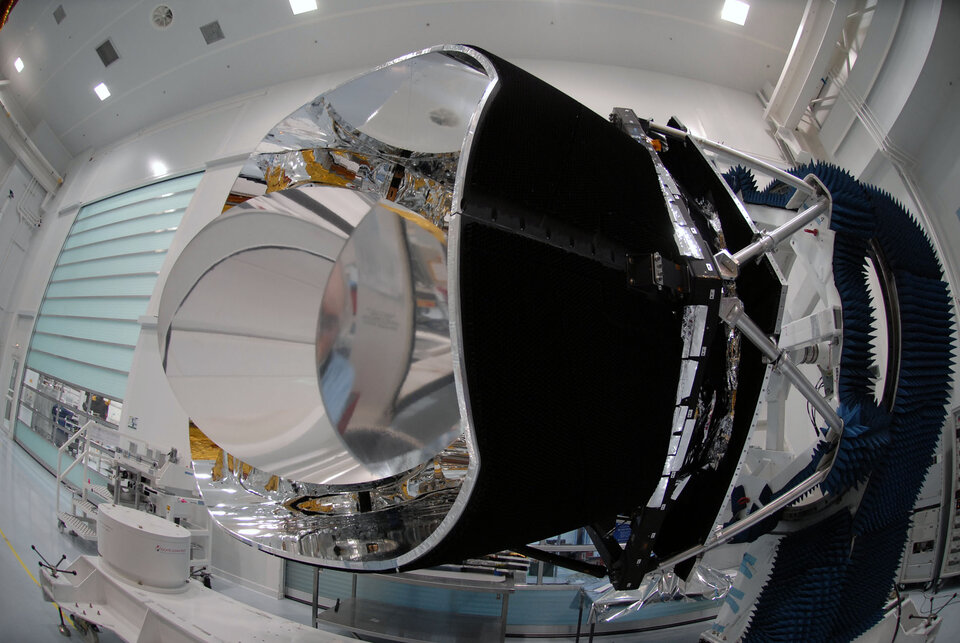
The Planck spacecraft was approximately 4.2 m high and 4.2 m wide. The primary mirror was 1.5 m and was accompanied by two science instruments: the Low Frequency Instrument (LFI), which operated between 30 and 70 GHz, and the High Frequency Instrument (HFI), which operated between 100 and 857 GHz.
HFI completed its survey in January 2012. LFI continued to operate, with science operations concluding in October 2013.
Journey
Planck launched on 14 May 2009 on an Ariane 5 from ESA’s Spaceport in Kourou, French Guiana. It shared a ride into orbit with ESA's Herschel spacecraft. The two spacecraft operated independently.
Planck operated from a Lissajous orbit around the second Lagrangian point of the Sun–Earth system (L2), a virtual point located 1.5 million km from Earth in the direction opposite to the Sun.

History
Planck was formerly called COBRAS/SAMBA (Cosmic Background Radiation Anisotropy Satellite and Satellite for Measurement of Background Anisotropies), since the mission grew out of a pair of proposals with similar objectives.
It was renamed on approval of the mission in 1996 in honour of the German scientist Max Planck (1858-1947) who won the Nobel Prize for Physics in 1918.
ESA's Planck observatory followed NASA’s Cosmic Background Explorer, COBE, and the Wilkinson Microwave Anisotropy Probe, WMAP.
Partnerships
The Prime Contractor for the Planck satellite was Alcatel Alenia Space (Cannes, France), which lead a consortium of industrial partners with the Alcatel Alenia Space industry branch in Torino, Italy, responsible for the Service Module. ESA and the Danish National Space Centre (Copenhagen, Denmark, funded by the Danish Natural Science Research Council) were responsible for the provision of Planck’s telescope mirrors, manufactured by EADS Astrium (Friedrichshafen, Germany).
The Low Frequency Instrument was designed and built by a Consortium (led by the Istituto di Astrofisica Spaziale e Fisica Cosmica (IASF) in Bologna, Italy) of scientists and Institutes from Italy, Finland, the United Kingdom, Spain, the United States, Germany, The Netherlands, Switzerland, Norway, Sweden and Denmark.
The High Frequency Instrument (HFI) was designed and built by a Consortium (led by the Institut d'Astrophysique Spatiale (CNRS) in Orsay, France) of scientists and Institutes from France, the United States, the United Kingdom, Canada, Italy, Spain, Ireland, Germany, The Netherlands, Denmark and Switzerland.
Many funding agencies contributed to the LFI and HFI instruments hardware; the major ones were: CNES (F), ASI (I), NASA (USA), PPARC (UK), Tekes (FIN), Ministerio de Educación y Ciencia (Spain), and ESA.