Looking into the eye of the solar tiger
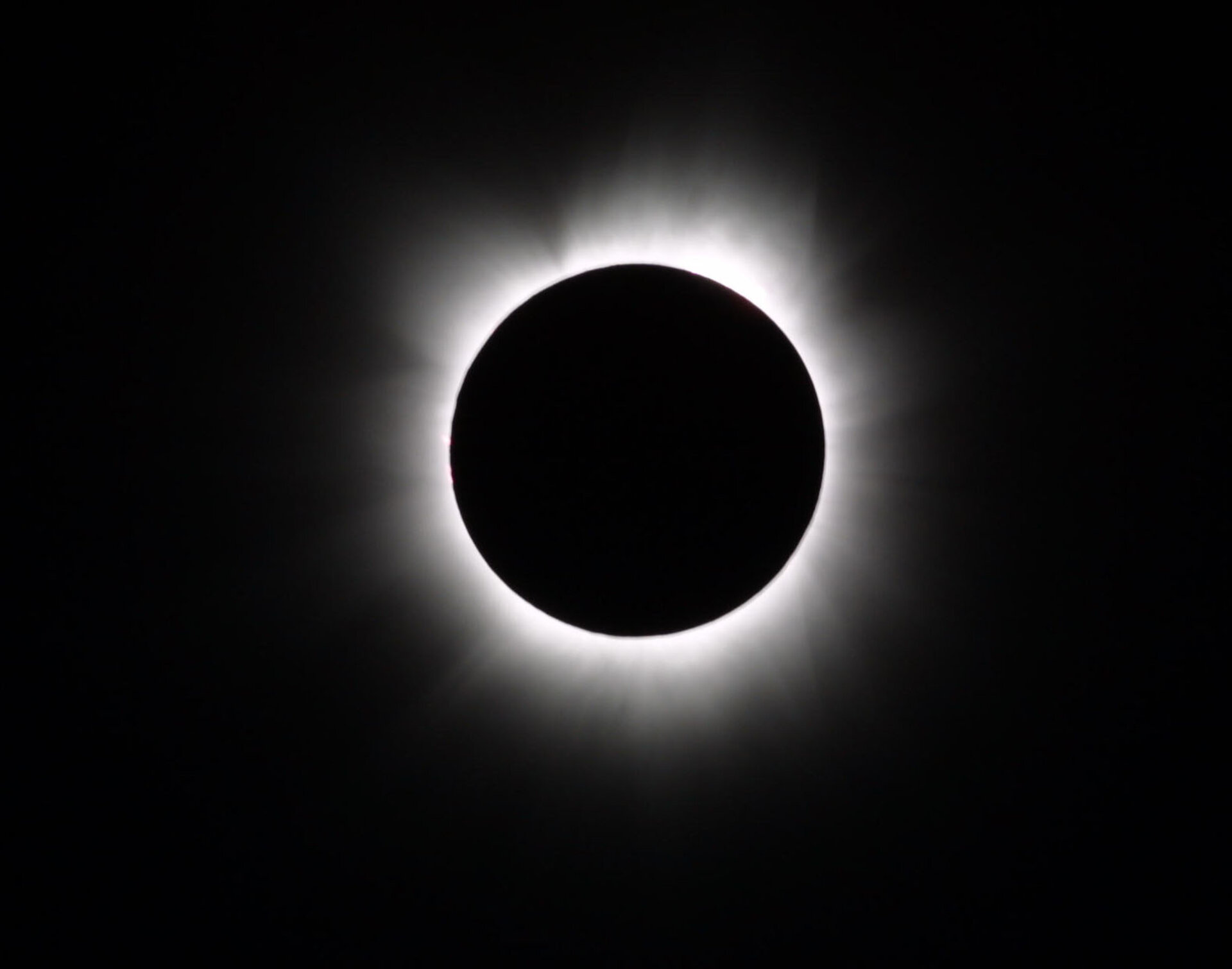
The calm appearance of the Sun seen from Earth by visible light is deceptive. Our ancestors had hints that something more ferocious was going on, in the streaky atmosphere revealed during total eclipses of the Sun…
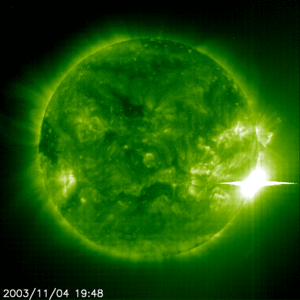
Telescopes in space, able to see the ultraviolet light and X-rays coming from the solar atmosphere, eventually revealed a ‘raging tiger’ that is never still.
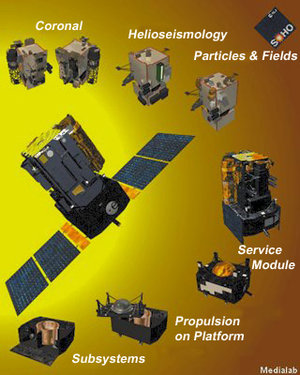
With an exceptional collection of instruments, SOHO has monitored the events more systematically than ever before, and has watched the Sun’s output of visible and invisible light changing from year to year according to the intensity of activity.
Movies made from SOHO images show contortions due to magnetic fields that arch and clash together, producing magnetic explosions. These release bursts of high-energy atomic particles and create the intense flashes called solar flares.

Discoveries by SOHO have included shocks passing through the solar atmosphere like ripples in a pond, and tornadoes the size of Africa swirling near the Sun’s poles.
Thousands of small explosions that occur every day, due to a continual rearrangement of tangled magnetic fields, may explain how the solar atmosphere acquires a temperature of millions of degrees. Gas leaking through a honeycomb of magnetic bubbles turns out to be the source of most of the solar wind.
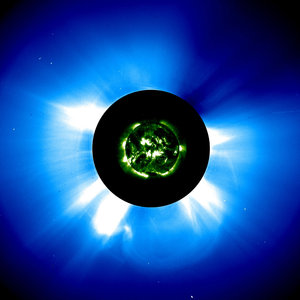
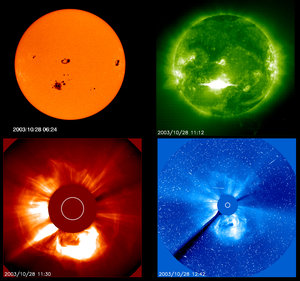
Especially remarkable are SOHO’s observations of the coronal mass ejections, or CMEs, in which the Sun sends huge puffs of gas out into the Solar System.
CMEs occur almost daily and involve millions of tonnes of gas travelling at hundreds of kilometres per second. Most mass ejections either miss Earth or are too small to be troublesome.
SOHO has shown itself uniquely competent in identifying big mass ejections heading our way. Disturbances of Earth’s environment may follow two or three days later.
Engineers responsible for satellites and for power and communications systems on the ground, which are vulnerable to space weather, can now be alerted in good time.
For the scientists such practical matters are linked to advances in basic understanding of the Sun’s behaviour. The seemingly random events turn out to be signs of good housekeeping.
The CMEs keep sweeping away into space the untidy magnetic fields associated with sunspots. A busy period of ‘spring cleaning’ after the count of sunspots has peaked leaves the Sun with its main magnetic field completely overturned, and its north and south magnetic poles swapped around
For more information:
Bernhard Fleck, ESA SOHO Project Scientist
E-mail: bfleck @ esa.nascom.nasa.gov