Space Science About Space ScienceESA's 'Cosmic Vision'Science & Technology in-depthMultimedia Science imagesScience videosAnimationsDownloadsSounds from spaceMedia centre Press ReleasesPress kitsESA TelevisionResources Reference sectionGlossaryFAQs Science missions Services HelpLegal disclaimerCommentsSubscribeFollow us RSS feeds ESA Sci on Twitter
|  |  |  |  | | | Lava flows in Daedalia Planum 9 October 2009
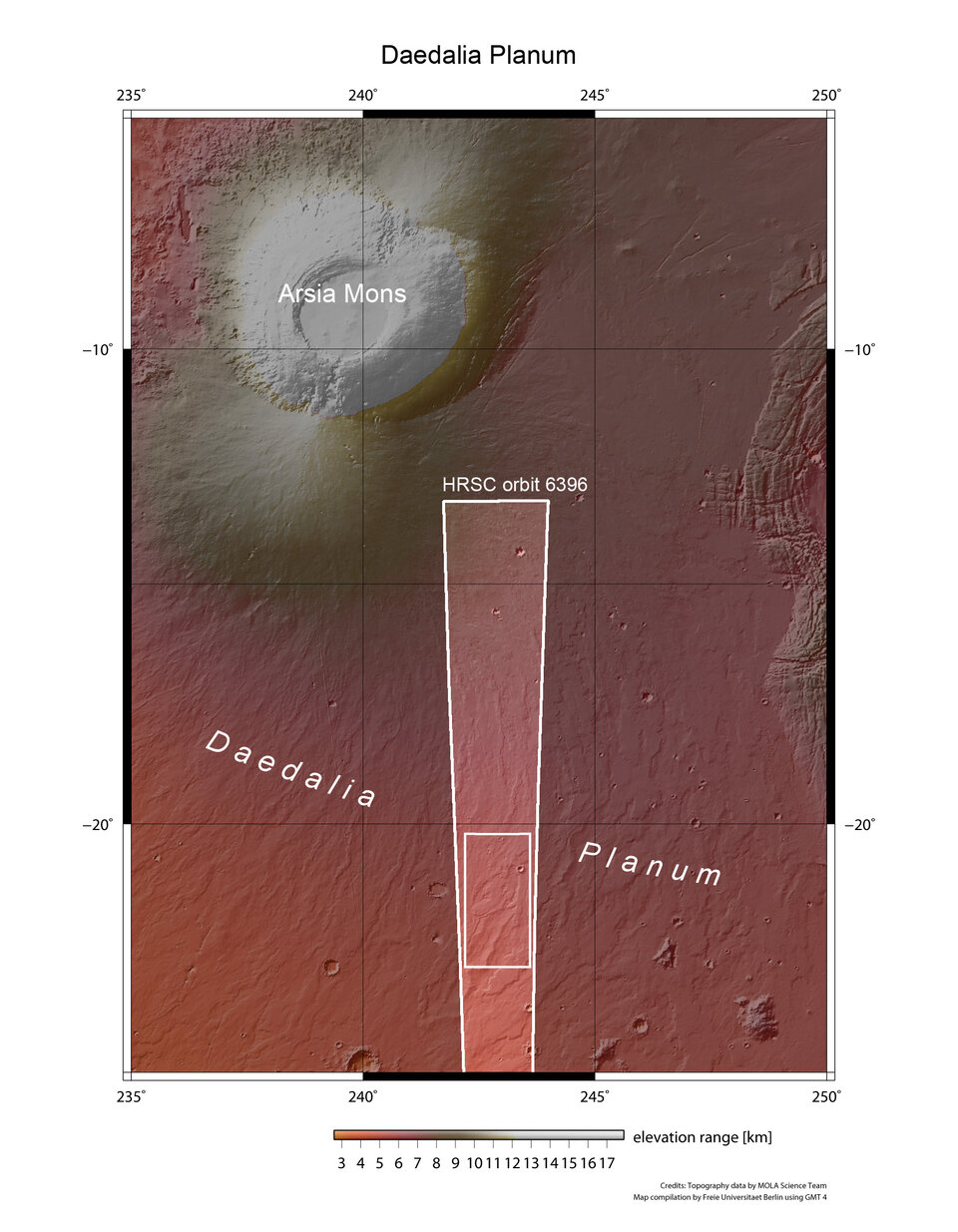
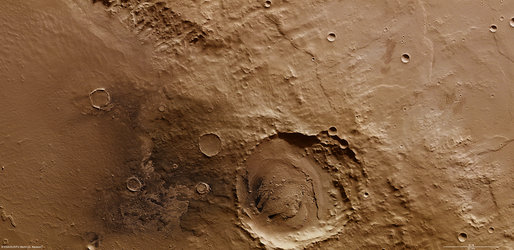
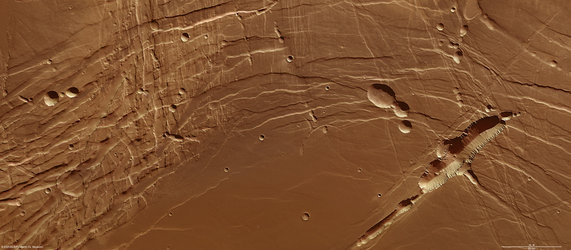
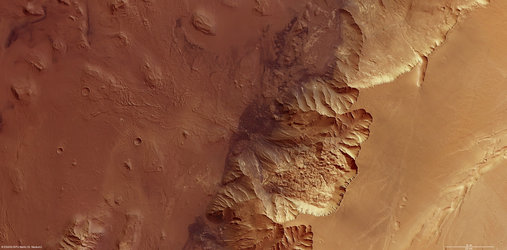
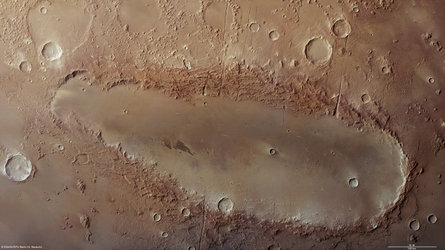
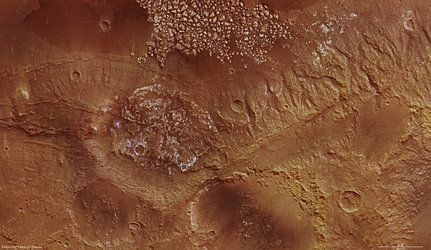
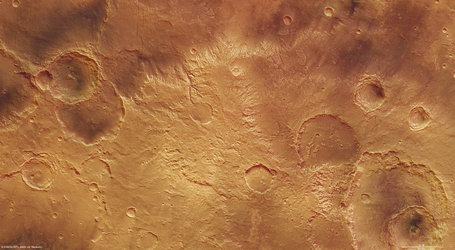
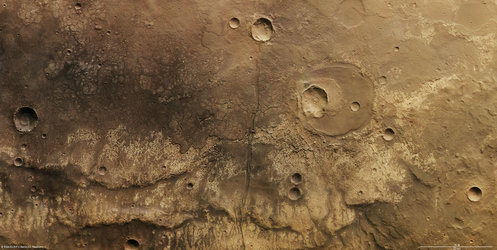
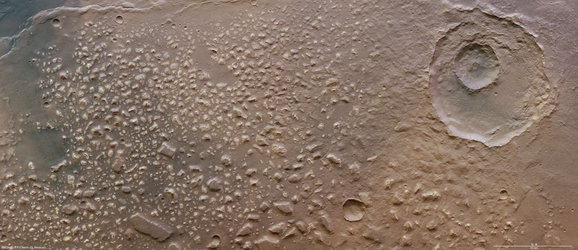
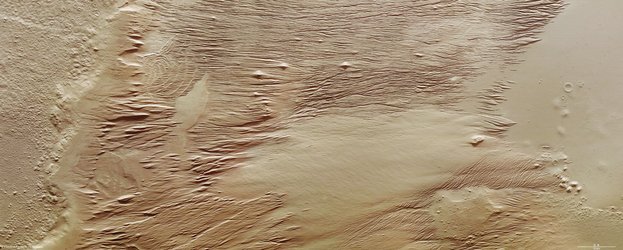
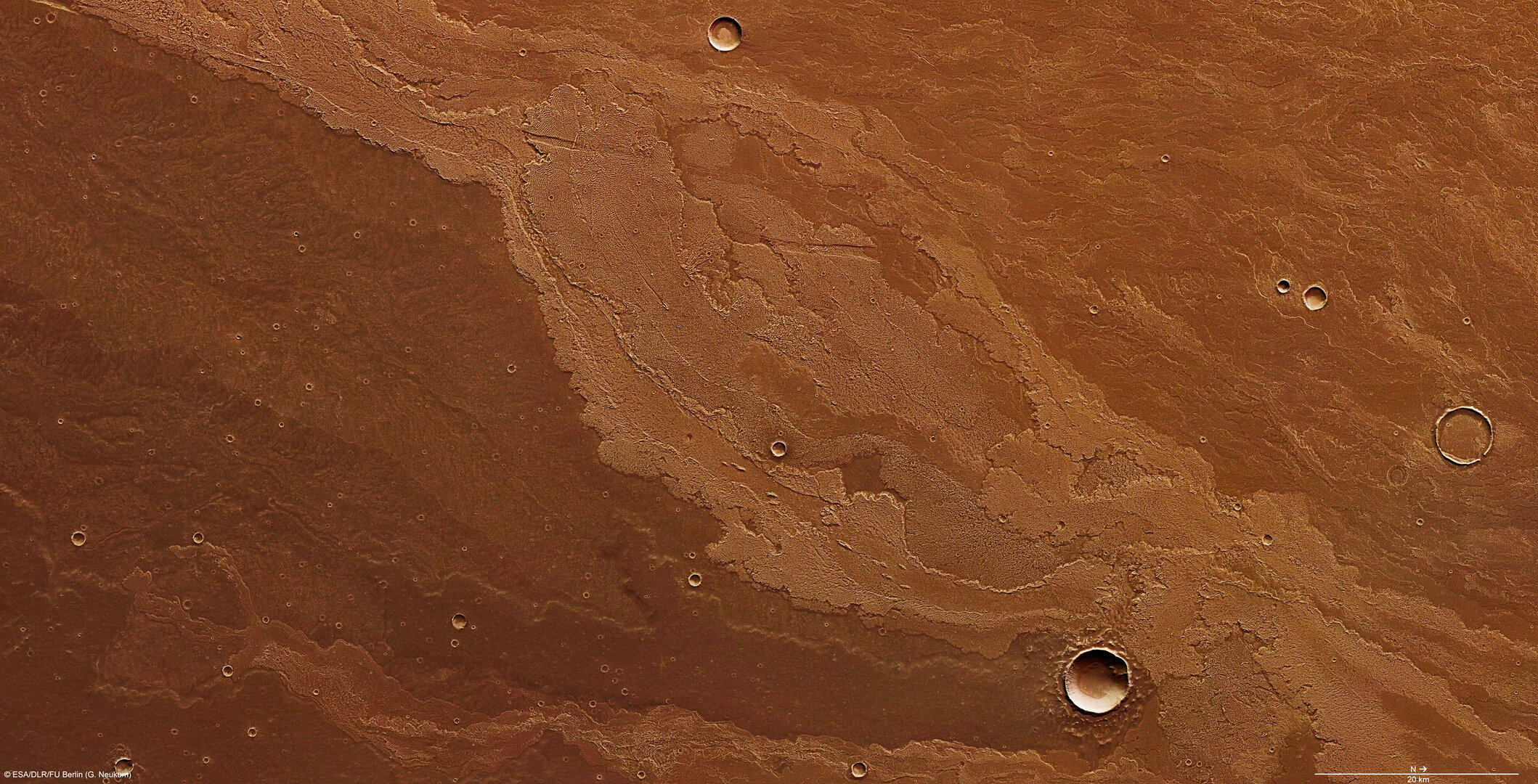
 | Daedalia Planum is a sparsely cratered, untextured plain that lies to the south-east of Arsia Mons, one of the largest volcanoes on Mars. It is 350 km in diameter and rises 14 km. The plain is dominated by numerous lava flows of varying ages.
The images are centred at 21°S/ 243°E. They cover about 150 x 75 km or 11 250 sq km, an area roughly the size of Jamaica, and have a ground resolution of about 17m/pixel.
Credits: ESA/DLR/FU Berlin (G. Neukum) |  |  |  |  |
| | | |  | Daedalia Planum is a sparsely cratered, untextured plain that lies to the south-east of Arsia Mons, one of the largest volcanoes on Mars. It is 350 km in diameter and rises 14 km. The plain is dominated by numerous lava flows of varying ages.
The images are centred at 21°S/ 243°E. They cover about 150 x 75 km or 11 250 sq km, an area roughly the size of Jamaica, and have a ground resolution of about 17m/pixel.
Credits: FU Berlin/MOLA |  |  |  |  |
| | | |  | Daedalia Planum is a sparsely cratered, untextured plain that lies to the south-east of Arsia Mons, one of the largest volcanoes on Mars. It is 350 km in diameter and rises 14 km. The plain is dominated by numerous lava flows of varying ages.
The images are centred at 21°S/ 243°E. They cover about 150 x 75 km or 11 250 sq km, an area roughly the size of Jamaica, and have a ground resolution of about 17m/ pixel.
Credits: ESA/DLR/FU Berlin (G. Neukum) |  |  |  |  |
| | | |  | Daedalia Planum is a sparsely cratered, untextured plain that lies to the south-east of Arsia Mons, one of the largest volcanoes on Mars. It is 350 km in diameter and rises 14 km. The plain is dominated by numerous lava flows of varying ages.
The images are centred at 21°S/ 243°E. They cover about 150 x 75 km or 11 250 sq km, an area roughly the size of Jamaica, and have a ground resolution of about 17m/ pixel.
Credits: ESA/DLR/FU Berlin (G. Neukum) |  |  |  |  |
| | | |  | Daedalia Planum is a sparsely cratered, untextured plain that lies to the south-east of Arsia Mons, one of the largest volcanoes on Mars. It is 350 km in diameter and rises 14 km. The plain is dominated by numerous lava flows of varying ages.
The images are centred at 21°S/ 243°E. They cover about 150 x 75 km or 11 250 sq km, an area roughly the size of Jamaica, and have a ground resolution of about 17m/ pixel.
Credits: ESA/DLR/FU Berlin (G. Neukum) |  |  |  |  |
| | | |  | Daedalia Planum is a sparsely cratered, untextured plain that lies to the south-east of Arsia Mons, one of the largest volcanoes on Mars. It is 350 km in diameter and rises 14 km. The plain is dominated by numerous lava flows of varying ages.
The images are centred at 21°S/ 243°E. They cover about 150 x 75 km or 11 250 sq km, an area roughly the size of Jamaica, and have a ground resolution of about 17m/ pixel.
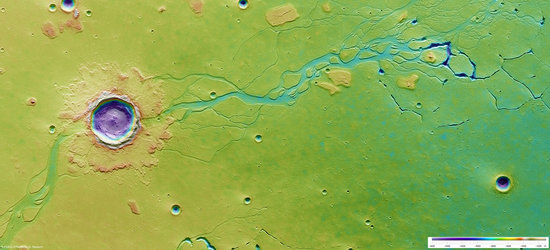
This ortho-image was rectified using elevation data derived from a high-resolution Digital Terrain Model, or DTM (obtained from HRSC data), such that distortions introduced during imaging are corrected. Such an image can be used to derive maps. Elevation data from the DTM has been colour-coded and overlain on the ortho-image so that elevation data and the image itself are displayed in a single scene.
The scale is in metres.
Credits: ESA/DLR/FU Berlin (G. Neukum) |  |  |  |  |
| | | |  | Daedalia Planum is a sparsely cratered, untextured plain that lies to the south-east of Arsia Mons, one of the largest volcanoes on Mars. It is 350 km in diameter and rises 14 km. The plain is dominated by numerous lava flows of varying ages.
The images are centred at 21°S/ 243°E. They cover about 150 x 75 km or 11 250 sq km, an area roughly the size of Jamaica, and have a ground resolution of about 17m/ pixel.
Credits: ESA/DLR/FU Berlin (G. Neukum) |  |  |  |  |
| | | |  | Daedalia Planum is a sparsely cratered, untextured plain that lies to the south-east of Arsia Mons, one of the largest volcanoes on Mars. It is 350 km in diameter and rises 14 km. The plain is dominated by numerous lava flows of varying ages.
The images are centred at 21°S/ 243°E. They cover about 150 x 75 km or 11 250 sq km, an area roughly the size of Jamaica, and have a ground resolution of about 17m/ pixel.
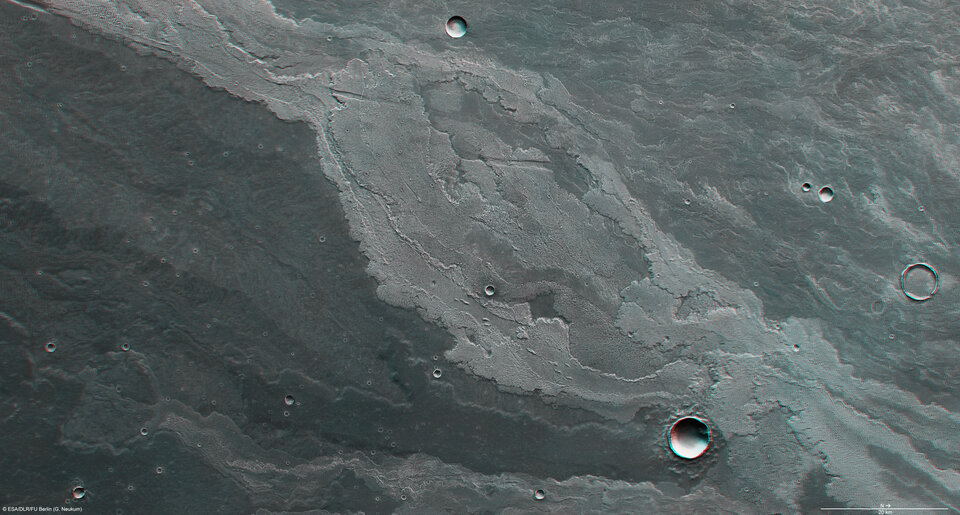
The map shows two lava flows (1): the younger flow (upper portion visible in nadir images) exhibits flow structures, pressure ridges as well as the central lava channel (upper right corner). An older flow visible in the lower portion has a smoother surface owing to gradual accumulation of sediments.
Two striking depressions lying almost at right angles to the lava flow are also visible in the upper portion of the imaged region (2 and 3). These structures are related to grabens that existed earlier (grabens are depressional features formed by faults in the crust).
It is likely that the lava flows invaded the grabens partially or filled them up completely. Where a graben was only partially filled, the original dimensions are still recognisable.
In the upper left of the nadir image is a portion of this feature that remains unmodified by the younger lava flows.
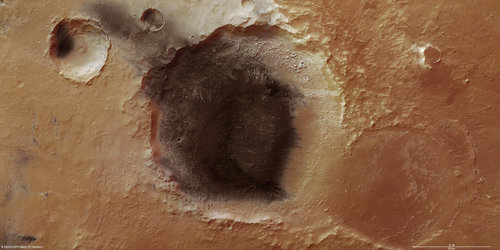
Existing impact craters have also been transformed by the lava flows. The two larger craters show different stages of modification (visible in the 3D image). The largest crater (bottom) was not affected by the lava flow but the ejecta blanket formed during the impact is partially covered in lava.
The second largest crater has been flooded almost entirely, although minor portions of the rim are still preserved. It is likely that the lava entered through a breach in the rim, filling it up. Fully covered impact craters, whose outlines are still visible, are also known as ghost craters. One such ghost crater is located in the immediate vicinity of the second largest impact crater.
Credits: ESA/DLR/FU Berlin (G. Neukum) |  |  |  |  |
| | | |  | Daedalia Planum is a sparsely cratered, untextured plain that lies to the south-east of Arsia Mons, one of the largest volcanoes on Mars. It is 350 km in diameter and rises 14 km. The plain is dominated by numerous lava flows of varying ages.
The images are centred at 21°S/ 243°E. They cover about 150 x 75 km or 11 250 sq km, an area roughly the size of Jamaica, and have a ground resolution of about 17m/ pixel.
The map shows two lava flows: the younger flow (upper portion visible in nadir images) exhibits flow structures, pressure ridges as well as the central lava channel (upper right corner). An older flow visible in the lower portion has a smoother surface owing to gradual accumulation of sediments.
Two striking depressions lying at right angles to the lava flow are also visible in the upper portion of the imaged region. These structures are related to grabens that existed earlier (grabens are depressional features formed by faults in the crust).
It is likely that the lava flows invaded the grabens partially or filled them up completely. Where a graben was only partially filled, the original dimensions are still recognisable.
In the upper left of the nadir image is a portion of this feature that remains unmodified by the younger lava flows.
Existing impact craters have also been transformed by the lava flows. The two larger craters show different stages of modification (visible in the 3D image). The largest crater (bottom) was not affected by the lava flow but the ejecta blanket formed during the impact is partially covered in lava.
The second largest crater has been flooded almost entirely, although minor portions of the rim are still preserved. It is likely that the lava entered through a breach in the rim, filling it up. Fully covered impact craters, whose outlines are still visible, are also known as ghost craters. One such ghost crater is located in the immediate vicinity of the second largest impact crater.
Credits: ESA/DLR/FU Berlin (G. Neukum) |  |  |  |  |
| |
|  | Mars Express image browser Mars Express on YouTube Traces of Martian lifeRelated articles Mars Express close flybys of martian moon PhobosWind and water have shaped Schiaparelli on MarsLight and dark in the Phoenix LakeMars: how low can you go?Mars’s mysterious elongated craterRocky mounds and a plateau on MarsWet era on early Mars was globalVolcanic ash in Meridiani PlanumCraters young and old in Sirenum FossaeCraters, lava flows and tectonic features near Ma'adim VallisCraters and channels in Hephaestus FossaeChaotic terrain in Ariadnes CollesIce-covered martian North PoleThe Euminedes Dorsum mountains on MarsLava deposits in Mangala FossaeRelated links High Resolution Stereo CameraBehind the lens...Frequently asked questionsFor specialists ESA Planetary Science archive (PSA)NASA Planetary Data SystemHRSC data viewer
|