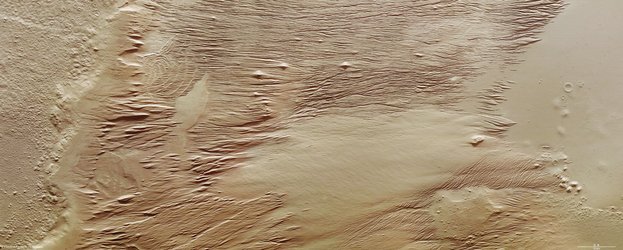
Volcanic ash in Meridiani Planum
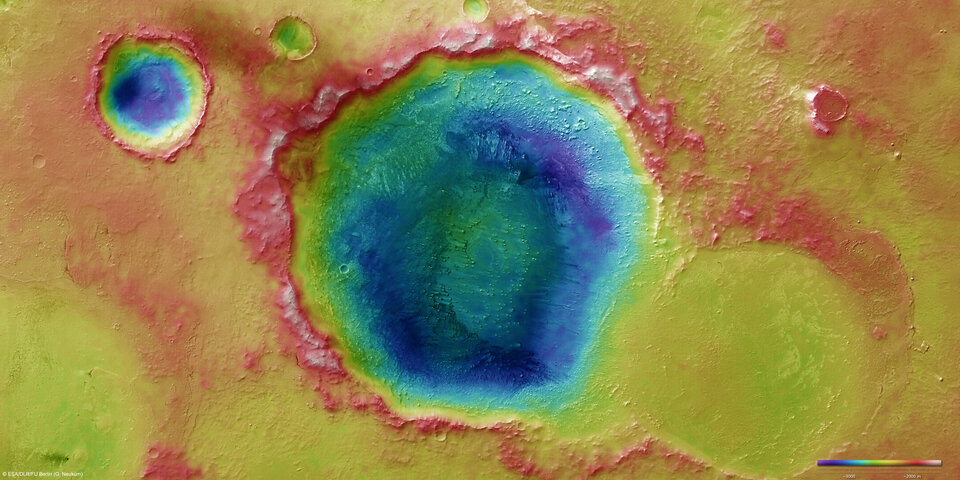
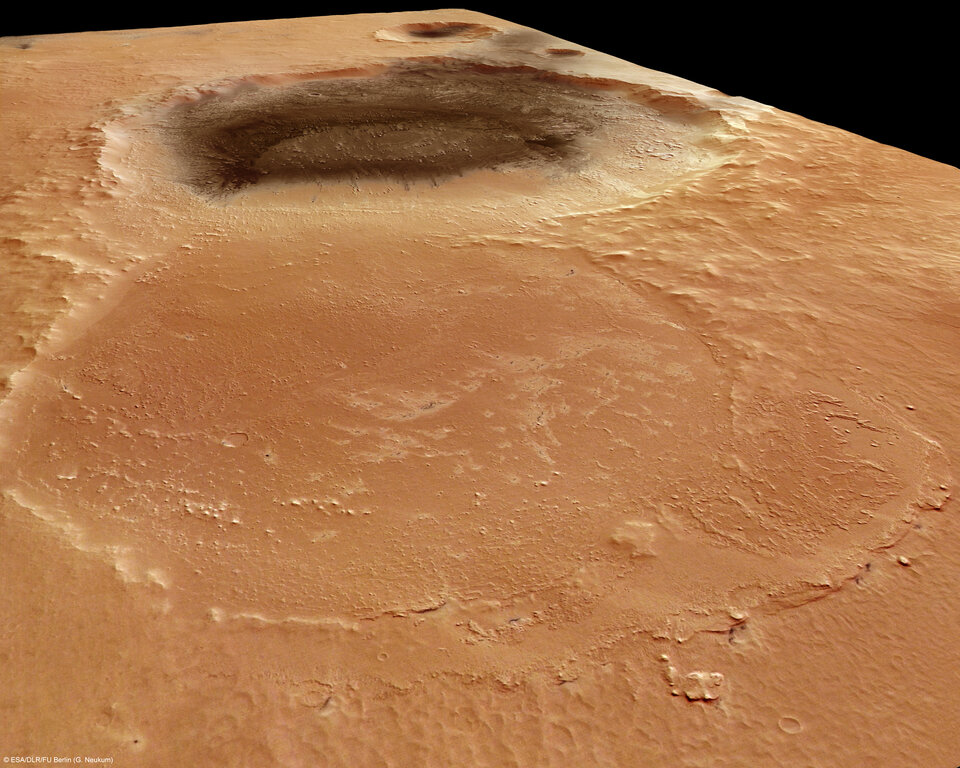
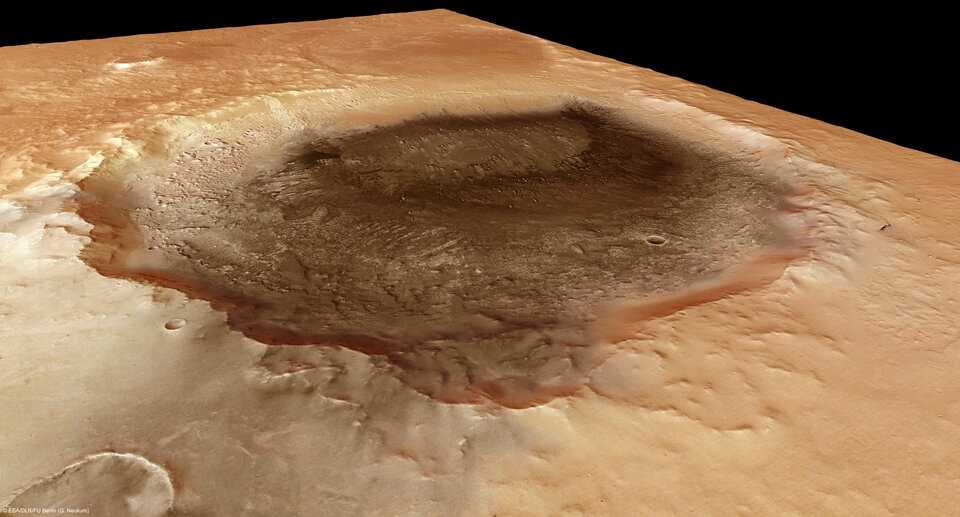
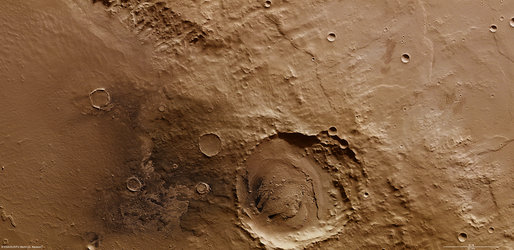
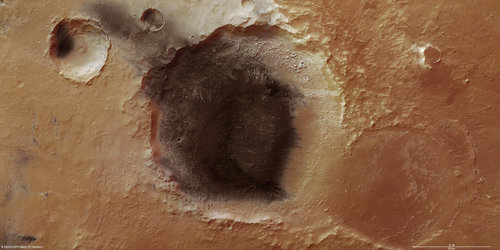
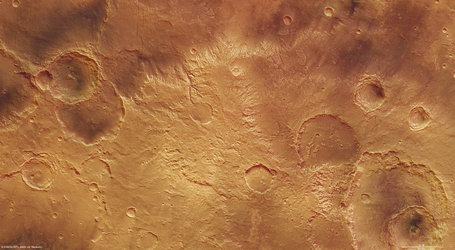
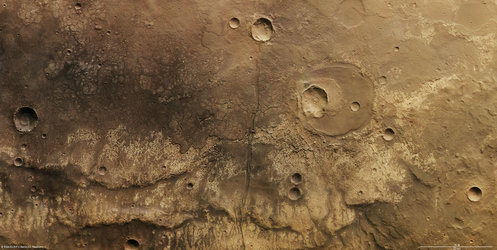
Deposits of volcanic ash colour this view of the Meridiani Planum, as seen by the Mars Express High Resolution Stereo Camera. They also give clues to the prevailing wind direction in this region of Mars.
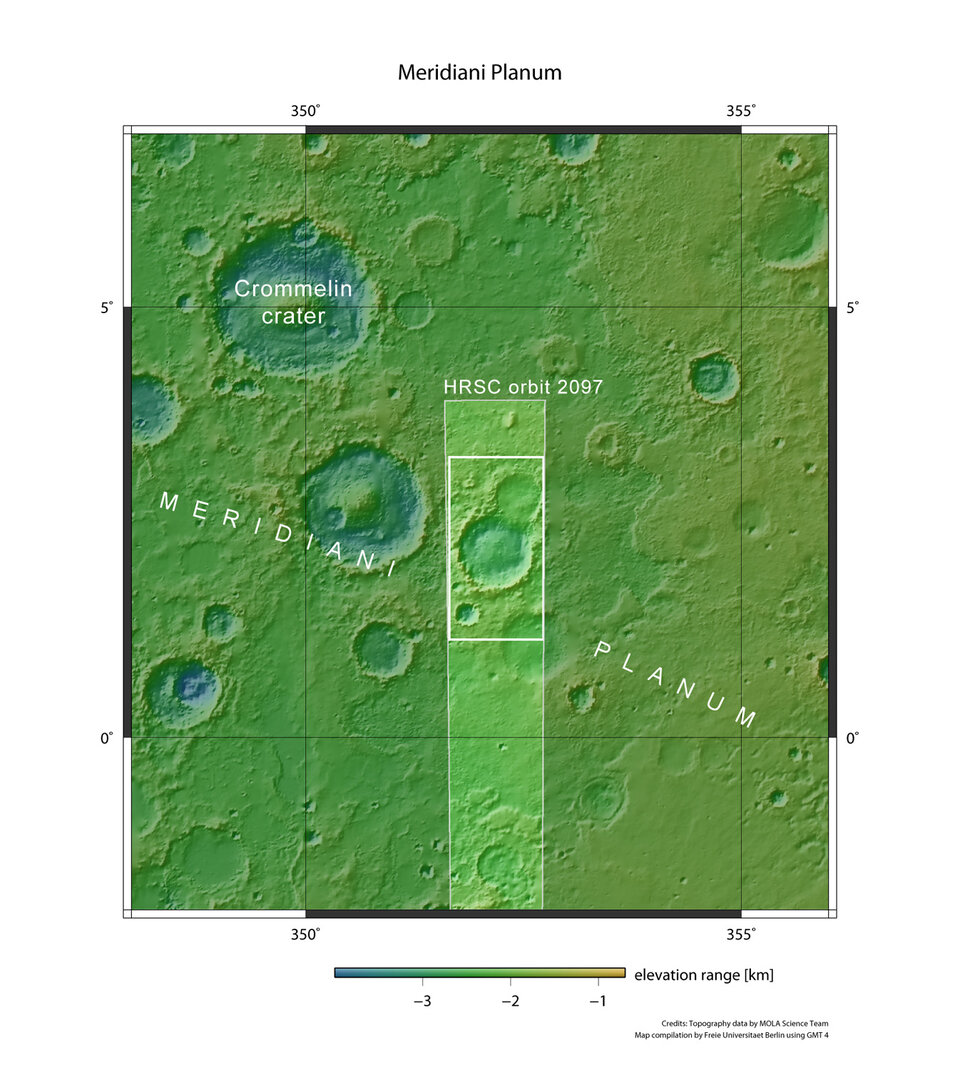
Meridiani Planum, a plain at the northern edge of the southern highlands of Mars, is half way between the volcanic Tharsis Region to the west and the low-lying Hellas Planitia impact basin to the south-east. Through a telescope, Meridiani Planum is a striking, dark feature, close to the martian equator.

Meridiani Planum extends 127 km by 63 km and covers an area of roughly 8000 sq km, which is about the size of Cyprus. It was chosen as a central reference point for Mars’ geographical coordinate system. So the martian prime meridian, the equivalent of the Greenwich, UK, prime meridian on Earth, has been set to run through this region.
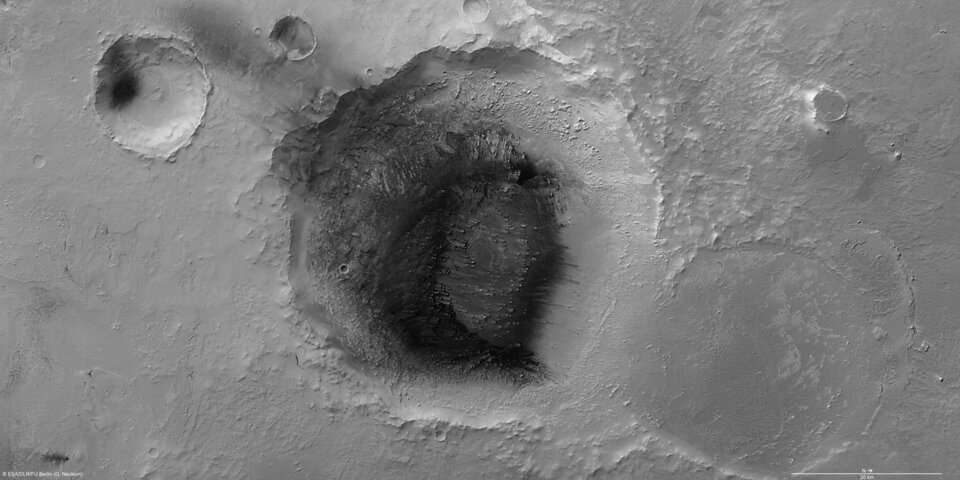
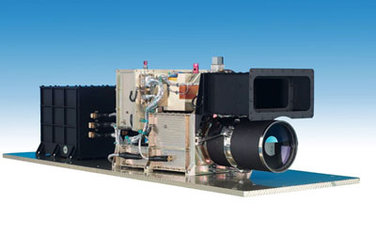
The High-Resolution Stereo Camera (HRSC) took this image. It was obtained on 1 September 2005, during orbit 2097, at a resolution of about 13 m per pixel.
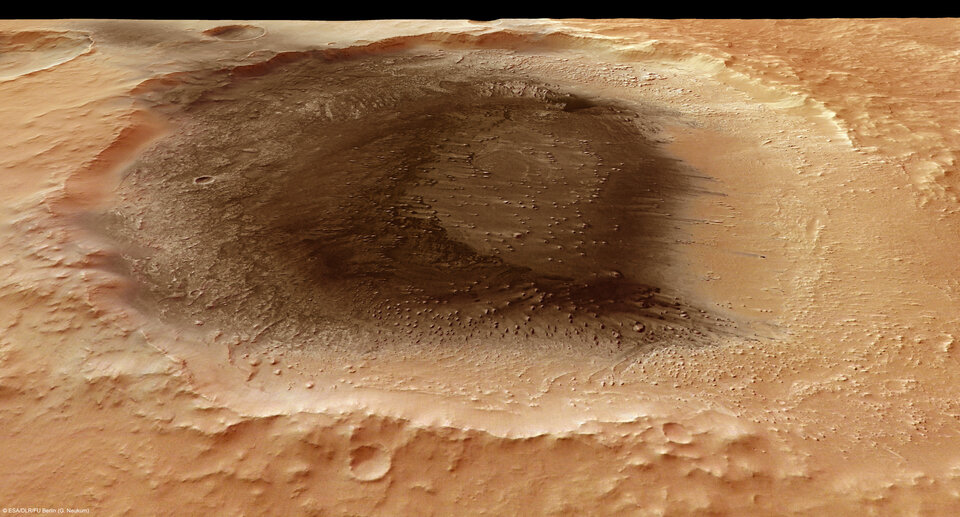
In the centre of the image, the floor of an impact crater almost 50 km wide is covered in dark material. This resembles volcanic ash, which is predominantly composed of minerals such as pyroxene and olivine. Poking through the dark covering are small mounds, probably made of more resistant material. The softer material around them has been eroded and blown out of the crater by north-easterly winds and now forms dark streaks on the surroundings.
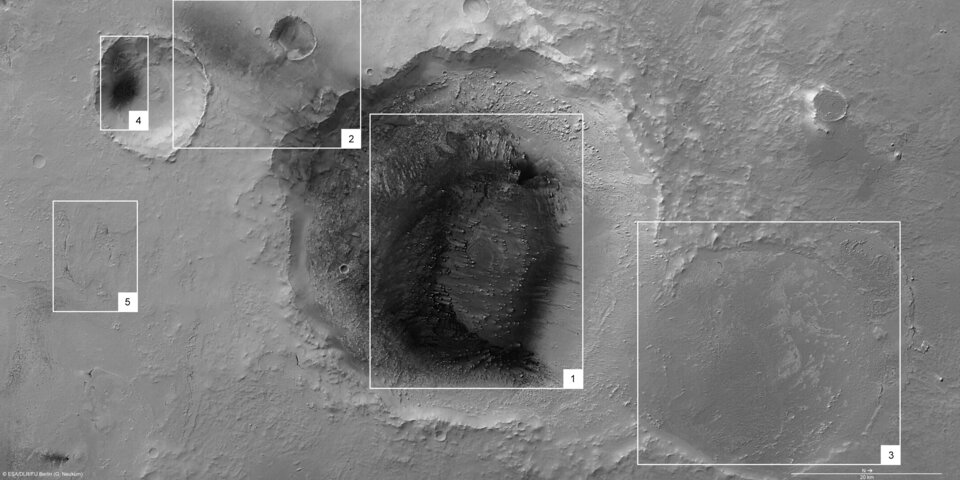
An impact crater just 15 km wide, to the upper left, exhibits the same dark material on its south-western edge. It is likely that this material was blown into the smaller crater from the larger one. The nearly black structures are almost certainly dunes made of volcanic ash-rich sediments. In contrast, the 34-km-wide impact crater to the lower right of the image is largely filled with light material.
The southern area, to the left of the image below the smaller crater, exhibits dark features. Located on the lee side of ridges, these are probably similar deposits of ash-rich material, again blown out of the crater.