

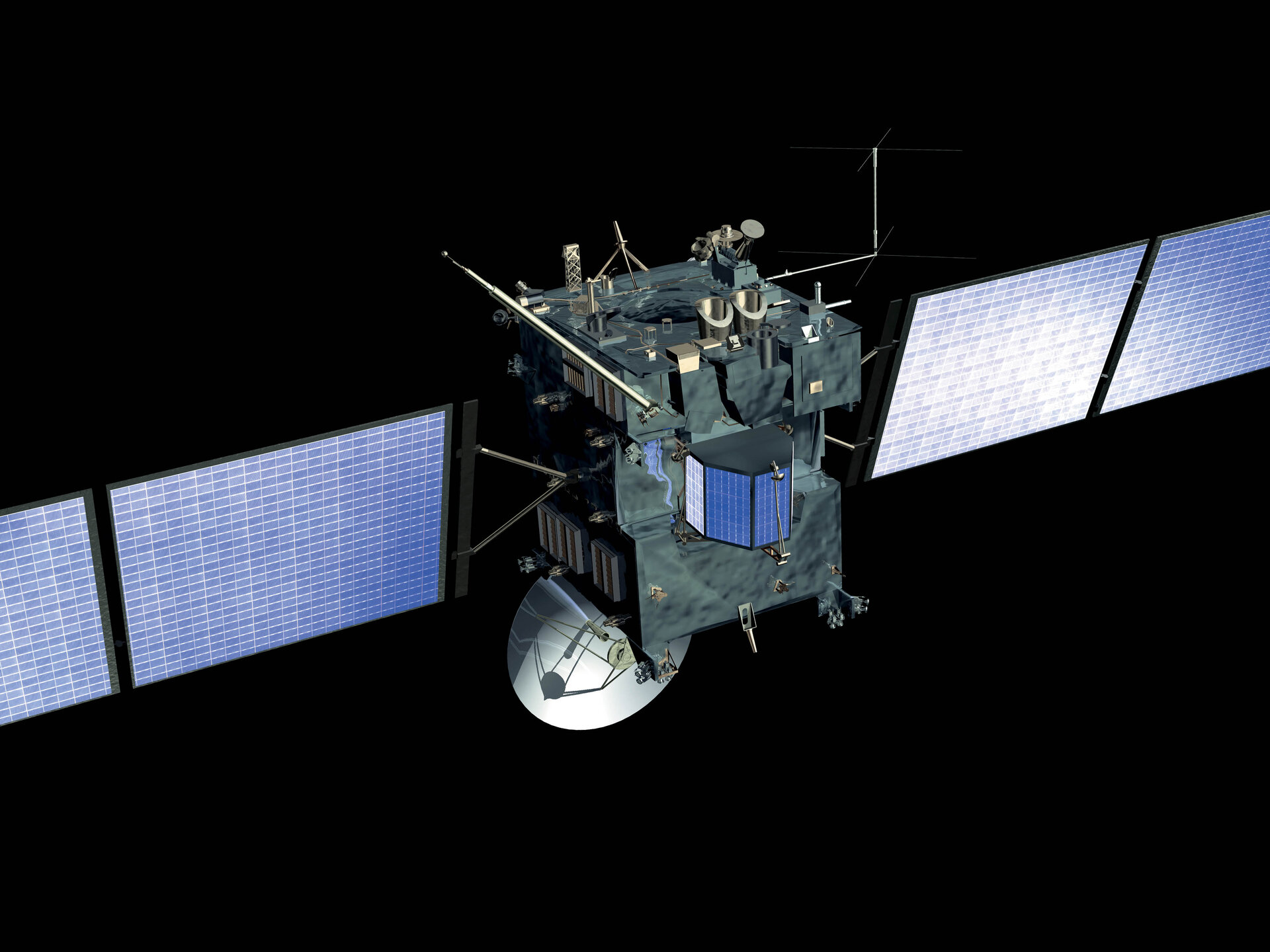
Science from the Orbiter
The Rosetta Orbiter's scientific payload includes 11 experiments, in addition to the Lander. Scientific consortia from institutes across Europe and the United States have provided these state-of-the-art instruments. All of them are located on the side of the spacecraft that will permanently face the comet during the main scientific phase of the mission.
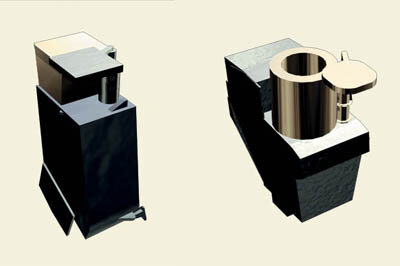
OSIRIS (Optical, Spectroscopic, and Infrared Remote Imaging System): A Wide Angle Camera and a Narrow Angle Camera to obtain high-resolution images of asteroids Otawara and Siwa and of the comet nucleus, and to help in identifying the best landing sites.
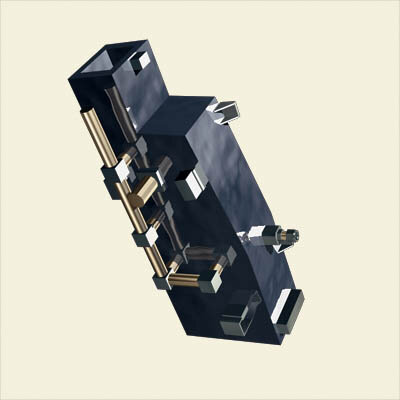
ALICE (Ultraviolet Imaging Spectrometer): Analyses gases in the coma and tail and measures the comet's production rates of water and carbon monoxide/dioxide. Also provides information on the surface composition of the nucleus.

VIRTIS (Visible and Infrared Thermal Imaging Spectrometer): Maps and studies the nature of the solids and the temperature on the surface of the nucleus. Also identifies comet gases, characterises the physical conditions of the coma and helps to identify the best landing sites.

MIRO (Microwave Instrument for the Rosetta Orbiter): Used to determine the abundances of major gases, the surface outgassing rate and the nucleus subsurface temperature. It will also measure the subsurface temperatures of Siwa and Otawara, and search for gas around them.

ROSINA (Rosetta Orbiter Spectrometer for Ion and Neutral Analysis):Two sensors will determine the composition of the comet's atmosphere and ionosphere, the velocities of electrified gas particles, and reactions in which they take part. It will also investigate possible asteroid outgassing.

