The Tarantula Nebula (30 Doradus)
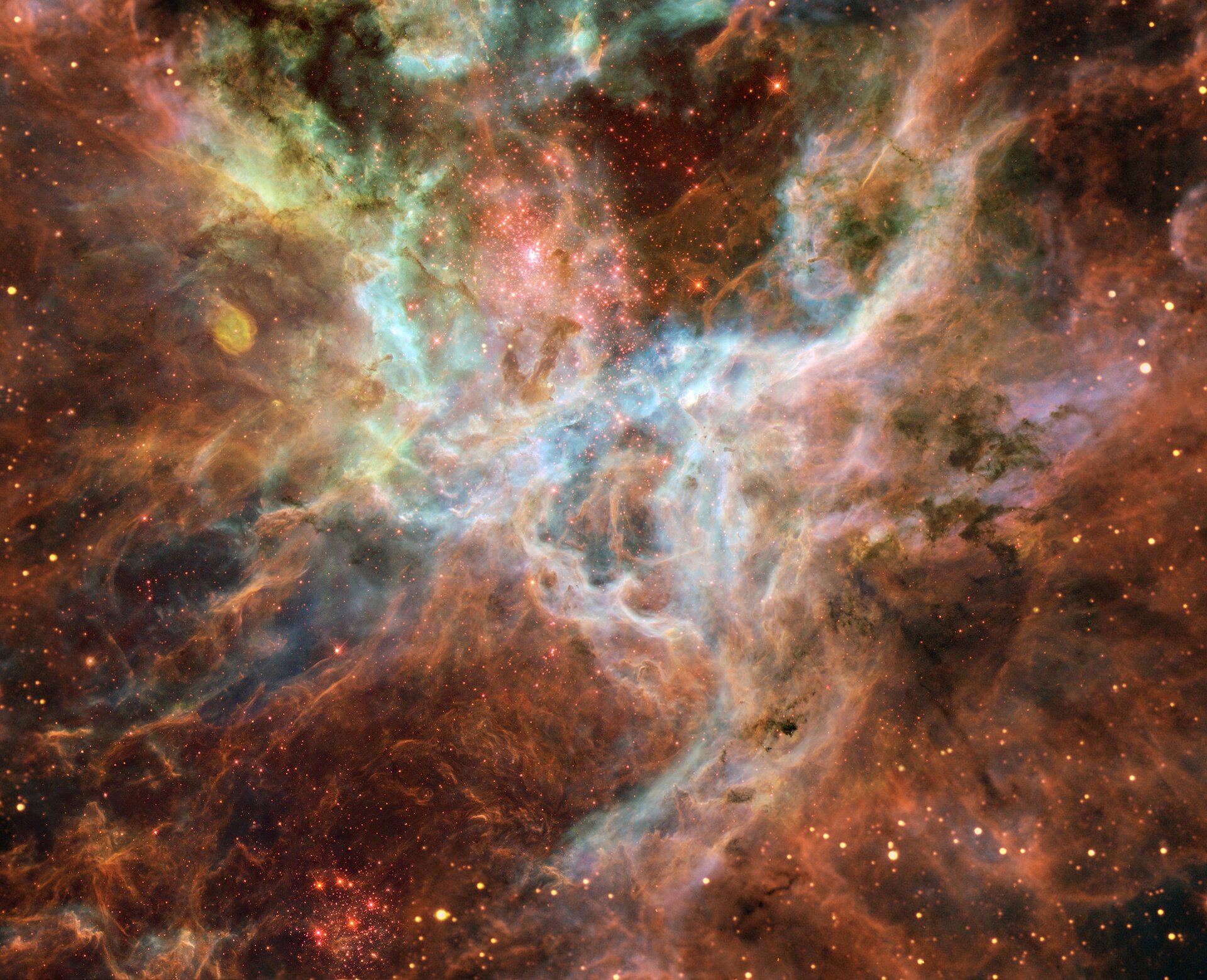
The Tarantula Nebula is the most vigorous star forming region known in the local Universe.
The Tarantula Nebula is 170 000 light-years away in the Large Magellanic Cloud (LMC) in the southern sky and is clearly visible to the naked eye as a large milky patch. Astronomers believe that this smallish, irregular galaxy is currently going through a violent period in its life cycle.
It is orbiting the Milky Way and has had several close encounters with it. It is believed that the interaction with the Milky Way has caused an episode of energetic star formation – part of which is visible as the Tarantula Nebula.
The Tarantula is the largest stellar nursery we know in the local Universe. In fact if this enormous complex of stars, gas and dust were at the distance of the Orion Nebula it would be visible during the day and cover a quarter of the sky.