Applications
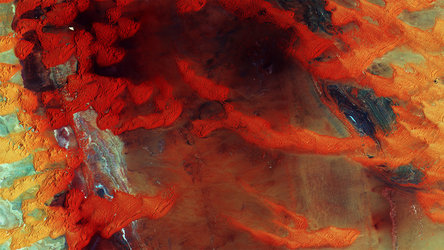
Longitudinal snow dunes across Antarctica
This Copernicus Sentinel-2 image shows some of the longitudinal dunes found in George V Land in East Antarctica. In a recent paper published in Nature Geoscience, a team led by a research team from Université Grenoble Alpes in France and the Institut de physique du globe de Paris, used satellite data, including Copernicus Sentinel-2 imagery, to identify and analyse snow dunes.
One of the study’s most significant discoveries is the widespread prevalence of longitudinal dunes, which account for 61% of the formations observed. These dunes form under unidirectional wind regimes, where strong and consistent winds stretch the snow into long, narrow shapes.
Read full story: Unveiling the hidden snow dunes shaping Antarctica's frozen landscape