HydroGNSS passes Flight Acceptance Review
ESA’s HydroGNSS Scout mission, which will investigate hydrological climate variables from space, has passed a set of tests that mean it is a step nearer to launch.
The satellite’s Flight Acceptance Review is now complete, marking a milestone in the preparations of the spacecraft before it can be transported to the launch site in the US. The review is the final step in confirming that the satellites meet all mission and safety requirements, marking a significant achievement for the project team.
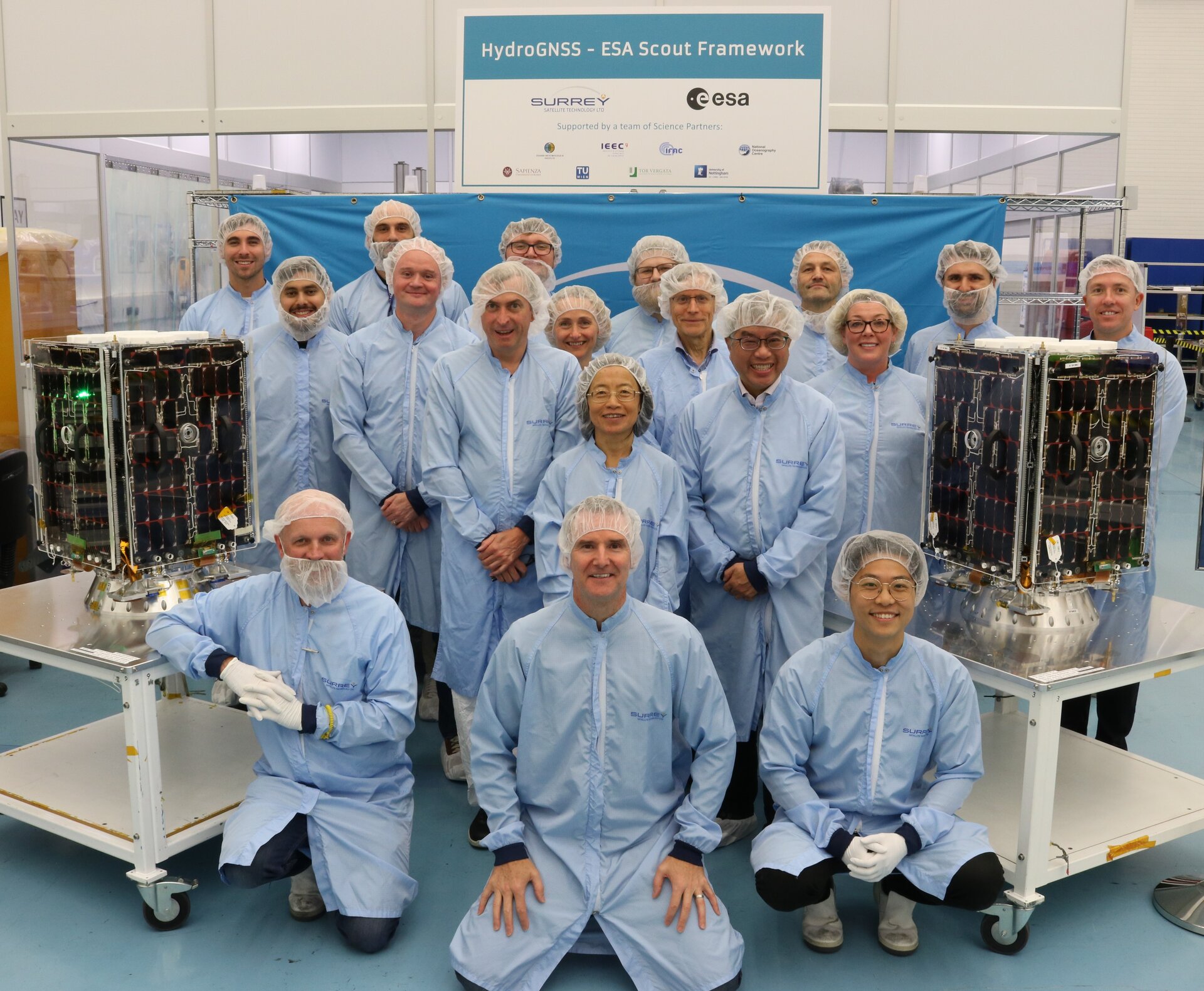
Here, the HydroGNSS team gather for a group picture.
The mission will provide measurements on water-related indicators such as soil moisture, freeze–thaw state over permafrost, inundation and wetlands, and above-ground biomass, using a technique called Global Navigation Satellite System (GNSS) reflectometry.
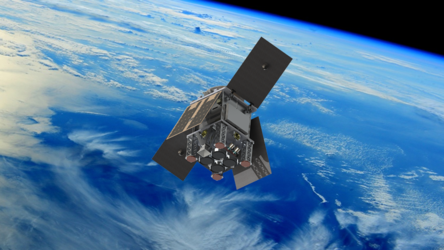
The mission consists of two microsatellites, both of which carry a GNSS reflectometry instrument in an orbit of 500-600 km, 180 degrees apart.
HydroGNSS has been developed by Surrey Satellite Technology Ltd (SSTL) for ESA’s Scout framework, part of the agency’s FutureEO programme. This new family of small ‘scout’ satellites are developed within short timeframes and deliver science data, either by miniaturising existing space technologies or by demonstrating new observing techniques.
Launch is expected later this year on a Falcon 9 rocket.