Precise Methane Leak Detection from Orbit
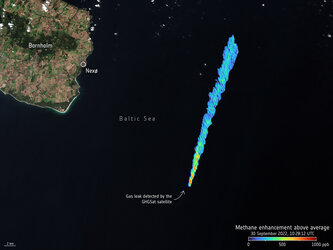
A recent ESA Discovery study has shown it's feasible to build a satellite instrument capable of detecting leaks ten times smaller – opening the door to drastically reducing methane emissions from the energy industry.
The 'Precise Methane Leak Detection from Orbit' study developed a concept for a narrowband imaging instrument that could achieve this tenfold improvement in sensitivity. The proposed design would use a 25 cm aperture to image 5 km × 5 km regions of the ground at 10 m resolution, spending around 30 seconds observing specific targets.
Weighing approximately 30 kg, the instrument concept is too large for CubeSats, but small enough that a constellation of microsatellites providing regular revisit times over facilities worldwide is economically viable.
The project was proposed through ESA's Open Space Innovation Platform, which seeks out promising new ideas for space research, and was funded by the Discovery element of ESA's Basic Activities.