EarthCARE White Dragon improves weather forecasts
ESA’s EarthCARE mission was developed to make a unique set of simultaneous measurements that shed new light on the role that clouds and aerosols play in regulating Earth’s climate. Now, in a remarkable example of a research mission delivering direct practical benefits, global observations from the satellite’s cloud profiling radar are being used operationally by the European Centre for Medium-Range Weather Forecasts (ECMWF) to improve daily weather forecasts.
EarthCARE is a joint venture between ESA and the Japan Aerospace Exploration Agency (JAXA), which provided one of the satellite’s instruments: the cloud profiling radar – and it’s the data from this instrument that are now, for the first time, being assimilated into ECMWF’s numerical weather prediction model to update the current state of the atmosphere, and ultimately improve weather forecasts.
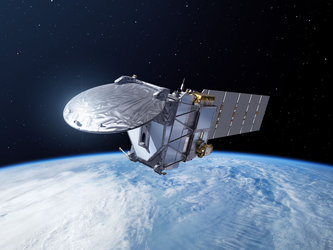
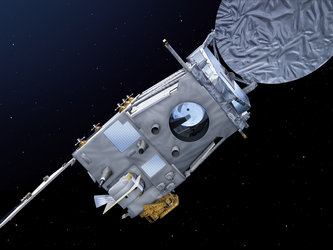
According to JAXA tradition, satellites are given nicknames in addition to their official names. The nickname chosen for EarthCARE is 'Hakuryu' or 'White Dragon' in Japanese. The name Hakuryu embodies the distinctive characteristics of the satellite's appearance, with its white body and solar panel resembling a long tail. In Japanese mythology, dragons are ancient and divine creatures that govern water and fly in the sky: an appropriate metaphor for a mission that is used to study clouds and aerosols.
The short animation depicts the White Dragon flying into a computer system, representing its new operational role in numerical weather prediction.
Read full story: A first: EarthCARE cloud data sharpen weather forecasts