ESA contribution to International Polar Year 2007-2008
ESA PR 11-2007. Today marks the official start of International Polar Year (IPY) 2007-2008, a large worldwide science programme focused on the Arctic and Antarctic. ESA is contributing to this important initiative, which will constitute the most intensive period of research on the polar regions in half a century.
Thousands of scientists from more than 60 countries will be conducting research during this two-year programme. IPY 2007-2008 will be an intense, internationally coordinated campaign of polar observations, interdisciplinary research and analysis that will enhance our understanding of physical, biological and social processes in the polar regions, examine their globally-connected role in the climate system, and set the stage for assessments, forecasts, recommendations, and future discovery.
Because of the remoteness and harshness of the polar regions, in situ research is very difficult to carry out and has proved to be insufficient for comprehensive studies. For the first time during an International Polar Year, the scientific community has at its disposal satellite measurements offering broad coverage of the polar regions and thus opening up new scientific possibilities.
The last International Polar Year was in 1957-1958 and provided the foundation for much of the polar science knowledge we have today. Given the important role polar regions play for global change, there is now more than ever a need for a coordinated international initiative to achieve a major advance in polar science and in the understanding of Earth's climate and ecosystems.
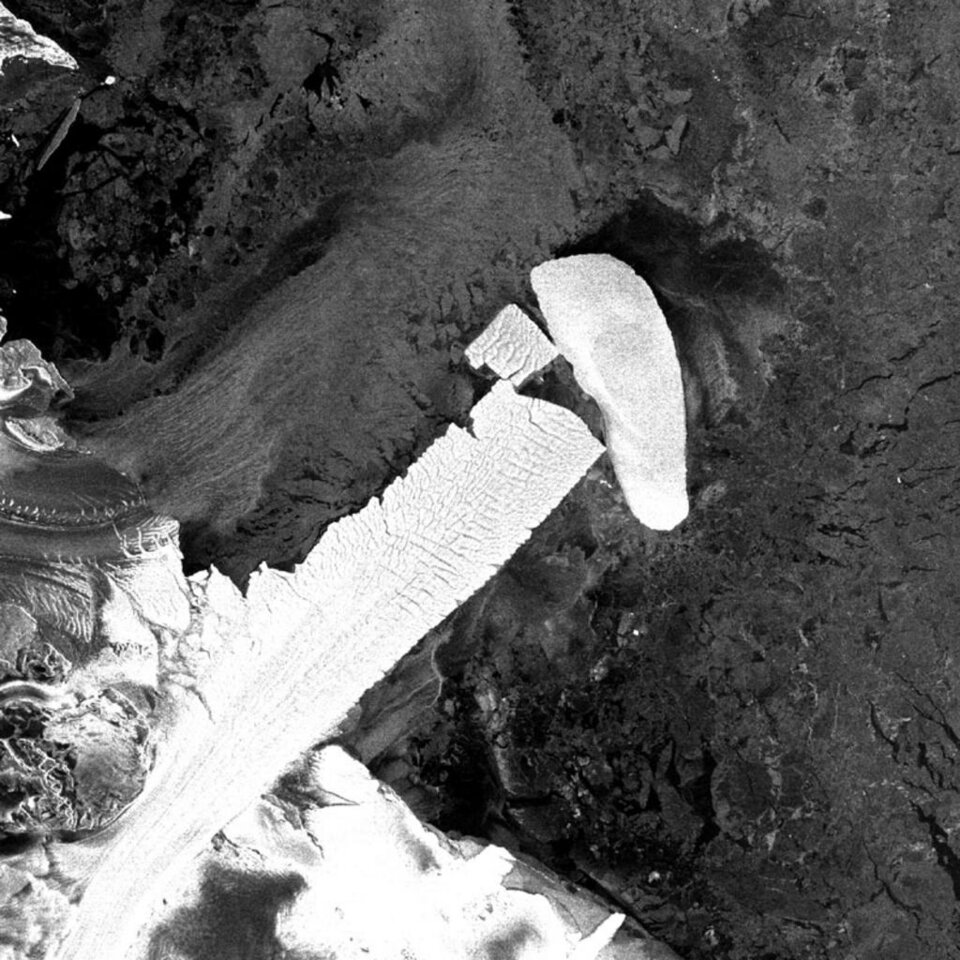
For more than 20 years, ESA has been providing increasing support to the cryosphere communities in the form of satellite data. Since the early 1990s, ESA has been able to provide near-continuous satellite data on these regions over long periods of time. Continuous data are essential for scientists to identify and analyse long-term climatic trends and changes.
During IPY 2007-2008, ESA will make its legacy data available through an extensive Earth observation data portfolio containing current and historical data (dating back 15 years) from its ERS 1, ERS 2 and Envisat satellites, as well as data collected from a number of non-ESA satellites.
Moreover, during this two-year period, ESA has committed to helping scientists collect an increasing amount of satellite information, particularly to understand recent and current distributions and variations in snow and ice. ESA satellite data – images, microwave data, and even sensitive gravity measurements – will be used to try to understand changes in the global ice sheets.
For this purpose, ESA issued, at the end of 2006, a dedicated Announcement of Opportunity for EO data provision for scientific research and application development in support of IPY 2007-2008, with data provision to start in spring 2007. All the data will be free of charge, and the 48 selected projects from 12 different countries will cover both the Arctic and Antarctic regions.

Data will be made available, and the exploitation of historical archives possible, in connection with the following missions: ESA’s Envisat, ERS 1 and 2, Proba, GOCE and SMOS (when ready), and third-party missions including Japan’s ALOS and the CNES, French Space Agency, Spot-4.
In 2009, when this IPY comes to an end, ESA will make another significant contribution to research in the polar regions with the launch of Cryosat 2. This spacecraft will monitor precise changes in the thickness of the polar ice sheets and floating sea ice. The observations made over the three-year lifetime of the mission will provide conclusive evidence on the rates at which ice cover is diminishing.
Another initiative that began in 2006 and is supported by ESA is Polar View. This is a satellite remote-sensing programme, funded through the Earthwatch GMES Service Element (GSE) and focused on both the Arctic and the Antarctic. It promotes the utilisation of satellites for the public good and in support of public policy, in the areas of sustainable economic development, marine safety, and the environment.
Polar View delivers services to stakeholder groups interested in issues relating to those three areas in the polar regions. These groups include policy-makers, government departments, northern residents, and public agencies. Polar View also collaborates with the national ice centres to generate and provide expanded and more detailed information sets. In addition, Polar View provides information for certain private customers and commercial interests, such as iceberg information for yacht races around the Antarctic and for hunters and trappers travelling and working in the North.
Background to International Polar Years

IPY 2007-2008 aims to enhance international collaboration in polar region research and monitoring, link researchers across different fields to address questions and issues lying beyond the scope of individual disciplines, ensure data collected under the IPY are made available in an open and timely manner and intensify the recovery of relevant historical data and ensure these also are made openly available.
There have been three IPYs over the last 125 years – 1882-1883, 1932-1933 and 1957-1958. Scientific and exploration programmes that have arisen out of each IPY have led to scientific advancements, new discoveries and greater understanding of many geophysical phenomena that influence the Earth’s global systems.
IPY 2007-2008 is being co-sponsored by the International Council for Science (ICSU) and the World Meteorological Organisation (WMO) and is endorsed by 31 nations. The idea of IPY was inspired by the Austrian explorer Karl Weyprecht, who was a scientist and co-commander of the Austro-Hungarian Polar Expedition of 1872-74.
For further information, please contact:
Mark Drinkwater
ESA/ESTEC
Head of Ocean/Sea-Ice Science Unit
Tel: +31 71 565 4514
E-mail: mark.drinkwater @ esa.int