• → European Space Agency

      • Space for Europe
      • Space News
      • Space in Images
      • Space in Videos
    • About Us

      • Welcome to ESA
      • DG's news and views
      • For Member State Delegations
      • Business with ESA
      • Law at ESA
      • ESA Exhibitions
      • ESA Publications
      • Careers at ESA
    • Our Activities

      • Space News
      • Observing the Earth
      • Human Spaceflight
      • Space Transportation
      • Navigation
      • Space Science
      • Space Engineering & Technology
      • Operations
      • Telecommunications & Integrated Applications
      • Preparing for the Future
    • Careers at ESA

    • For Media

      • Media
      • ESA TV
      • Videos for professionals
      • Photos
    • For Educators

    • For Kids

    • ESA

    • Human Spaceflight

    • Astronauts

    • International Space Station

    • Research

    • Education

    • About research in space
    • Research areas
    • Human health
    • Aging
    • Plants
    • Life support
    • Exobiology
    • Physics and materials
    • Radiation
    • Technology
    • Platforms and facilities
    • International Space Station
    • Sounding rockets
    • Parabolic flights
    • Drop towers
    • Bedrest and ground studies
    • Hypergravity
    • Research activities
    • Research Announcements
    • Experiment archive
    • Multimedia
    • Images
    • Videos
    • Web Streaming Network
    • Printed products
    • Brochures
    • European user guide to low gravity platforms
    • Space for life newsletter

    ESA > Our Activities > Human Spaceflight > Research

    Bedrest and ground studies

    Changes in gravity levels for research purposes can be simulated on Earth, and ESA offers a number of programmes for researchers to test theories without launching experiments into space.

    Similar to the hypergravity centrifuge, small experiments can be rotated continuously around two or three axes. Over time, the force of gravity is statistically reduced to zero. These studies can be a good starting point for further gravity research.

    Space on Earth
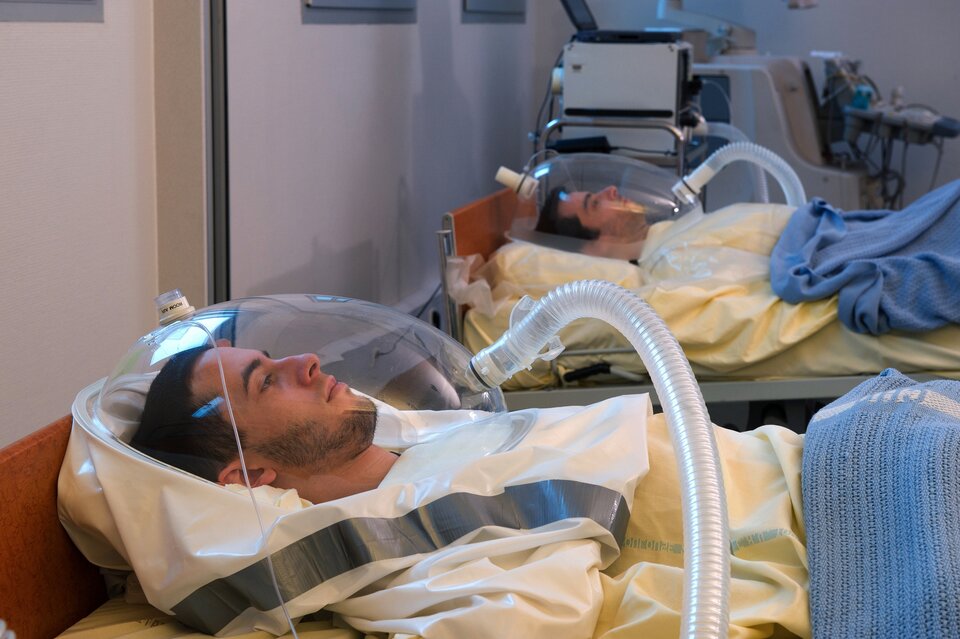
    Energy measurements

    You don’t need to send an astronaut to space in order to study how humans adapt to weightlessness and isolation.

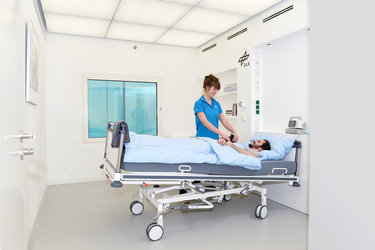
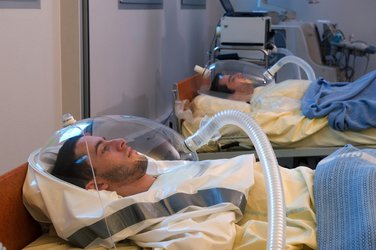
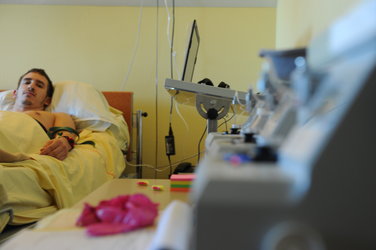
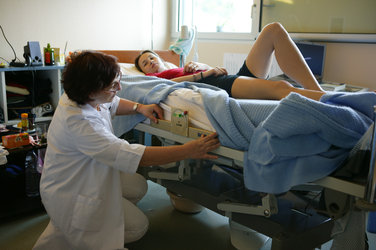
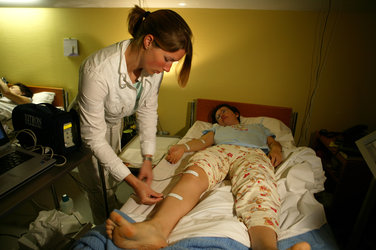
    Bedrest volunteers spend five to 60 days in bed tilted towards the head end, usually, at 6° below the horizontal. They may not stand up unless the research demands it and must perform all daily activities in bed, including eating, showers and exercise.

    By submitting themselves to this upside-down regime, the volunteers’ bodies start to adapt as though in space.

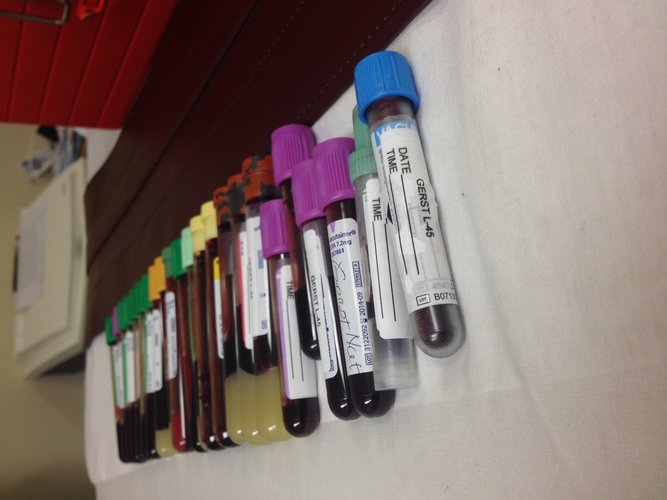
    Scientists monitor the volunteers continuously to understand how their bodies change and why. Results allow measures to be devised that will help astronauts on space missions as well as bedridden people recuperating from illness. They are an ideal opportunity for researchers to test equipment and monitor healthy patients intensively – the volunteers are not going anywhere.

    Remote isolation

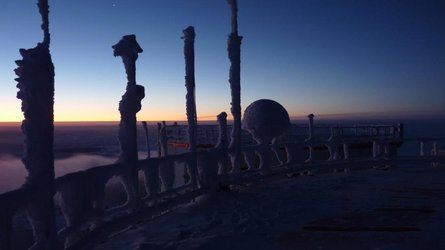
    Concordia research station in Antarctica sits on a plateau 3200 m above sea level. A place of extremes, temperatures can drop to –80°C in the winter, with a yearly average temperature of –50°C.

    As Concordia lies at the very southern tip of Earth, the Sun does not rise above the horizon in the winter and does not set in the summer. The crew must live without sunlight for four months of the year.

    Apart from the effects of isolation and sensory deprivation, Concordia has another trick up its sleeve. The thin air holds less oxygen than at sea level. The crew live in a permanent state of hypoxia – lack of oxygen.
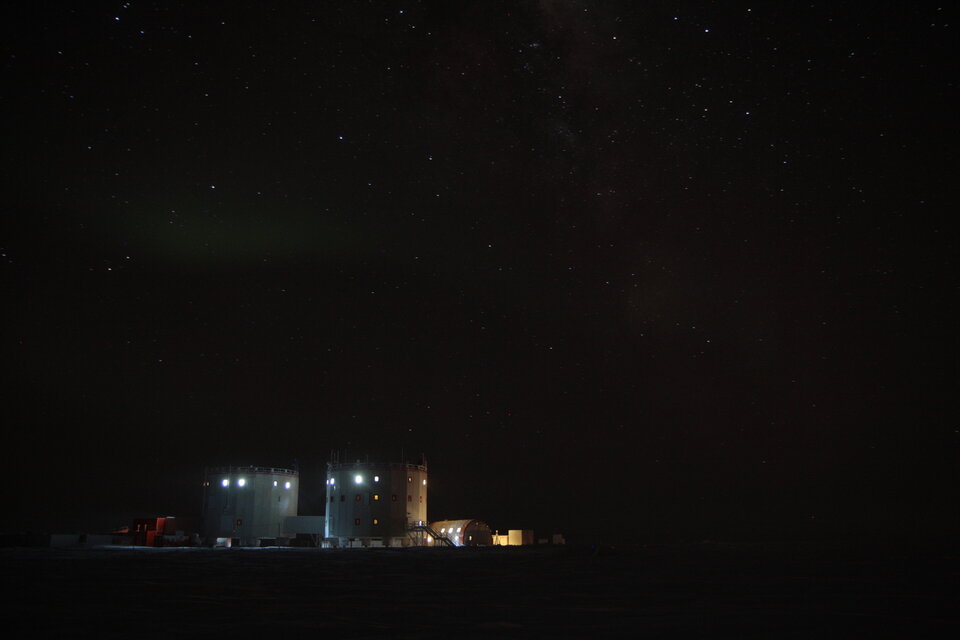
    Concordia in the Dark

    Designing space missions with lower atmospheric pressure is easier for engineers. Similar to commercial aircraft, spacecraft and planetary structures can be lighter if the internal air pressure is lowered. In addition, less time is needed to prepare physically for spacewalks.

    Concordia crewmembers are generally not adapted to living at high altitude with little oxygen. Observing how their bodies adapt gives a good indication as to how astronauts will adapt to spaceflight far from Earth.
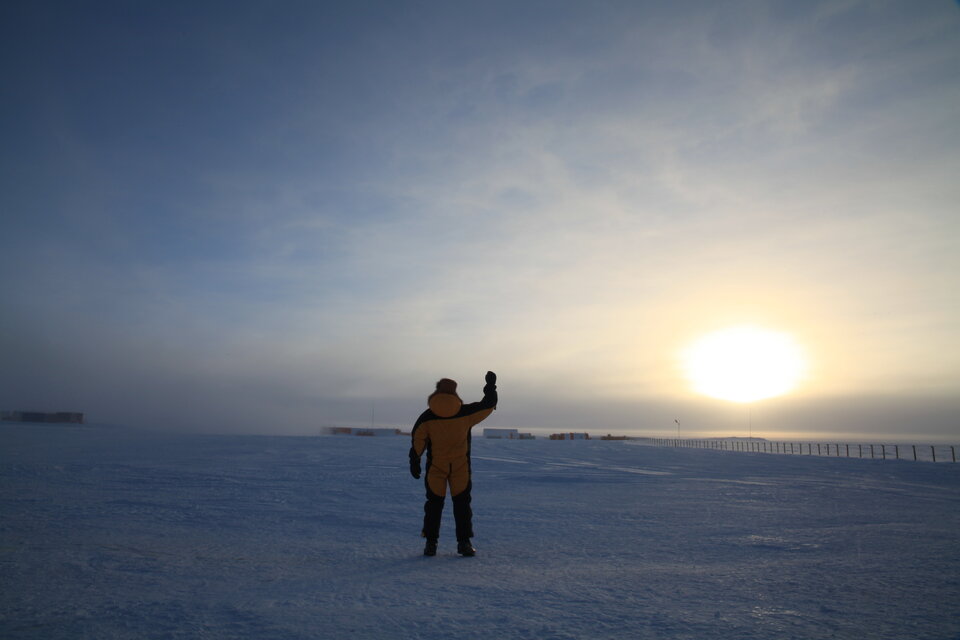
    Waving to the Sun

    Last update: 12 May 2015

    Rate this

    Views

    Share

    • Currently 4 out of 5 Stars.
    • 1
    • 2
    • 3
    • 4
    • 5
    Rating: 4/5 (2 votes cast)

    Thank you for rating!

    You have already rated this page, you can only rate it once!

    Your rating has been changed, thanks for rating!

    1910
    Tweet

    Related articles

    New bedrest adventure adds artificial gravity02 February 2016

    New bedrest adventure adds artificial gravity02 February 2016 The human body is made for living on Earth – take away the constant pull of gravity and muscles and bones begin to waste away. Living in space is hard on astronauts and ways must be found to keep them fit and safe.

    60 days and 60 nights ... in bed28 August 2015

    60 days and 60 nights ... in bed28 August 2015 On 9 September, the first of 12 men will go to bed for 60 days as part of important research into stopping the wasting effects that spaceflight has on the human body. Although they may be putting their feet up, it is set to be a far from relaxing expe...

    Enough lying about22 October 2013

    Enough lying about22 October 2013 ESA’s volunteers recently finished their third and last session lying in bed in the interest of spaceflight and science. They can return to their normal lives after spending their last 21 days in bed with their feet up – once their bodies have recuper...

    Experiments wanted for the next-best-thing to human research in space02 October 2013

    Experiments wanted for the next-best-thing to human research in space02 October 2013 ESA is accepting proposals for scientific research using two of its human spaceflight ‘analogue’ platforms: bedrest studies and the Concordia station in Antarctica. Such experiments increase our knowledge of human risks in spaceflight today, and espec...

    Bedsuit01 May 2013

    Bedsuit01 May 2013 Seventies science-fiction or science experiment? Not an actor or space traveller, this ‘pillownaut’ might not have his feet on firm ground, but he is simulating spaceflight by spending three weeks in bed.

    Stress to rest 26 April 2013

    Stress to rest 26 April 2013 On Sunday, ESA’s bedrest volunteers began lying down for their second three-week session with their heads angled below the horizontal to help research the effects of weightlessness on the human body.

    Measuring skull pressure without the headache19 December 2012

    Measuring skull pressure without the headache19 December 2012 Space research has developed a new way of measuring the pressure inside your skull using simple sound waves from headphones. The device is an effective early-warning system for patients recovering from head injury or brain surgery.

    Checking bed angle in bedrest study

    Get some rest12 November 2012

    Checking bed angle in bedrest study

    Get some rest12 November 2012 Why are 12 volunteers about to spend 21 days in bed, lying with their heads tilted below the horizontal? Their experience will help to understand and address changes in astronauts’ bodies in space as well as in bedridden people on Earth.

    Bedrest volunteer in bed

    What are bedrest studies?10 May 2012

    Bedrest volunteer in bed

    What are bedrest studies?10 May 2012 Bedrest studies offer scientists a way to see how the human body adapts to weightlessness. They allow researchers to test techniques to counteract the negative effects of living in space. The results benefit people on Earth – many negative effects of...

    CNES–S. Levin, 2005

    Why bedrest studies?10 May 2012

    CNES–S. Levin, 2005

    Why bedrest studies?10 May 2012 Preparing for spaceflight is no easy task. Sending people into space is expensive and dangerous while the effects of living beyond the pull of gravity are not fully understood. Space agencies need to research the effects of living in space on the huma...

    • Experiment archive
    • International Space Station Benefits for Humanity
    • European space laboratory Columbus
    • ESA user guide to low gravity platforms
    • App Store
    • Subscribe
    • mobile version
    • LATEST ARTICLES
    • · Counting calories in space
    • · How to rescue a Moonwalker in need
    • · See our seasons change from space
    • · Preparing for Mercury: BepiColombo…
    • · Giant iceberg in the making
    • FAQ

    • Site Map

    • Contacts

    • Terms and conditions