• → European Space Agency

      • Space for Europe
      • Space News
      • Space in Images
      • Space in Videos
    • About Us

      • Welcome to ESA
      • DG's News and Views
      • For Member State Delegations
      • Business with ESA
      • ESA Exhibitions
      • ESA Publications
      • Careers at ESA
    • Our Activities

      • Space News
      • Observing the Earth
      • Human Spaceflight
      • Launchers
      • Navigation
      • Space Science
      • Space Engineering
      • Operations
      • Technology
      • Telecommunications & Integrated Applications
    • For Public

    • For Media

    • For Educators

    • For Kids

    • ESA

    • CryoSat

    • Observing the Earth

    • Living Planet

    • CryoSat at a glance
    • An Earth Explorer
    • CryoSat: an icy mission
    • Earth’s changing ice
    • Facts and figures
    • About the satellite

      • Platform
      • Instruments
    • About the launch

      • Launch site
      • Launcher
      • After launch
    • Meet the team

      • Richard Francis - Project Manager
      • Tommaso Parrinello - Mission Manager
      • Duncan Wingham, Lead Investigator
      • Klaus Köble, EADS Astrium Project Manager
      • Mark Drinkwater, Mission Scientist
      • Bill Simpson, Launch Campaign Manager
      • Nic Mardle, Spacecraft Operations Manager
      • Laurent Rey, Thales Alenia Space SIRAL Project Manager
      • Malcolm Davidson, Validation Manager
    • Multimedia
    • Image Gallery
    • Videos
    • Online documents

    ESA > Our Activities > Observing the Earth > CryoSat

    CryoSat

    CryoSat

    ESA's ice mission is designed to acquire accurate measurements of the thickness of land and sea ice and determine how it is changing.
    Archive

    Latest News

    CryoSat hits land21 December 2012

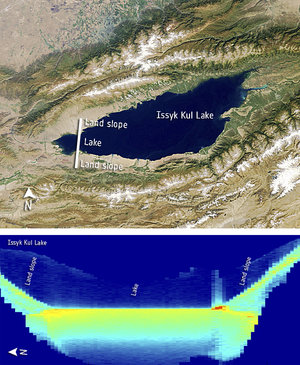
    CryoSat hits land21 December 2012 ESA’s ice mission is now giving scientists a closer look at oceans, coastal areas, inland water bodies and even land, reaching above and beyond its original objectives.

    ESA satellites looking deeper into sea ice

    ESA satellites looking deeper into sea ice05 October 2012

    ESA satellites looking deeper into sea ice

    ESA satellites looking deeper into sea ice05 October 2012 This year, satellites saw the extent of Arctic sea ice hit a record low since measurements began in the 1970s. ESA’s SMOS and CryoSat satellites are now taking a deeper look by measuring the volume of the sea-ice cover.

    CryoSat goes to sea28 May 2012

    CryoSat goes to sea28 May 2012 CryoSat was launched in 2010 to measure sea-ice thickness in the Arctic, but data from the Earth-observing satellite have also been exploited for other studies. High-resolution mapping of the topography of the ocean floor is now being added to the ice...

    News Archive

    Focus on

    • CryoSat: past, present and future
      CryoSat: past, present and future
      CryoSat: past, present and futureInterview with Tommaso Parrinello and Duncan Wingham to discuss the past, present and future of ESA’s ice mission.
    • Latest CryoSat result revealed
      Latest CryoSat result revealed
      Latest CryoSat result revealedChanges in Arctic sea-ice thickness between October 2010 and March 2011
    • Track CryoSat-2
    • CryoSatApp (iPhone)
    • CryoSatApp (iPad)
    • Access CryoSat data
    • Arctic sea-ice thickness 2011
      Arctic sea-ice thickness 2011
      Arctic ice map unveiled at Paris Air Show
    • CryoSat validation campaign in Greenland
    • Ground validation campaign
    • Accuracy key to users
    • Earth Explorers and Greenland
    • CryoSat-2 launch sequence replay
    • Launch diary
    • Launch milestones
    • Diary in pictures
    • In depth
    • CryoSat technical site

    Connect with us

    • RSS
    • Youtube
    • Twitter
    • Flickr
    • Google Buzz
    • Subscribe
    • App Store
    • LATEST ARTICLES
    • · CryoSat hits land
    • · Ariane 5 completes seven launches …
    • · Measuring skull pressure without t…
    • · Malargüe station inauguration
    • · The solar wind is swirly
    • FAQ

    • Jobs at ESA

    • Site Map

    • Contacts

    • Terms and conditions