Reflections on a launch
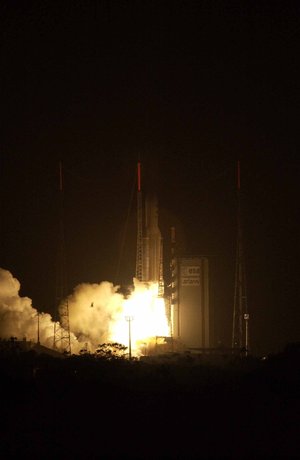
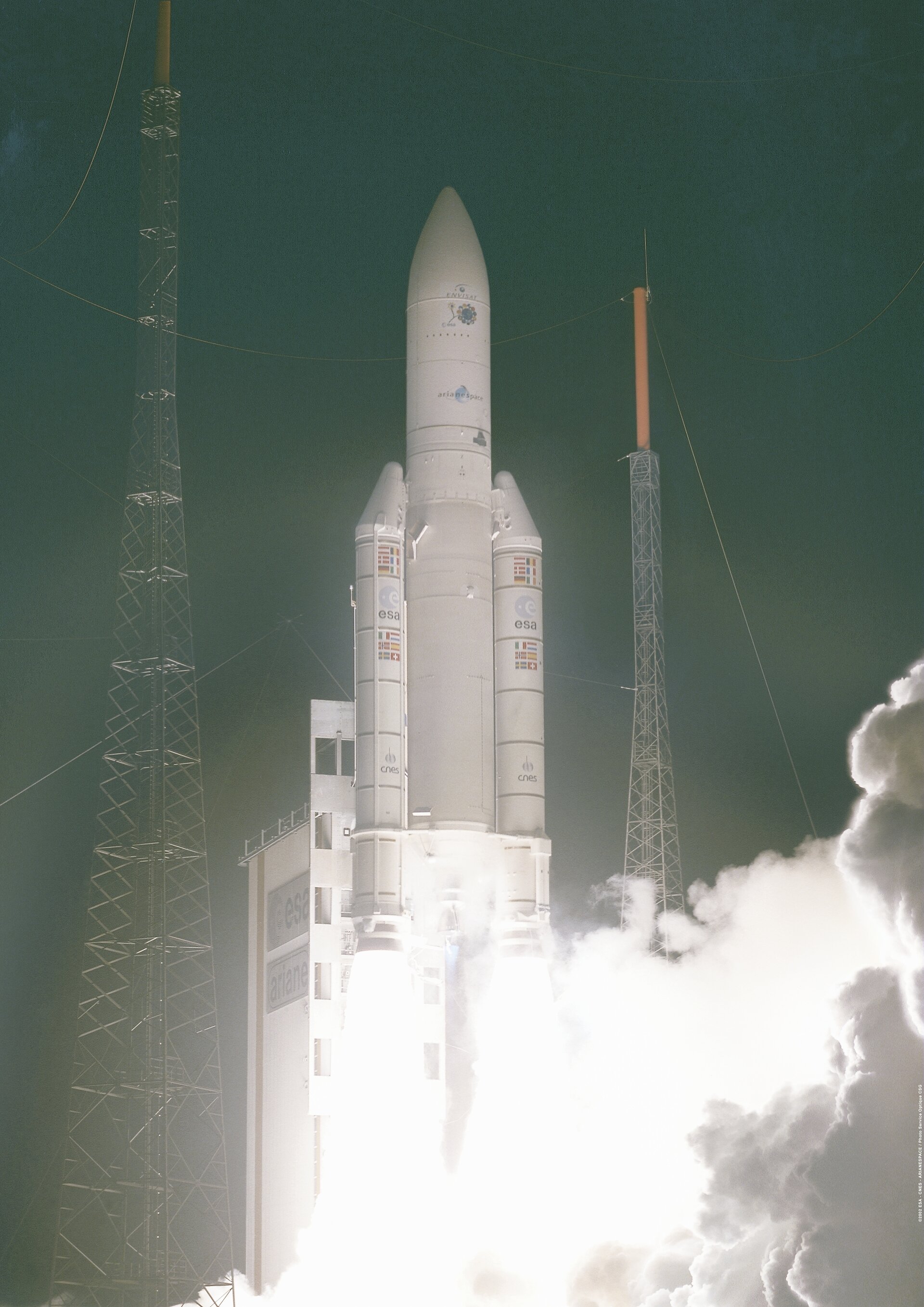
As they waited to see Ariane 5 lift-off with Envisat, some first-time visitors to the Kourou spaceport were a little worried. Situated some 14 km distance from the launch pad, would they even be able to see much? In the end, at 10.07:59 pm local time last Thursday night, visibility was definitely not an issue.
"The take-off filled the whole horizon," said Juliet Blumm, (17) from London, who won a British-based slogan competition to see the launch. "It was a brilliant orange light, just like the sun was rising."
And as this dazzling brightness ascended from horizon to sky, becoming a giant orange star beginning its graceful arc north, then came the overwhelming volume produced by the Ariane 5's engine and boosters, which watchers could feel as much as hear.
Also with Juliet in the Venus viewing area was 13-year-old contest winner Anke Hartsmann from Oldenburg, Germany, who designed the Earth flag on the side of Envisat's launch fairing. Her verdict on the launch? "Just amazing!"
Spanish competition winners Elizabeth Rossello (12) and Gerard Cabanas (9) could hardly believe what they were seeing. The accompanying camera crew from Spanish TV3 cut between filming the launch and their awe-struck faces.
Invited guests, mostly project workers and their families, had watched preparations for the launch from the Jupiter control centre nearby. Collectively, they - and others watching at ESA centres across Europe - had put many hundreds of man-years of work into the Envisat mission, and it was all going to succeed or fail in a single instant.
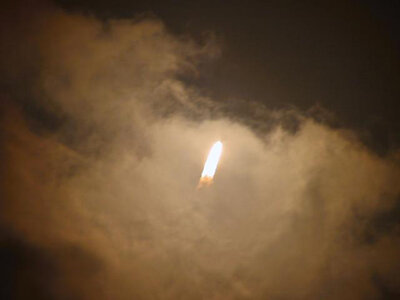
The final countdown went precisely to plan, and the weather played its part to perfection. By the time of the final weather report, eleven minutes from launch, the clouds had finally lifted, displaying a brilliant full moon. Because this was Ariane 5's first mission into polar orbit, space weather was also monitored.
Decreased magnetic field strength over the northern polar region meant that charged particles from the sun might possibly interfere with the launcher's avionics system - but the surface of the sun stayed calm.
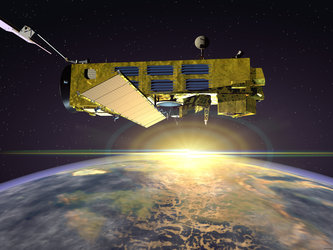
A pre-programmed pause in the countdown allowed lift-off to occur at precisely the right second, to allow Envisat to enter orbit half an hour ahead of ERS-2. This means the two ESA spacecraft can carry out simultaneous observations in future.
A minute before launch, doors opened on each side of Jupiter to allow guests onto roof terraces to see lift-off with their own eyes. Most watched until the side boosters separated, two minutes into flight, then hurried back inside to watch the flight controllers at work. A few stayed outside longer, watching until Envisat vanished from sight, seeming to merge into a bright star to the north.
ESA's Envisat team in French Guiana passed over control of the satellite to ESOC in Germany, but they can't relax quite yet. Now comes moving time: they have to sort through some 400 tonnes of support equipment that came to French Guiana with Envisat. Some is recycled here, the other 300 tonnes will be reused or recycled back in Europe.
Last words go to Envisat engineer Gilles Labruyere, who wrote email postcards throughout Envisat's launch campaign: "We have put a Stradivarius into orbit. The operators and users will be able to make it sing!"