• → European Space Agency

      • Space for Europe
      • Space News
      • Space in Images
      • Space in Videos
    • About Us

      • Welcome to ESA
      • DG's News and Views
      • For Member State Delegations
      • Business with ESA
      • ESA Exhibitions
      • ESA Publications
      • Careers at ESA
    • Our Activities

      • Space News
      • Observing the Earth
      • Human Spaceflight
      • Launchers
      • Navigation
      • Space Science
      • Space Engineering
      • Operations
      • Technology
      • Telecommunications & Integrated Applications
    • For Public

    • For Media

    • For Educators

    • For Kids

    • ESA

    • Operations

    • Ground Systems Engineering

    • Space Debris

    • SSA

    • Operations
    • Operations home
    • Background
    • About Operations
    • The Right Stuff
    • Multimedia

      • Images
      • Videos
    • SSA programme
    • Space Situational Awareness
    • Teams on ground
    • Ground Systems Engineering
    • EGOS - Ground operation system
    • Missions in space
    • Solar and planetary
    • Astronomy & fundamental physics
    • Earth observation
    • Human spaceflight
    • Technology demonstration
    • Estrack operations
    • Past missions
    • ESA mission history
    • - Find a mission: A...Z
    • Mission control centres
    • ATV Control Centre (ATV-CC)
    • Columbus Control Centre (Col-CC)
    • Ground stations
    • Estrack tracking stations
    • ESTRACK Control Centre
    • - Find a station: A...Z
    • OPS Community
    • Advanced Operations Concepts Office
    • HSO Exchange
    • Knowledge Management at ESA's Operations team

    ESA > Our Activities > Operations

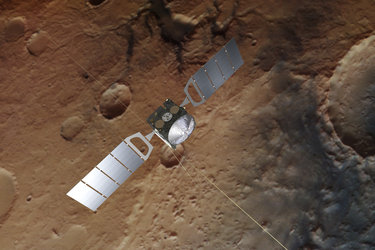
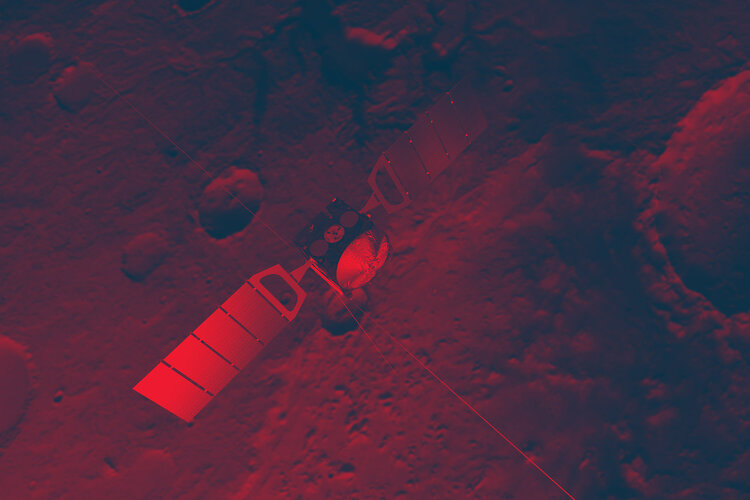
    Artist's impression of Boom 2 deployed

    Smooth deployment for second MARSIS antenna boom

    16 June 2005

    The second 20-metre antenna boom of the MARSIS instrument on board Mars Express was successfully – and smoothly – deployed, confirmed today by the ground team at ESA’s European Space Operations Centre.

    The command to deploy the second MARSIS boom was given to the spacecraft at 13:30 CEST on 14 June 2005.

    Shortly before the deployment started, Mars Express was set into a slow rotation to last 30 minutes during and after the boom extension. This rotation allowed all the boom’s hinges to be properly heated by the Sun.

    Just after, an autonomous manoeuvre oriented the spacecraft towards the Sun, to have the spacecraft recharge its batteries and for a further heating of the hinges.
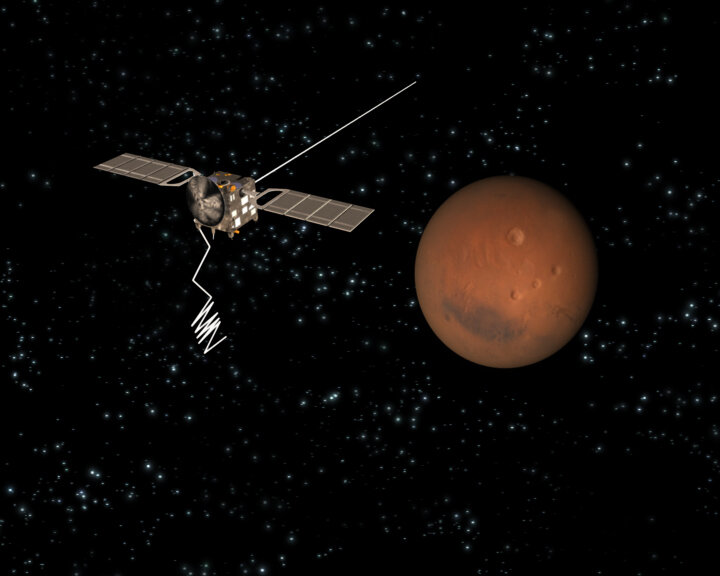
    MARSIS boom 2 deployment begins

    A first positive sign reached ground in the afternoon of 14 June, at 16:20 CEST, when Mars Express was able to properly re-orient itself and point towards Earth to transmit data.

    The data received in the following hours confirmed that the initial spacecraft behaviour was consistent with two fully and correctly deployed booms and that the deployment had not induced disturbance frequencies that may have been dangerous for the spacecraft.

    A series of tests during the following 48 hours was necessary to verify that the long boom was successfully locked and that the deployment did not affect the integrity of the spacecraft systems.


    The unfolding of MARSIS boom 2 continues

    The complete success of the operation was announced today at 14:00 CEST, when the ground team had completed all tests on the spacecraft systems. This confirmed that the spacecraft is in optimal shape and under control, with the second MARSIS boom straight and locked into the correct position.

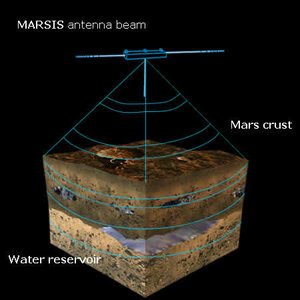
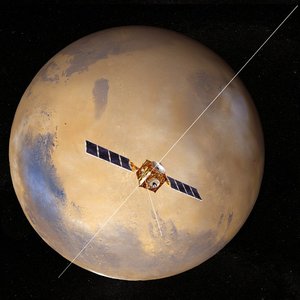
    With the two MARSIS 20-metre radar booms fully deployed, Mars Express is already in principle capable of ‘looking’ beneath the Martian surface, and also studying its ionosphere (the upper atmosphere). The third 7-metre ‘monopole’ boom, to be deployed perpendicularly to the first two booms, will be used to correct some surface roughness effects on the radio waves emitted by MARSIS and reflected by the surface.

    The third boom deployment, not considered critical because of its orientation and shorter length, will take place on 17 June 2005. It will be followed by further tests on the spacecraft and the MARSIS instrument for a few more days.

    The radar, with its long booms, will allow Mars Express to continue its search for water on Mars. By night, it will be used to make soundings for water below the surface. By day, it will probe the structure of the ionosphere.

    Jean-Jacques Dordain, ESA Director General, said: "This is a great success following some tense moments and careful judgements. The result shows the power of the teamwork between ESA, European industry and ESA's partners in the scientific community in Europe and elsewhere."

    For more information:

    Fred Jansen
    ESA Mars Express Mission Manager
    fjansen @ rssd.esa.int
    Rate this

    Views

    Share

    • Currently 0 out of 5 Stars.
    • 1
    • 2
    • 3
    • 4
    • 5
    Rating: 0/5 (0 votes cast)

    Thank you for rating!

    You have already rated this page, you can only rate it once!

    Your rating has been changed, thanks for rating!

    57
    Tweet
    • Looking at Mars
    • More about...
      • Mars Express factsheet
        • Mars Express instruments
        • Animation
          • See stages of MARSIS deployment
          • Related articles
            • Mars Express radar collects first surface data
              • Smooth deployment for second MARSIS antenna boom
                • Green light for the deployment of the second MARSIS boom
                  • Deployment of second MARSIS boom delayed
                    • Mars Express radar to be deployed in May
                      • Mars Express latest findings give hints about water loss in the Martian atmosphere
                        • Chances of life are linked to water
                          • Water on early Mars?

    Connect with us

    • RSS
    • Youtube
    • Twitter
    • Flickr
    • G+
    • Facebook
    • Livestream
    • Subscribe
    • App Store
    • ESA Operations Twitter

    Follow ESA operations

    • LATEST ARTICLES
    • · ESA astronaut Timothy Peake set fo…
    • · Space drives e-mobility
    • · Proba-V opens its eyes
    • · First new Galileo satellite arrive…
    • · Next destination: space
    • FAQ

    • Jobs at ESA

    • Site Map

    • Contacts

    • Terms and conditions