• → European Space Agency

      • Space for Europe
      • Space News
      • Space in Images
      • Space in Videos
    • About Us

      • Welcome to ESA
      • DG's News and Views
      • For Member State Delegations
      • Business with ESA
      • ESA Exhibitions
      • ESA Publications
      • Careers at ESA
    • Our Activities

      • Space News
      • Observing the Earth
      • Human Spaceflight
      • Launchers
      • Navigation
      • Space Science
      • Space Engineering
      • Operations
      • Technology
      • Telecommunications & Integrated Applications
    • For Public

    • For Media

    • For Educators

    • For Kids

    • ESA

    • Space Engineering

    • What we do
    • Directorate of Technical and Quality Management (TEC)
    • Electrical
    • Electrical engineering
    • Control Systems
    • Data Systems
    • Radio Frequency Payload Systems
    • Electromagnetics and Space Environment
    • Power and Energy Conversion
    • Mechanical
    • Mechanical engineering
    • Thermal Control
    • Structures and Mechanisms
    • Mechatronics and Optics, incl. robotics and life support
    • Propulsion and Aerothermodynamics
    • Systems
    • Systems and software engineering
    • Software Systems
    • Systems Engineering, incl. cost engineering
    • Technology programmes
    • Product Assurance
    • Product Assurance
    • Flight Safety
    • Dependability
    • Quality Management and Assurance
    • Materials and Processes
    • Electronic Components
    • Software Product Assurance
    • Standards
    • Requirements and standards
    • European Cooperation for Space Standardization (ECSS)
    • European Space Components Coordination (ESCC)
    • Services
    • ESA calendar of events
    • Subscribe

    ESA > Our Activities > Space Engineering

    ESA's Mechanisms section: simulations to pyrotechnics

    9 September 2011

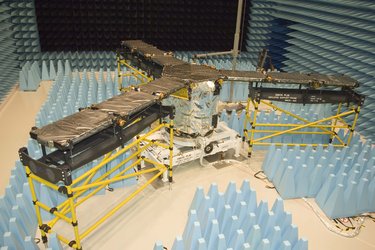
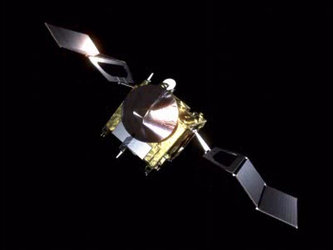
    International Berthing and Docking Mechanism (IBDM) simulation

    “Gravity and so on means that some mechanisms for deployment cannot be tested on the ground to assess how they’ll work in space,” explained Gianluigi Baldesi, working on Multibody and Advanced Simulations within the Mechanisms section.

    “So in recent years we have significantly improved our capabilities with respect to software-based simulations.
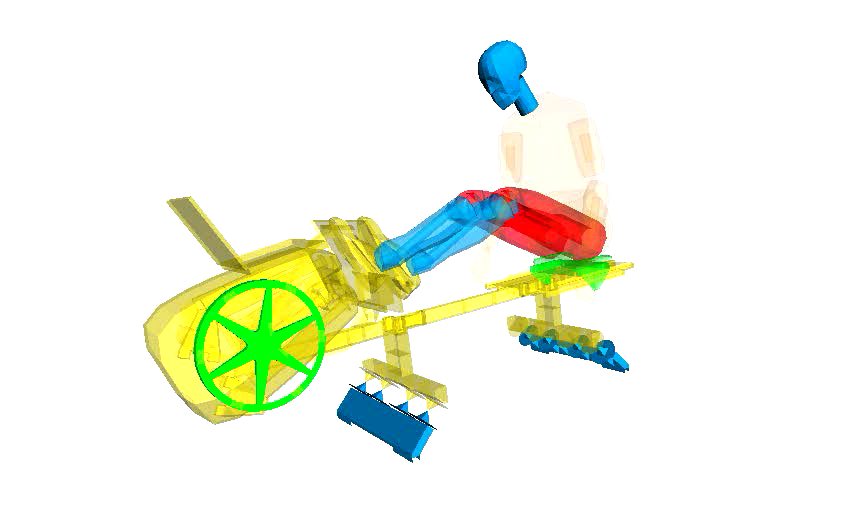
    Flywheel application
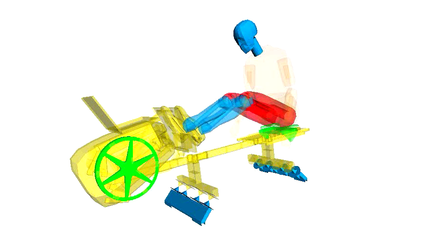
    Simulating a flywheel exercise machine aboard Columbus

    “The ESA Mechanisms section has improved its software and built up a dedicated database of analysis models in order to perform complex dynamic and advanced electromagnetic simulations.

    “These can support projects during the development stage – to help optimise a mechanical design – as well as verification, to assess it will indeed work as planned in the environment it was built for.

    CNES Pyrotechnics Laboratory
    Shock test bench at CNES Pyrotechnics Lab

    “Finally, simulations can also be employed for inflight investigations: if something in orbit isn’t operating as planned, we can reproduce the circumstances to understand what went wrong, and suggest ways to fix it.”

    Wider interest in mechanism simulations is growing: last year’s First ESA Workshop on Multibody Dynamics for Space Applications had more than 150 participants from across Europe and the US.

    Tribology and pyrotechnics partners
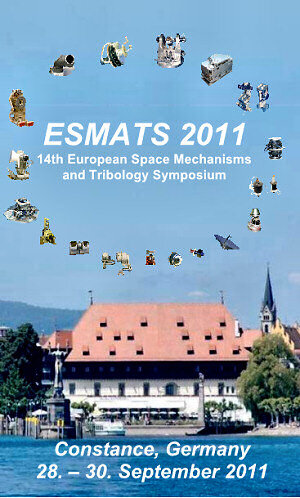
    14th European Space Mechanisms and Tribology Symposium 2011

    Tribology – the study of how moving surfaces interact, focused on friction and lubrication – is certainly the most challenging element of mechanisms for space.

    Since 1972, the section has been working alongside the European Space Tribology Laboratory. Results are presented in the first quarter of each year during the Mechanisms R&D Final Presentation days, in association with ESTEC’s Mechanisms Workshop.

    Pyrotechnics is another essential technology for specific applications of space mechanisms, offering an unbeatably high energy/mass ratio for deployments and separations. Due to safety constraints, the ESA Mechanism section’s research in this area is partnered with the Agency’s external Pyrotechnics Laboratory at CNES in Toulouse.

    This month sees a significant event for the space mechanisms community, with the 14th European Space Mechanisms and Tribology Symposium (EMATS 2011) taking place at Lake Constance in Germany on 28 to 30 September, with around 250 engineers expected to attend.

    ESA's Mechanisms section is among the co-organisers of the symposium, which takes place every two years, and Mechanisms staff will be presenting results from their current research.

    For a detailed overview of ESA’s Mechanisms section, visit its website (see link on right hand side).


    Previous

    Rate this

    Views

    Share

    • Currently 0 out of 5 Stars.
    • 1
    • 2
    • 3
    • 4
    • 5
    Rating: 0/5 (0 votes cast)

    Thank you for rating!

    You have already rated this page, you can only rate it once!

    Your rating has been changed, thanks for rating!

    37
    Tweet
    • This article continues...
      • Making space systems mobile: website highlights ESA’s Mechanisms section
        • ESA's Mechanisms section: simulations to pyrotechnics
        • More information
        • Mechanisms section website
          • Structures and Mechanisms
            • External Laboratories (Mechanical)
            • Related articles
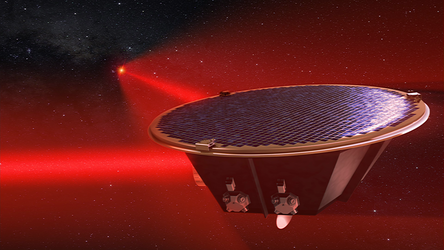
              • How to keep LISA’s laser on target five million km away
              • Related links
              • ESMATS 2011

    Connect with us

    • RSS
    • Youtube
    • Twitter
    • Flickr
    • G+
    • Facebook
    • Livestream
    • Subscribe
    • App Store
    • LATEST ARTICLES
    • · ESA astronaut Timothy Peake set fo…
    • · Space drives e-mobility
    • · Proba-V opens its eyes
    • · First new Galileo satellite arrive…
    • · Next destination: space
    • FAQ

    • Jobs at ESA

    • Site Map

    • Contacts

    • Terms and conditions