• → European Space Agency

      • Space for Europe
      • Space News
      • Space in Images
      • Space in Videos
    • About Us

      • Welcome to ESA
      • DG's News and Views
      • For Member State Delegations
      • Business with ESA
      • ESA Exhibitions
      • ESA Publications
      • Careers at ESA
    • Our Activities

      • Space News
      • Observing the Earth
      • Human Spaceflight
      • Launchers
      • Navigation
      • Space Science
      • Space Engineering
      • Operations
      • Technology
      • Telecommunications & Integrated Applications
    • For Public

    • For Media

    • For Educators

    • For Kids

    • ESA

    • Space Engineering

    • What we do
    • Directorate of Technical and Quality Management (TEC)
    • Electrical
    • Electrical engineering
    • Control Systems
    • Data Systems
    • Radio Frequency Payload Systems
    • Electromagnetics and Space Environment
    • Power and Energy Conversion
    • Mechanical
    • Mechanical engineering
    • Thermal Control
    • Structures and Mechanisms
    • Mechatronics and Optics, incl. robotics and life support
    • Propulsion and Aerothermodynamics
    • Systems
    • Systems and software engineering
    • Software Systems
    • Systems Engineering, incl. cost engineering
    • Technology programmes
    • Product Assurance
    • Product Assurance
    • Flight Safety
    • Dependability
    • Quality Management and Assurance
    • Materials and Processes
    • Electronic Components
    • Software Product Assurance
    • Standards
    • Requirements and standards
    • European Cooperation for Space Standardization (ECSS)
    • European Space Components Coordination (ESCC)
    • Services
    • ESA calendar of events
    • Subscribe

    ESA > Our Activities > Space Engineering

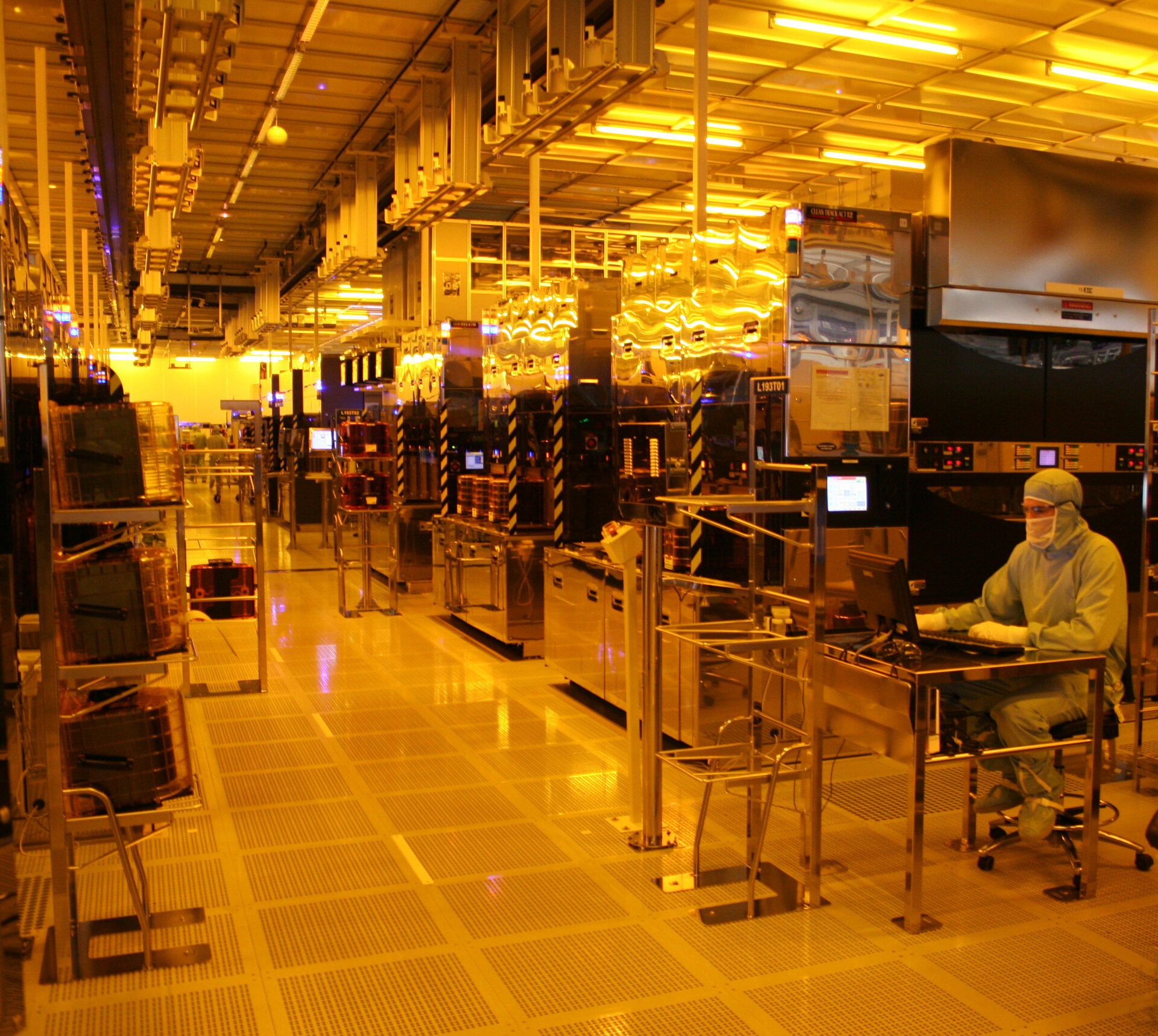
    Clean room for chip fabrication

    LEON: a new recipe for chips

    2 January 2013

    How to go about designing a microprocessor? The first step is to think about what it needs to do, in this case serve as a general purpose processor for space-based computer systems.

    The next, having selected the SPARC open standard to work within, was to code the instruction set defined by this standard into a text-based description suitable for translation into an electronic circuit.

    “Coding is performed using a hardware description language called VHDL which resembles a software programming language but has specific features to describe an electronic circuit,” Roland explained.

    The resulting description contained several thousand lines of code: the LEON2-FT VHDL IP core. This VHDL code could then be simulated on computers, to validate it was operating as intended in advance of producing any hardware. A reduced version of the LEON IP core was distributed to the user community to obtain crowdsourced debugging tips.
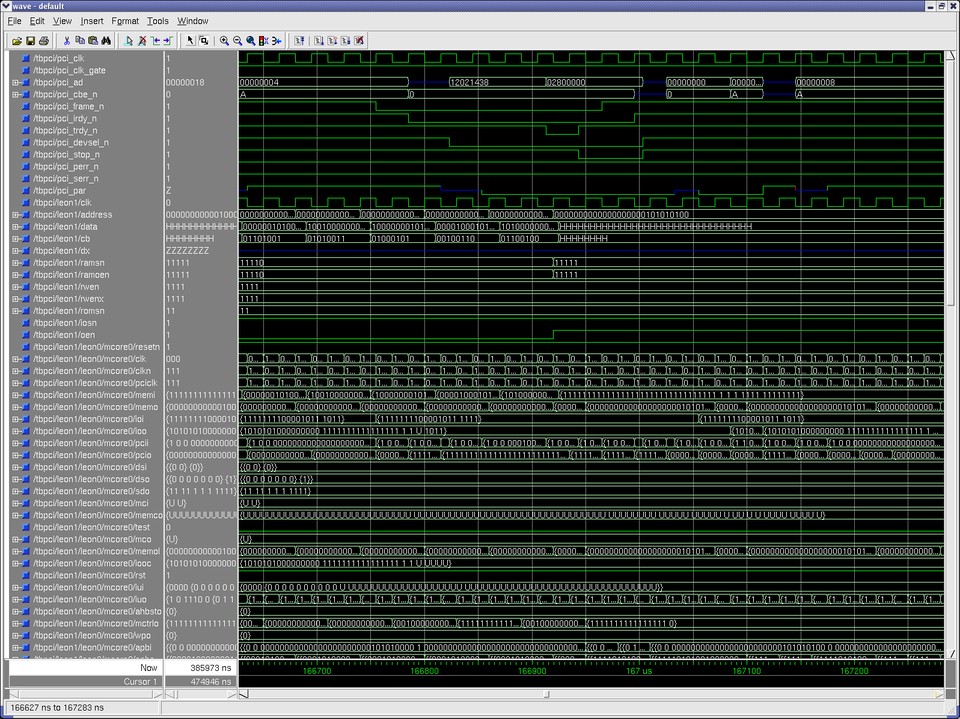
    LEON simulation

    “The next stage was then to physically translate that code to create a test board hosting a programmable chip called a ‘field programmable gate array’ (FPGA) where the LEON design could be put to work and tested.”

    The reprogrammable nature of the FPGA allowed different design configurations to be evaluated before deciding on a definitive version for the final (and expensive) chip manufacturing, when the microprocessor design is etched onto semiconductor chips.

    Into the nanoworld

    Conservative space technology tends to lag behind its faster-moving terrestrial equivalent: the LEON2-FT is etched to a resolution of 180 nm, while the forthcoming Next Generation Microprocessor will go down to 90 nm or even 65 nm. For comparison, Intel’s latest CPU is around 32 nm.

    These 90 nm and 65 nm technologies, while available in the commercial world for many years, are currently being validated for use in space through a pair of ESA activities called the Design Against Radiation Effects (DARE) and Deep Sub Micron (DSM) initiatives.

    This descent into the nanoworld throws up fresh design challenges – such smaller technology is more sensitive to Single Event Upsets, for example – but success would mean that spacecraft designers can go on assuming enhanced processing performance for future missions for many years to come.
    Rate this

    Views

    Share

    • Currently 0 out of 5 Stars.
    • 1
    • 2
    • 3
    • 4
    • 5
    Rating: 0/5 (0 votes cast)

    Thank you for rating!

    You have already rated this page, you can only rate it once!

    Your rating has been changed, thanks for rating!

    11
    facebook
    twitter
    reddit
    google plus
    digg
    tumbler
    digg
    blogger
    myspace

    Related articles

    LEON: the space chip that Europe built02 January 2013

    LEON: the space chip that Europe built02 January 2013 Just like home computers, the sophisticated capabilities of today’s space missions are made possible by the power of their processor chips. ESA’s coming Alphasat telecom satellite, the Proba-V microsatellite, the Earth-monitoring Sentinel family and t...

    Leading up to LEON: ESA’s first microprocessors02 January 2013

    Leading up to LEON: ESA’s first microprocessors02 January 2013 ESA engineers began by taking existing designs and adapting them for space use. This process began with the Agency’s MA31750 16-bit microprocessor, designed in the early 1990s.

    Vessel detection

    LEON's first flights02 January 2013

    Vessel detection

    LEON's first flights02 January 2013 The AT697 (LEON2-FT) flew for the first time in 2008, launched to ESA’s Columbus module on the Space Station within a prototype computer payload called the ERNObox.

    LEON: the making of a microprocessor for space02 January 2013

    LEON: the making of a microprocessor for space02 January 2013 The chances are whatever hardware you are reading this on would not cope well with space. Assuming its mechanical structure survived the launch acceleration and vibration, it would then face sustained hard vacuum and temperature extremes. And within a...

    • Data Systems
    • Microelectronics website
    • European Components Initiative (ECI)
    • Alphasat/Alphabus
    • Sentinels
    • Proba-V
    • IXV
    • Bepicolombo overview
    • Automated Transfer Vehicle (ATV)
    • About Ariane 5
      • DMS-R: ESA's Data Management System for the Russian Segment of the ISS
      • Rosetta

    Connect with us

    • RSS
    • Youtube
    • Twitter
    • Flickr
    • Google Buzz
    • Subscribe
    • App Store
    • LATEST ARTICLES
    • · CryoSat hits land
    • · Ariane 5 completes seven launches …
    • · Measuring skull pressure without t…
    • · Malargüe station inauguration
    • · The solar wind is swirly
    • FAQ

    • Jobs at ESA

    • Site Map

    • Contacts

    • Terms and conditions
