• → European Space Agency

      • Space for Europe
      • Space News
      • Space in Images
      • Space in Videos
    • About Us

      • Welcome to ESA
      • DG's News and Views
      • For Member State Delegations
      • Business with ESA
      • ESA Exhibitions
      • ESA Publications
      • Careers at ESA
    • Our Activities

      • Space News
      • Observing the Earth
      • Human Spaceflight
      • Launchers
      • Navigation
      • Space Science
      • Space Engineering
      • Operations
      • Technology
      • Telecommunications & Integrated Applications
    • For Public

    • For Media

    • For Educators

    • For Kids

    • ESA

    • Space Engineering

    • What we do
    • Directorate of Technical and Quality Management (TEC)
    • Electrical
    • Electrical engineering
    • Control Systems
    • Data Systems
    • Radio Frequency Payload Systems
    • Electromagnetics and Space Environment
    • Power and Energy Conversion
    • Mechanical
    • Mechanical engineering
    • Thermal Control
    • Structures and Mechanisms
    • Mechatronics and Optics, incl. robotics and life support
    • Propulsion and Aerothermodynamics
    • Systems
    • Systems and software engineering
    • Software Systems
    • Systems Engineering, incl. cost engineering
    • Technology programmes
    • Product Assurance
    • Product Assurance
    • Flight Safety
    • Dependability
    • Quality Management and Assurance
    • Materials and Processes
    • Electronic Components
    • Software Product Assurance
    • Standards
    • Requirements and standards
    • European Cooperation for Space Standardization (ECSS)
    • European Space Components Coordination (ESCC)
    • Services
    • ESA calendar of events
    • Subscribe

    ESA > Our Activities > Space Engineering

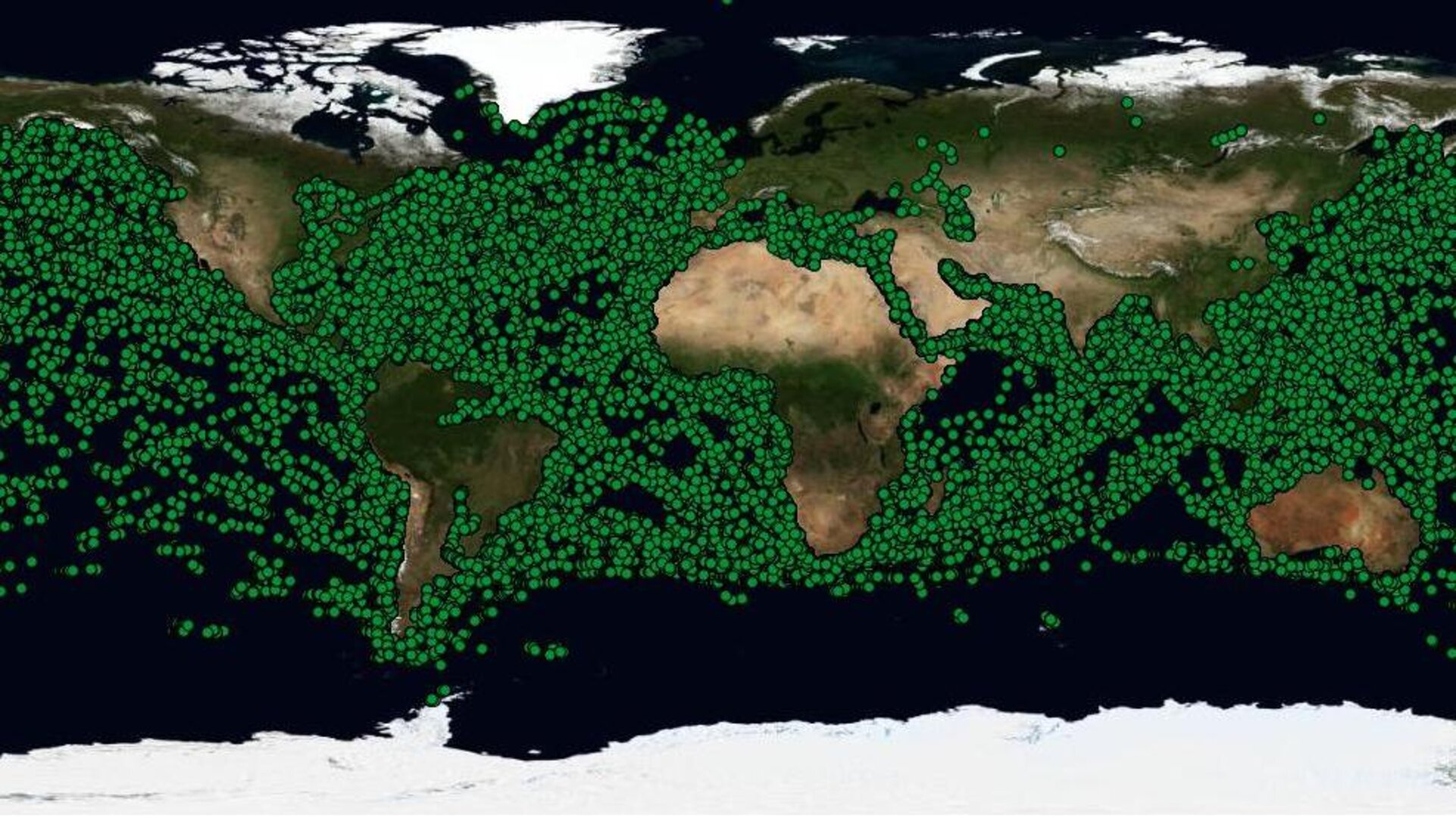
    Vessel detection
    Global ship traffic detection from ISS based on AIS signals

    LEON's first flights

    2 January 2013

    The AT697 (LEON2-FT) flew for the first time in 2008, launched to ESA’s Columbus module on the Space Station within a prototype computer payload called the ERNObox.

    This served to gather data on the internal Station environment before being converted into an experimental system detecting Automatic Identification System (AIS) signals from orbit – the maritime equivalent of air traffic control signals – to build up a global picture of oceangoing traffic.

    The following year a second LEON2-FT chip ran the flight computer of ESA’s Proba-2 microsatellite, a technology demonstration mission focused on solar and space weather monitoring.
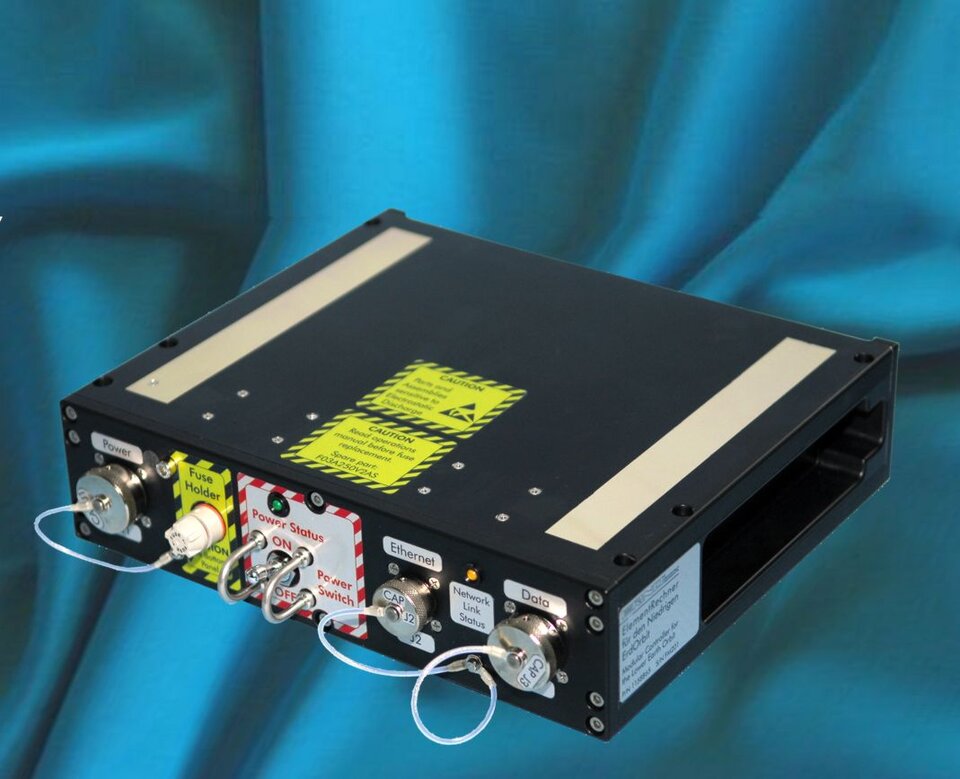
    LEON2-FT-based ERNObox

    Both chips remain fully functional to this day, achieving the all-important flight heritage essential for broader market acceptance.

    “About 400 flight units have been sold in the almost four years that the LEON has been on sale,” Roland added.

    “It is a general-purpose microprocessor, so it can serve in a main computer to run the satellite platform, but can also be used for payload computers to oversee particular experiments.”

    An intangible asset
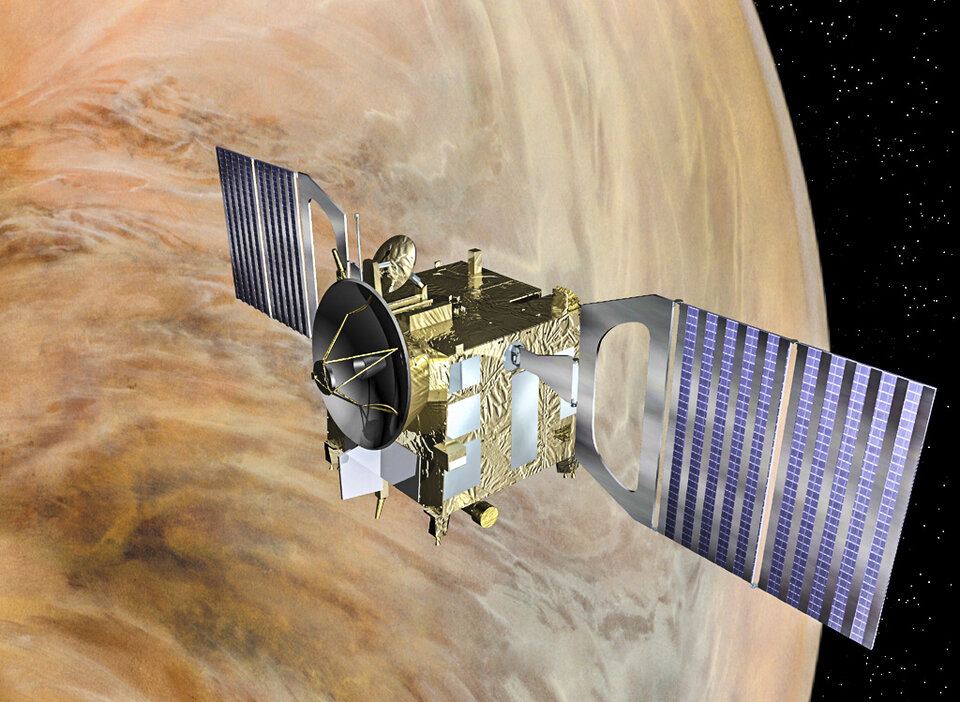
    Venus Express

    And the LEON’s versatility extends beyond the physical microprocessor itself. ESA also has full rights to reuse its ‘IP core’ (Intellectual Property core), meaning the underlying code that describes the circuit, the key input needed, after several design steps, to embed the circuit onto a real chip.

    Existing separately from the manufactured circuit, this LEON ‘source code’ therefore can be applied to various different platforms, such as becoming part of a dedicated ‘system on a chip’ with specialised peripheral functions, such as data compression or encoding and decoding.

    “In fact, a LEON IP core actually was launched even before the AT697 into space,” said Roland. “A programmable chip based on a radiation-tolerant version of this IP core has been controlling a visual monitoring camera on ESA’s Venus Express mission since 2005.”

    LEON’s next steps
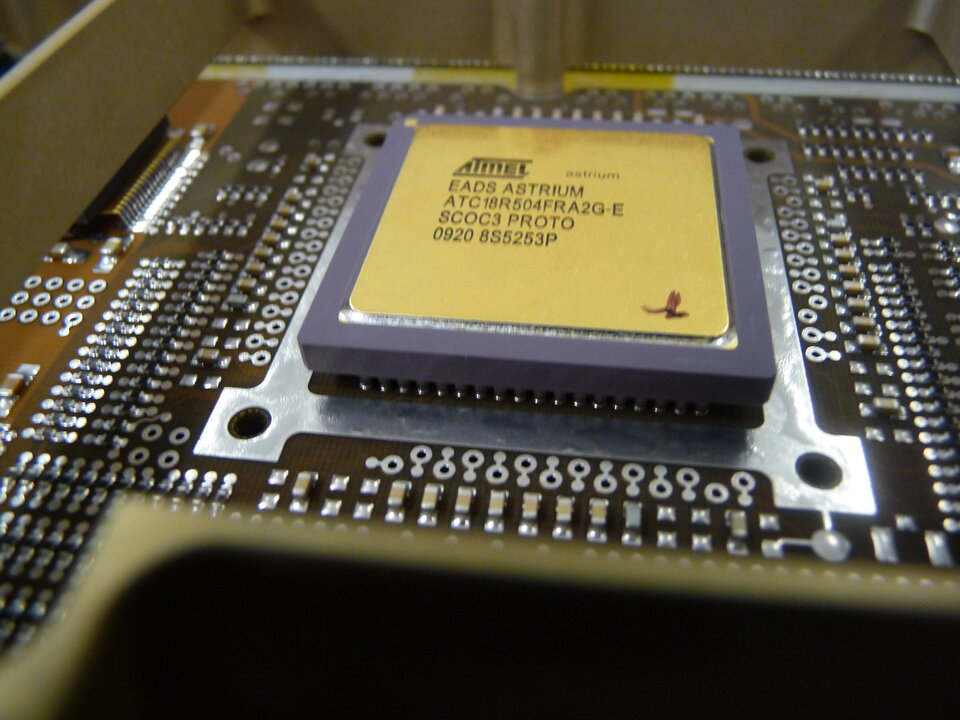
    LEON3 spacecraft controller on a chip

    Not that the LEON story ends with the LEON2-FT. Alphasat and Europe’s Galileo navigation satellites both use next-generation LEON3-based reprogrammable chips within payload elements, embedding a new IP core evolved from the previous LEON design by Swedish company Aeroflex Gaisler.

    Aeroflex Gaisler’s LEON3 is also become the basis of the SCOC3 spacecraft-computer-on-a-chip. Developed by Astrium with ESA support for manufacture by Atmel, this single component has sufficient functionality to operate an entire satellite platform or payload in space. 
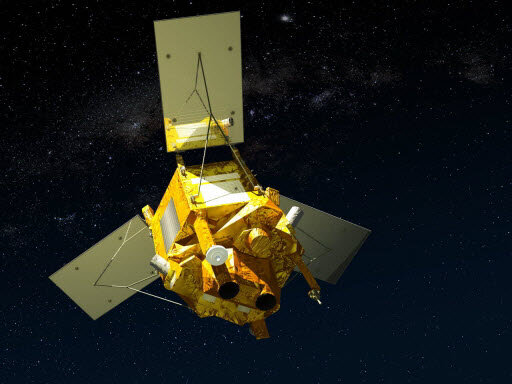
    Spot-6 satellite

    The SCOC3 is already flying in orbit, an integral part of missions including France’s Spot-6 Earth observation satellite launched in September and the MISSE-7 materials experiment outside the Space Station.

    And ESA has contracted with Göteborg-based Aeroflex Gaisler to develop the Next Generation Microprocessor (NGMP) for the decade to come, which will be based on the LEON4 microprocessor: four CPUs will serve a comprehensive set of peripherals to provide a further boost in processing performance, reflecting a similar move to multicore processors in terrestrial markets.

    (Continued in LEON: the making of a microprocessor for space).
    Rate this

    Views

    Share

    • Currently 0 out of 5 Stars.
    • 1
    • 2
    • 3
    • 4
    • 5
    Rating: 0/5 (0 votes cast)

    Thank you for rating!

    You have already rated this page, you can only rate it once!

    Your rating has been changed, thanks for rating!

    23
    facebook
    twitter
    reddit
    google plus
    digg
    tumbler
    digg
    blogger
    myspace

    Related articles

    LEON: the space chip that Europe built02 January 2013

    LEON: the space chip that Europe built02 January 2013 Just like home computers, the sophisticated capabilities of today’s space missions are made possible by the power of their processor chips. ESA’s coming Alphasat telecom satellite, the Proba-V microsatellite, the Earth-monitoring Sentinel family and t...

    Leading up to LEON: ESA’s first microprocessors02 January 2013

    Leading up to LEON: ESA’s first microprocessors02 January 2013 ESA engineers began by taking existing designs and adapting them for space use. This process began with the Agency’s MA31750 16-bit microprocessor, designed in the early 1990s.

    LEON: the making of a microprocessor for space02 January 2013

    LEON: the making of a microprocessor for space02 January 2013 The chances are whatever hardware you are reading this on would not cope well with space. Assuming its mechanical structure survived the launch acceleration and vibration, it would then face sustained hard vacuum and temperature extremes. And within a...

    LEON: a new recipe for chips02 January 2013

    LEON: a new recipe for chips02 January 2013 How to go about designing a microprocessor? The first step is to think about what it needs to do, in this case serve as a general purpose processor for space-based computer systems.

    • Data Systems
    • Microelectronics website
    • European Components Initiative (ECI)
    • Alphasat/Alphabus
    • Sentinels
    • Proba-V
    • IXV
    • Bepicolombo overview
    • Automated Transfer Vehicle (ATV)
    • About Ariane 5
      • DMS-R: ESA's Data Management System for the Russian Segment of the ISS
      • Rosetta

    Connect with us

    • RSS
    • Youtube
    • Twitter
    • Flickr
    • Google Buzz
    • Subscribe
    • App Store
    • LATEST ARTICLES
    • · CryoSat hits land
    • · Ariane 5 completes seven launches …
    • · Measuring skull pressure without t…
    • · Malargüe station inauguration
    • · The solar wind is swirly
    • FAQ

    • Jobs at ESA

    • Site Map

    • Contacts

    • Terms and conditions
