• → European Space Agency

      • Space for Europe
      • Space News
      • Space in Images
      • Space in Videos
    • About Us

      • Welcome to ESA
      • DG's News and Views
      • For Member State Delegations
      • Business with ESA
      • ESA Exhibitions
      • ESA Publications
      • Careers at ESA
    • Our Activities

      • Space News
      • Observing the Earth
      • Human Spaceflight
      • Launchers
      • Navigation
      • Space Science
      • Space Engineering
      • Operations
      • Technology
      • Telecommunications & Integrated Applications
    • For Public

    • For Media

    • For Educators

    • For Kids

    • ESA

    • Space Engineering

    • What we do
    • Directorate of Technical and Quality Management (TEC)
    • Electrical
    • Electrical engineering
    • Control Systems
    • Data Systems
    • Radio Frequency Payload Systems
    • Electromagnetics and Space Environment
    • Power and Energy Conversion
    • Mechanical
    • Mechanical engineering
    • Thermal Control
    • Structures and Mechanisms
    • Mechatronics and Optics, incl. robotics and life support
    • Propulsion and Aerothermodynamics
    • Systems
    • Systems and software engineering
    • Software Systems
    • Systems Engineering, incl. cost engineering
    • Technology programmes
    • Product Assurance
    • Product Assurance
    • Flight Safety
    • Dependability
    • Quality Management and Assurance
    • Materials and Processes
    • Electronic Components
    • Software Product Assurance
    • Standards
    • Requirements and standards
    • European Cooperation for Space Standardization (ECSS)
    • European Space Components Coordination (ESCC)
    • Services
    • ESA calendar of events
    • Subscribe

    ESA > Our Activities > Space Engineering

    Programme manager Luciano Di Napoli and controller Rob Oremus explain MetOp-B testing

    MetOp-B module passes crucial vacuum test

    3 August 2010

    The Payload Module of ESA’s latest meteorological satellite, MetOp-B, has been hauled out of the largest vacuum chamber in Europe: its ability to operate in the harsh conditions of space has been proved.

    After more than a month of testing in ESA’s Large Space Simulator (LSS) at ESTEC in the Netherlands, MetOp-B’s Payload Module was lifted out of the vacuum chamber on 28 July.

    Lifted out of LSS

    The module hosts all of the sensitive meteorological instruments. It had been placed within the LSS to recreate space conditions down here on Earth. The largest simulator of its kind in Europe - big enough to accommodate a double-decker bus standing upright - the LSS subjected the module to space-quality vacuum and temperatures ranging from upwards of 100 degrees C down to 120 degrees below zero.

    “Some of MetOp-B’s sensors work under much colder conditions still, because they are actively cooled for optimal performance verification,” said MetOp programme manager Luciano Di Napoli.


    Heavy lifting

    MetOp-B
    Payload Module moved

    “But those tests had already been done. In these past weeks it was about the Payload Module as a whole and it has proven to be space-proof. As a team, we are very proud about the results obtained.”

    The MetOp-B team worked with ESTEC Test Centre personnel to prepare for the Payload Module’s ‘liberation’. The multi-layer insulation-covered module was lifted up out of the LSS slowly and with maximum precision.

    The mission team monitored every millimetre-scale movement until the satellite was safely on its stand in the adjoining clean room. The entire process took three hours to complete.
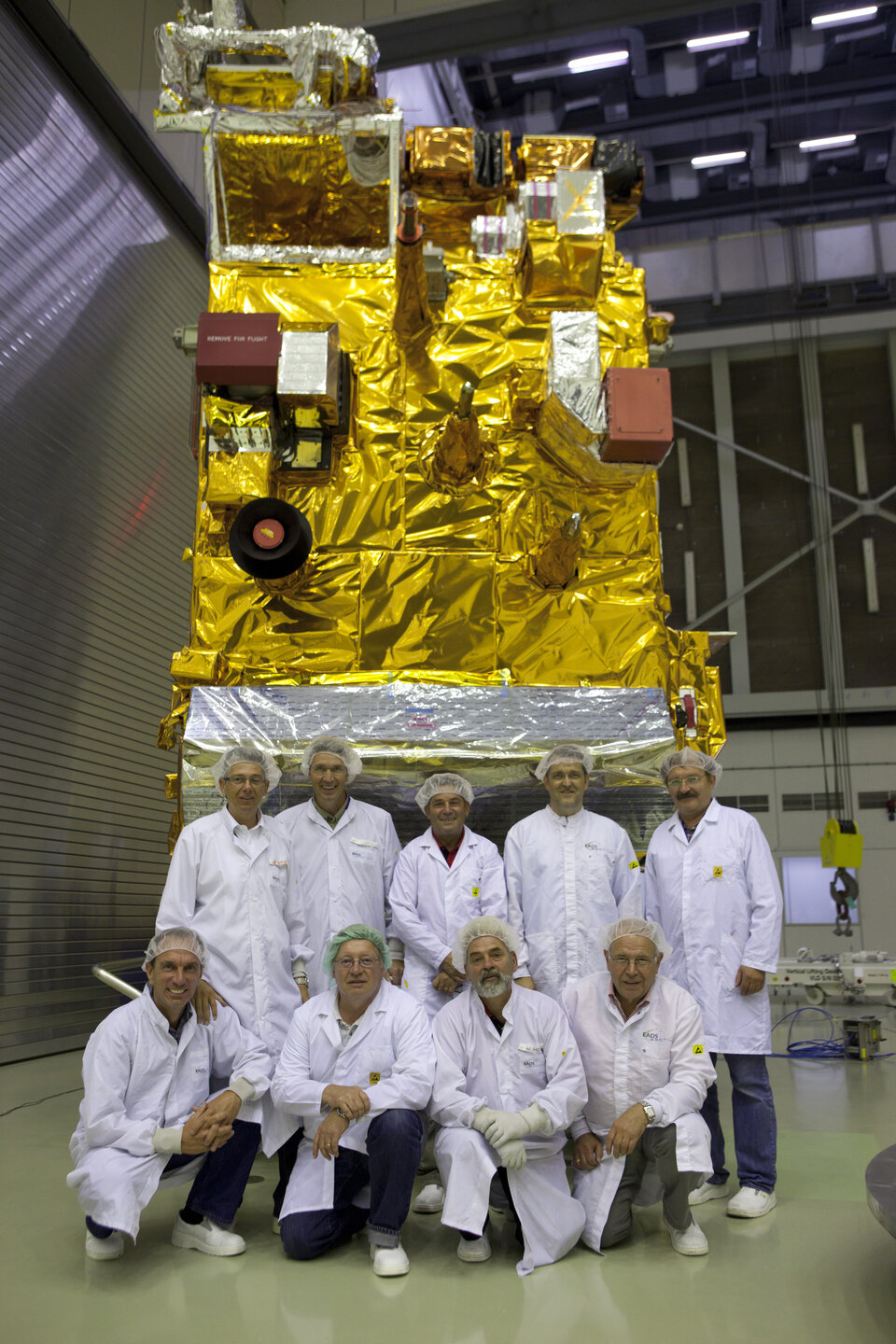
    MetOp-B team with Payload Module
    MetOp-B team

    After final checks at the ESTEC Test Centre, the module will be transported at the start of August to payload module contractor EADS Astrium, in Friedrichshafen, Germany, where it will be temporarily stored, waiting for the final precise calibration of some European and American instruments.

    Next year, it will journey to Toulouse, where EADS Astrium prime contractor will attach it to the Service Module and the solar panels. Finally, MetOp B will be transported to Baikonur in Kazakhstan for launch on a Soyuz rocket in the spring of 2012.

    Ensuring continuous data

    MetOp-B is the second in a series of three European meteorological operational satellites procured by ESA to serve as the space segment of the European Organisation for the Exploitation of Meteorological Satellites' EUMETSAT Polar System (EPS). The first in the series, MetOp-A, was launched into polar orbit in 2006. MetOp-C is scheduled for launch in 2016.
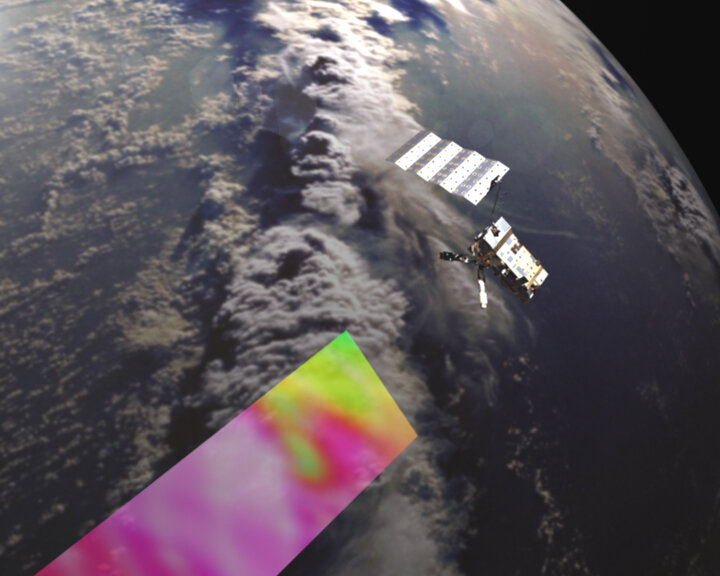
    MetOp-A is Europe's first polar orbiting weather satellite
    MetOp-A already in orbit

    “By launching a new satellite every five to six years, the MetOp system can provide continuous data for temperature, humidity, cloud cover and gases in the atmosphere, among other things,” says Rob Oremus, project controller for MetOp. “These data are essential for operational meteorology and climate research.”

    Mr Oremus was pleased with the results of the tests performed in the LSS: “The Payload Module is the most critical part of the MetOp-B satellite. It contains the instruments that will be collecting the data.

    “Now that the module has overcome the vacuum test, the path is clear for the run-up to the launch.”

    Rate this

    Views

    Share

    • Currently 0 out of 5 Stars.
    • 1
    • 2
    • 3
    • 4
    • 5
    Rating: 0/5 (0 votes cast)

    Thank you for rating!

    You have already rated this page, you can only rate it once!

    Your rating has been changed, thanks for rating!

    31
    facebook
    twitter
    reddit
    google plus
    digg
    tumbler
    digg
    blogger
    myspace
    • Related article
      • MetOp-B is ESA test centre’s latest task of busy year
      • More information
      • Test Centre
      • MetOp

    Connect with us

    • RSS
    • Youtube
    • Twitter
    • Flickr
    • Google Buzz
    • Subscribe
    • App Store
    • LATEST ARTICLES
    • · CryoSat hits land
    • · Ariane 5 completes seven launches …
    • · Measuring skull pressure without t…
    • · Malargüe station inauguration
    • · The solar wind is swirly
    • FAQ

    • Jobs at ESA

    • Site Map

    • Contacts

    • Terms and conditions