Integral overview
Name: Integral (International Gamma-Ray Astrophysics Laboratory)
Status: Completed (launched on 17 October 2002, stopped collecting scientific data on 28 February 2025)
Mission theme: Tracking violent events across the Universe
Mission objectives
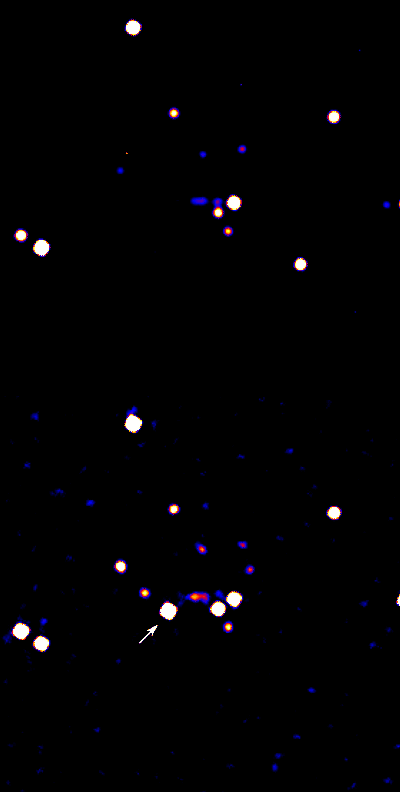
Integral was the first space observatory that could observe celestial objects simultaneously in gamma rays, X-rays and visible light. Its principal targets were violent explosions known as gamma-ray bursts, powerful phenomena such as explosions of stars, and regions of the Universe thought to contain black holes.
Earth's atmosphere acts as a shield to protect us from dangerous cosmic gamma rays – which are even more powerful and penetrating than the X-rays used in medical examinations radiation. But this means that gamma rays from space can only be detected outside Earth’s atmosphere. When it launched in 2002, Integral was the most advanced gamma-ray observatory ever created; it has enabled astronomers to observe distant events that shape the Universe and better understand how matter behaves in extreme conditions.
What’s special?
Integral was the most sensitive, accurate, and advanced gamma-ray observatory ever launched, allowing us to better understand the Universe’s most violent objects.
It sounds paradoxical: the events that made the Universe habitable were catastrophic. Billions of years ago, violent stellar explosions known as supernovae provided the energy needed to form the elements from which planet Earth and living things were eventually formed. What we want to know is how exactly these elements were made. To answer this question precisely, more research has to be done on new supernovae, and Integral’s gamma ray observations played a big role in providing the data we need.
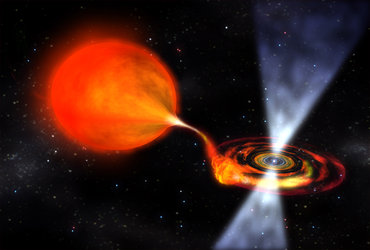
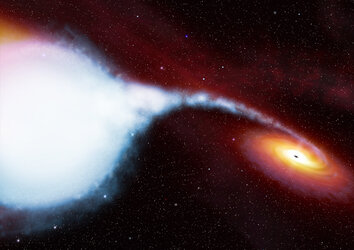
Gamma rays also appear after supernovae when matter squirms in the intense gravity of the collapsed and very dense remnant that is left behind after a star’s outer layers are blasted into space. These compact objects include neutron stars and stellar mass black holes, and studying them was another of Integral’s important goals.

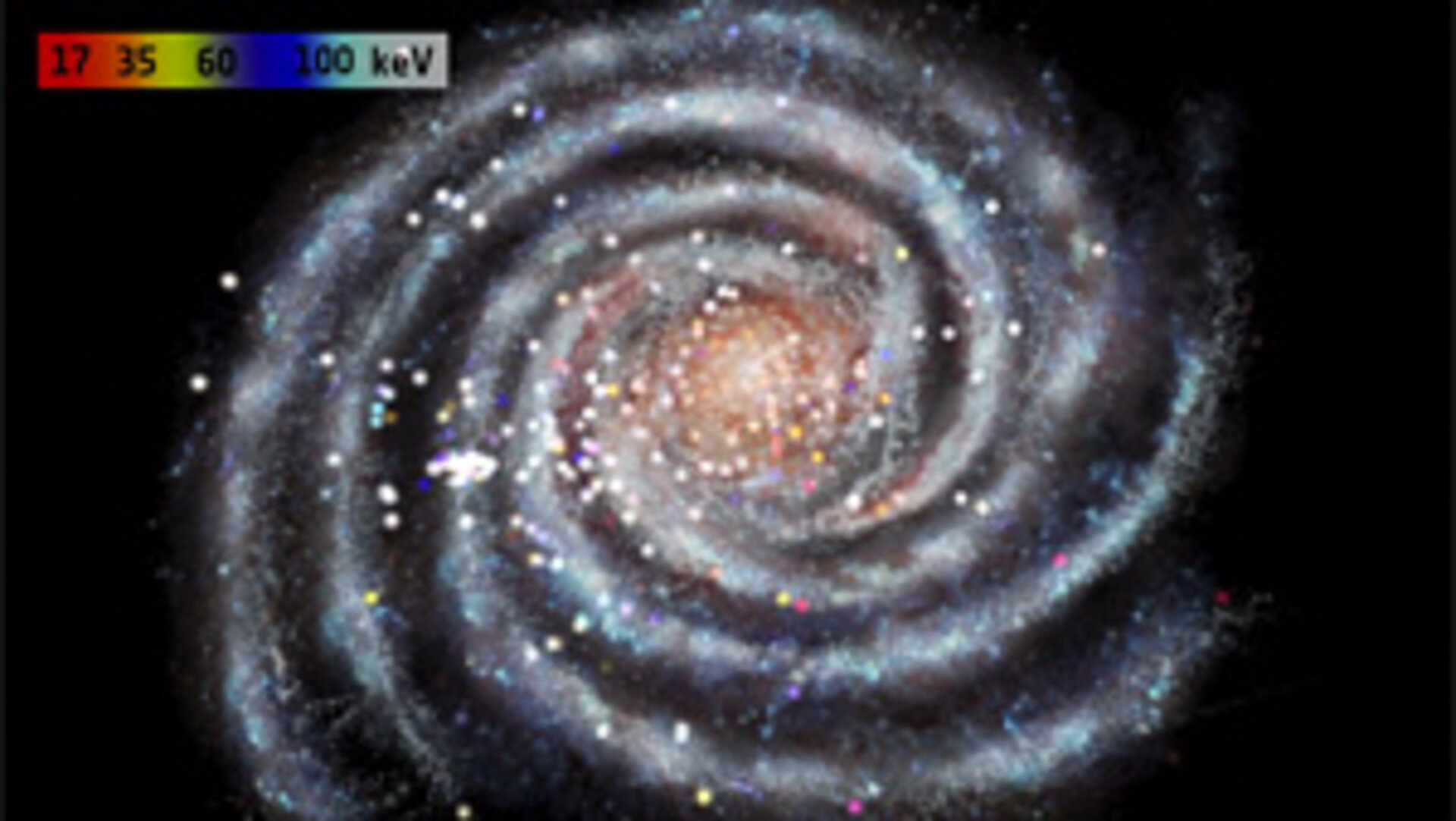
Access the video
The supermassive black hole at the centre of our own galaxy, the Milky Way, is another major source of gamma rays. Integral helped us to unveil the history of this giant and enigmatic object and map the region of space around it. The mission has also found evidence of supermassive black holes at the centres of other galaxies and studied their properties.
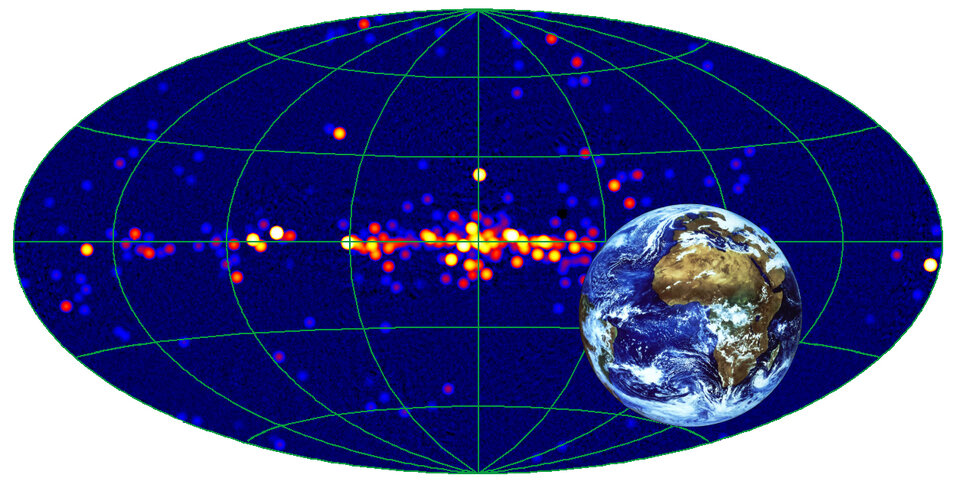
Even more mysterious than the energetic radiation coming from the centres of distant galaxies are the flashes of extremely powerful gamma rays that suddenly appear then disappear from a random location in the sky. Observations in different wavelengths confirm that these distant ‘gamma-ray bursts’ – which last milliseconds to hours, but each produce more energy than the Sun will over its entire lifetime – are the biggest explosions in the Universe. By observing gamma-ray bursts, Integral helped us understand where they come from.
Fortunately for us, these gamma-ray bursts are very far away, but they are not the most distant objects Integral has seen so far. This record goes to quasars – gamma-ray lighthouses that Integral sees shining from the very edge of the Universe.
Spacecraft and instruments
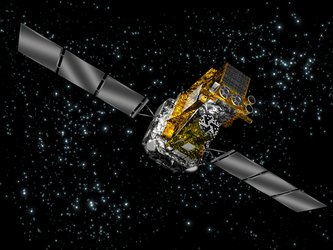
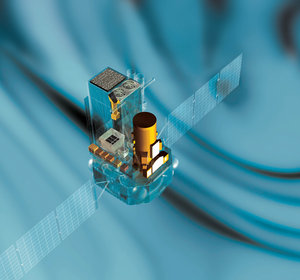
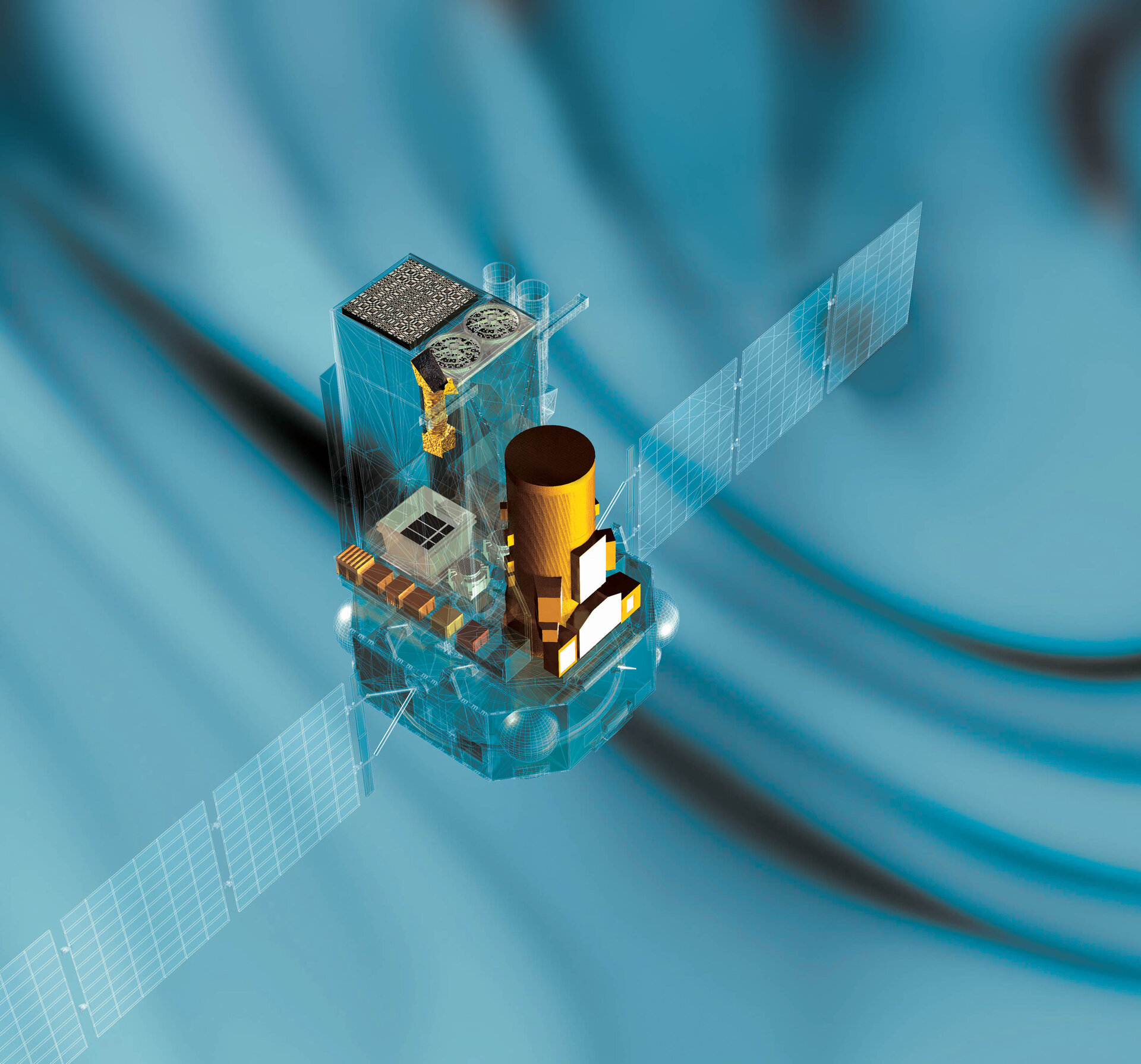
Standing five metres high and weighing more than four tonnes, the Integral spacecraft was impressively large. The satellite had two main parts: the service module at the bottom contains all spacecraft subsystems required to support the mission; the payload module containing the scientific instruments is mounted on top of the service module.
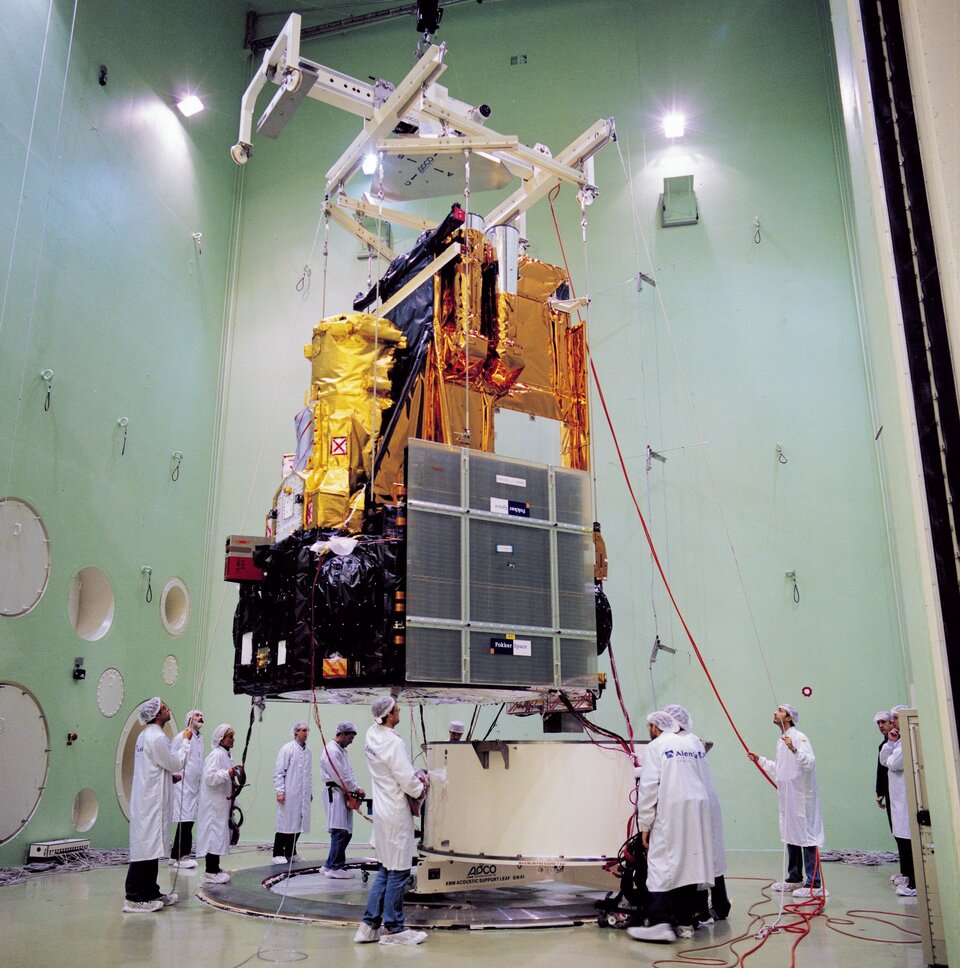
Integral’s service module was a rebuild of the one developed for XMM-Newton, ESA’s X-ray observatory – the two missions had some similar requirements, making this a useful cost-saving measure. It was a closed structure made of composite material that is a combination of aluminium and carbon fibre. Inside were systems for solar power generation, power conditioning and control, data handling, telecommunications and thermal, attitude and orbit control.
The four scientific instruments of Integral’s payload module weighed two tonnes altogether, making this the heaviest science payload ever placed into orbit by ESA. Why so heavy? The detectors had a very large area so that they could capture sparse gamma rays, and a huge shield protected the detectors from background radiation in order to make them more sensitive.
Integral hosted two main instruments to detect gamma rays: a camera provided the sharpest gamma-ray images so far, whilst a spectrometer precisely assessed the energy of the detected gamma rays. Two other instruments – an X-ray monitor and an optical camera – helped to identify the gamma-ray sources.
Journey and orbit

Integral was launched with a Russian Proton rocket on 17 October 2002 from the Baikonur Cosmodrome in Kazakhstan. A powerful launcher was essential to put the heavy spacecraft into its unusual orbit.
The Proton used three booster stages to place the spacecraft into a low ‘parking’ orbit. The Proton upper stage put the satellite into a highly eccentric 'transfer' orbit. Then Integral's own propulsion system brought the spacecraft to its operational orbit.
Integral circled Earth in a highly elliptical orbit once every three days. Up until 2015, its lowest point was 13 000 km above Earth’s surface and its highest point was 153 000 kilometres. Since 2015, the orbit had become shorter and Integral came closer to Earth’s surface; this ensured that the spacecraft could be safely disposed of in 2029.
Integral’s high and eccentric orbit guaranteed long periods of uninterrupted observation away from Earth's radiation belts. This to avoid the effects of background radiation which would interfere with the measurement of gamma rays.
After 2886 orbits and 22 years gazing into the depths of our cosmos, on 28 February 2025 Integral’s sensitive instruments stopped collecting scientific data. Following the end of its science observations, the spacecraft will continue to orbit Earth for four more years. ESA engineers will monitor the satellite until it re-enters Earth's atmosphere in early 2029. Thanks to a special four-thruster burn executed back in 2015, the satellite’s entry into the atmosphere will meet ESA’s pledge to minimise space debris.
History
Integral was selected by ESA in June 1993 as the second medium-size scientific mission (M2) of the Horizon 2000 programme. The mission was conceived as an observatory led by ESA with contributions from Russia (Proton launcher) and NASA (Deep Space Network ground stations).
Partnerships
Integral was a truly international mission with the participation of all ESA Member States plus the United States and Russia.
ESA appointed Italian aerospace company Alenia Aerospazio (now integrated into Leonardo) as industrial prime contractor, responsible for the design, integration and testing of the satellite. On board, four instruments from teams led by scientists in Italy, France, Germany, Denmark and Spain are gathering and analysing the gamma rays from space.