• → European Space Agency

      • Space for Europe
      • Space News
      • Space in Images
      • Space in Videos
    • About Us

      • Welcome to ESA
      • DG's News and Views
      • For Member State Delegations
      • Business with ESA
      • ESA Exhibitions
      • ESA Publications
      • Careers at ESA
    • Our Activities

      • Space News
      • Observing the Earth
      • Human Spaceflight
      • Launchers
      • Navigation
      • Space Science
      • Space Engineering
      • Operations
      • Technology
      • Telecommunications & Integrated Applications
    • For Public

    • For Media

    • For Educators

    • For Kids

    • ESA

    • ESA Science

    • Mars Express

    • Europe goes to Mars

      • Europe reclaims a stake in Mars exploration
      • Space age transforms our knowledge about Mars
    • About Mars Express

      • Mars Express mission facts
      • Mars Express instruments
      • The mission
      • The spacecraft
      • The launcher
    • About Mars

      • Geography of Mars
      • Water on early Mars?
      • Signatures of life
      • Facts about Mars
    • Meet the team

      • International collaboration
      • Project Manager
      • Project Scientist
      • Mars Lead Scientist
      • Principal Investigators
      • Operations
      • Industry
    • Multimedia
    • VideoTalk
    • Mars Express images
    • Mars Express videos
    • HRSC videos
    • Animation in 11 languages
    • Download wallpapers
    • Download screensavers
    • 3D Flash 'model'
    • Make a model
    • Services
    • Comments

    ESA > Our Activities > Space Science > Mars Express

    Mars Express radar to be deployed in May

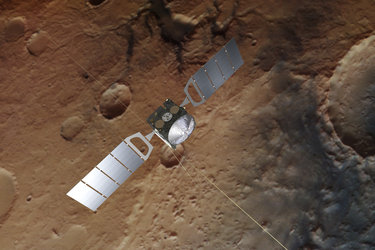
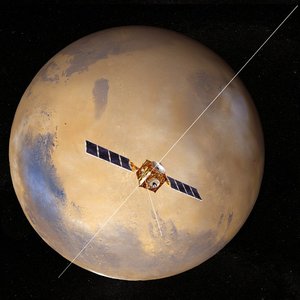
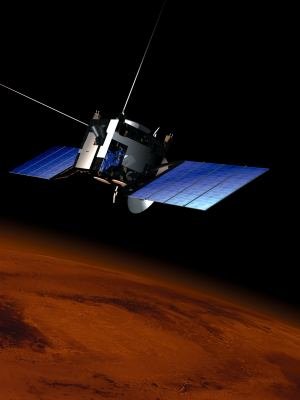
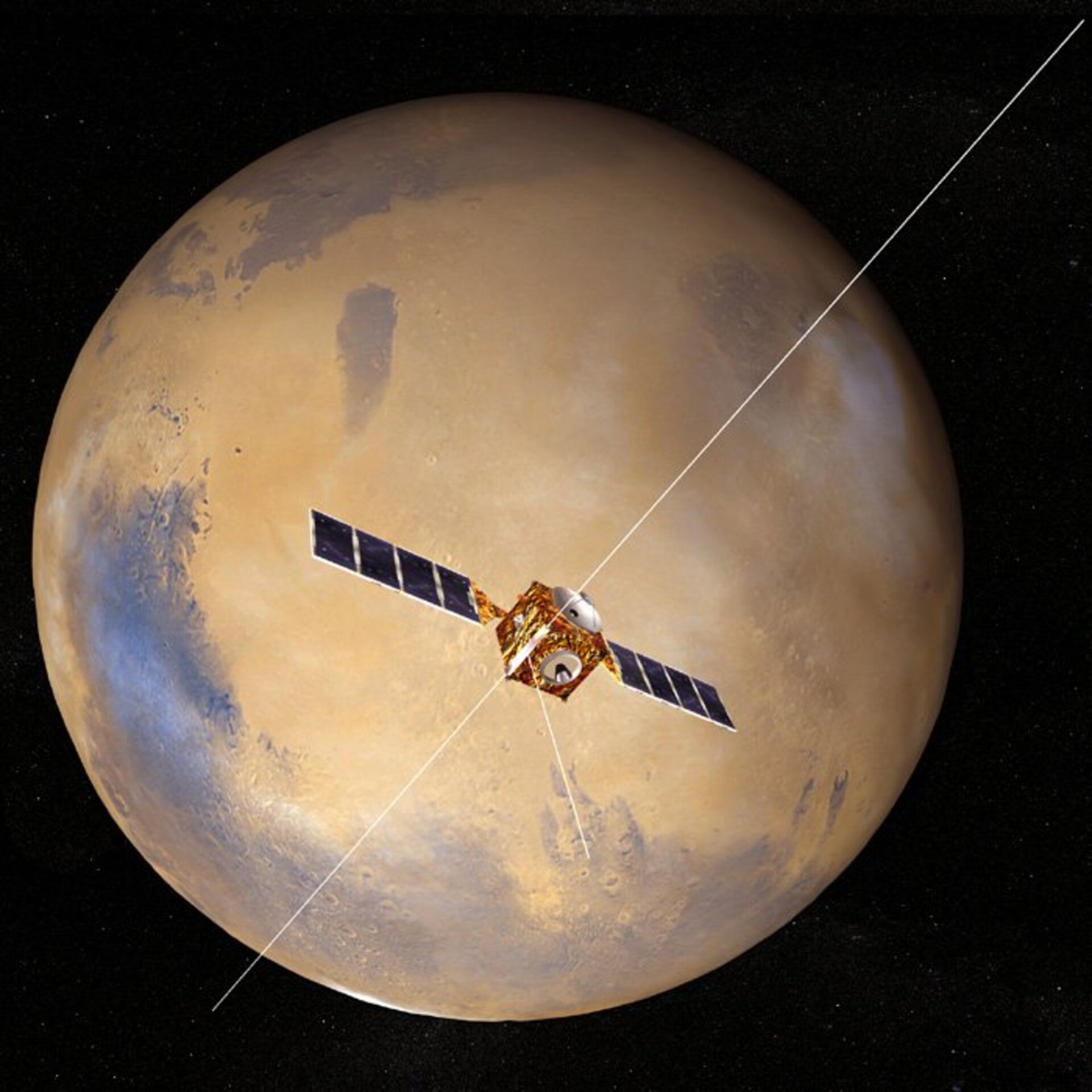
    Mars Express in orbit around Mars with the MARSIS antenna unfurled
    29 April 2005

    Following green light for the deployment of ESA’s Mars Express radar, given in February this year, the radar booms are now planned to be deployed in the first half of May.

    Once the deployment is successful, the Mars Express MARSIS radar will enable the first European spacecraft to orbit Mars to complement its study of the planet’s atmosphere and surface.

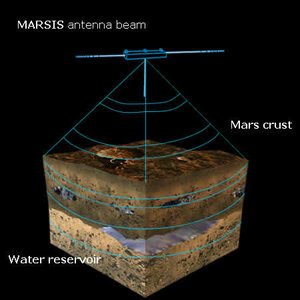
    MARSIS (Mars Advanced Radar for Subsurface and Ionosphere Sounding instrument) is the first antenna of its kind which was also designed to actually look below the surface of Mars at the different layers of material, most notably for water.

    The deployment of the three MARSIS radar booms is an operation which will take place in three phases, in a window spanning from 2 to 12 May 2005. These operations will be initiated and monitored from ESA’s European Space Operations Centre (ESOC) in Darmstadt, Germany.

    Each boom will be deployed separately, with the two 20-metre ‘dipole’ booms to be unfurled first and the 7-metre ‘monopole’ boom to follow a few days later.

    MARSIS antenna
    MARSIS main antenna

    Before each deployment, the spacecraft will be placed in a ‘robust’ attitude control mode, which will allow it to tumble freely while the boom extends before regaining standard pointing to the Sun and Earth.

    After each deployment, the control team will conduct a full assessment of the spacecraft status before a decision is taken to proceed with the next phase.

    The result of each deployment can be assessed only after a series of tests, each taking few days. After the deployment of the three booms, ESA engineers will start the analysis of the complete behaviour of the satellite to be able to confirm the overall success of the operation.

    The current schedule is subject to changes, because the timing of the complex series of operations cannot be all fixed beforehand. A status report will follow in due course.

    Once the deployment is complete, MARSIS will undergo three weeks of commissioning before the start of actual science investigations, ready for when one of the prime regions of interest for radar observations comes into the right position through the natural evolution of the spacecraft’s orbit.

    The MARSIS instrument was developed by the University of Rome 'La Sapienza', Italy, in partnership with NASA’s Jet Propulsion Laboratory (JPL) in Pasadena, California, USA.


    For more information please contact:

    Fred Jansen, ESA Mars Express Mission Manager
    E-mail: fjansen @ rssd.esa.int
    Rate this

    Views

    Share

    • Currently 0 out of 5 Stars.
    • 1
    • 2
    • 3
    • 4
    • 5
    Rating: 0/5 (0 votes cast)

    Thank you for rating!

    You have already rated this page, you can only rate it once!

    Your rating has been changed, thanks for rating!

    27
    Tweet
    • Looking at Mars
    • More about...
      • Mars Express factsheet
        • Mars Express instruments
        • Animation
          • See stages of MARSIS deployment
          • Related articles
            • Mars Express radar collects first surface data
              • Smooth deployment for second MARSIS antenna boom
                • Green light for the deployment of the second MARSIS boom
                  • Deployment of second MARSIS boom delayed
                    • Mars Express radar to be deployed in May
                      • Mars Express latest findings give hints about water loss in the Martian atmosphere
                        • Chances of life are linked to water
                          • Water on early Mars?

    Connect with us

    • RSS
    • Youtube
    • Twitter
    • Flickr
    • G+
    • Facebook
    • Livestream
    • Subscribe
    • App Store
    • LATEST ARTICLES
    • · Proba-V opens its eyes
    • · First new Galileo satellite arrive…
    • · Next destination: space
    • · Leak repaired on International Spa…
    • · After Chelyabinsk: European expert…
    • FAQ

    • Jobs at ESA

    • Site Map

    • Contacts

    • Terms and conditions