• → European Space Agency

      • Space for Europe
      • Space News
      • Space in Images
      • Space in Videos
    • About Us

      • Welcome to ESA
      • DG's News and Views
      • For Member State Delegations
      • Business with ESA
      • ESA Exhibitions
      • ESA Publications
      • Careers at ESA
    • Our Activities

      • Space News
      • Observing the Earth
      • Human Spaceflight
      • Launchers
      • Navigation
      • Space Science
      • Space Engineering
      • Operations
      • Technology
      • Telecommunications & Integrated Applications
    • For Public

    • For Media

    • For Educators

    • For Kids

    • ESA

    • ESA Science

    • Mars Express

    • Europe goes to Mars

      • Europe reclaims a stake in Mars exploration
      • Space age transforms our knowledge about Mars
    • About Mars Express

      • Mars Express mission facts
      • Mars Express instruments
      • The mission
      • The spacecraft
      • The launcher
    • About Mars

      • Geography of Mars
      • Water on early Mars?
      • Signatures of life
      • Facts about Mars
    • Meet the team

      • International collaboration
      • Project Manager
      • Project Scientist
      • Mars Lead Scientist
      • Principal Investigators
      • Operations
      • Industry
    • Multimedia
    • VideoTalk
    • Mars Express images
    • Mars Express videos
    • HRSC videos
    • Animation in 11 languages
    • Download wallpapers
    • Download screensavers
    • 3D Flash 'model'
    • Make a model
    • Services
    • Comments

    ESA > Our Activities > Space Science > Mars Express

    Signatures of life

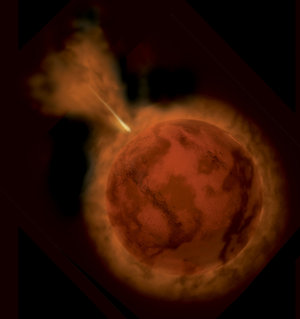
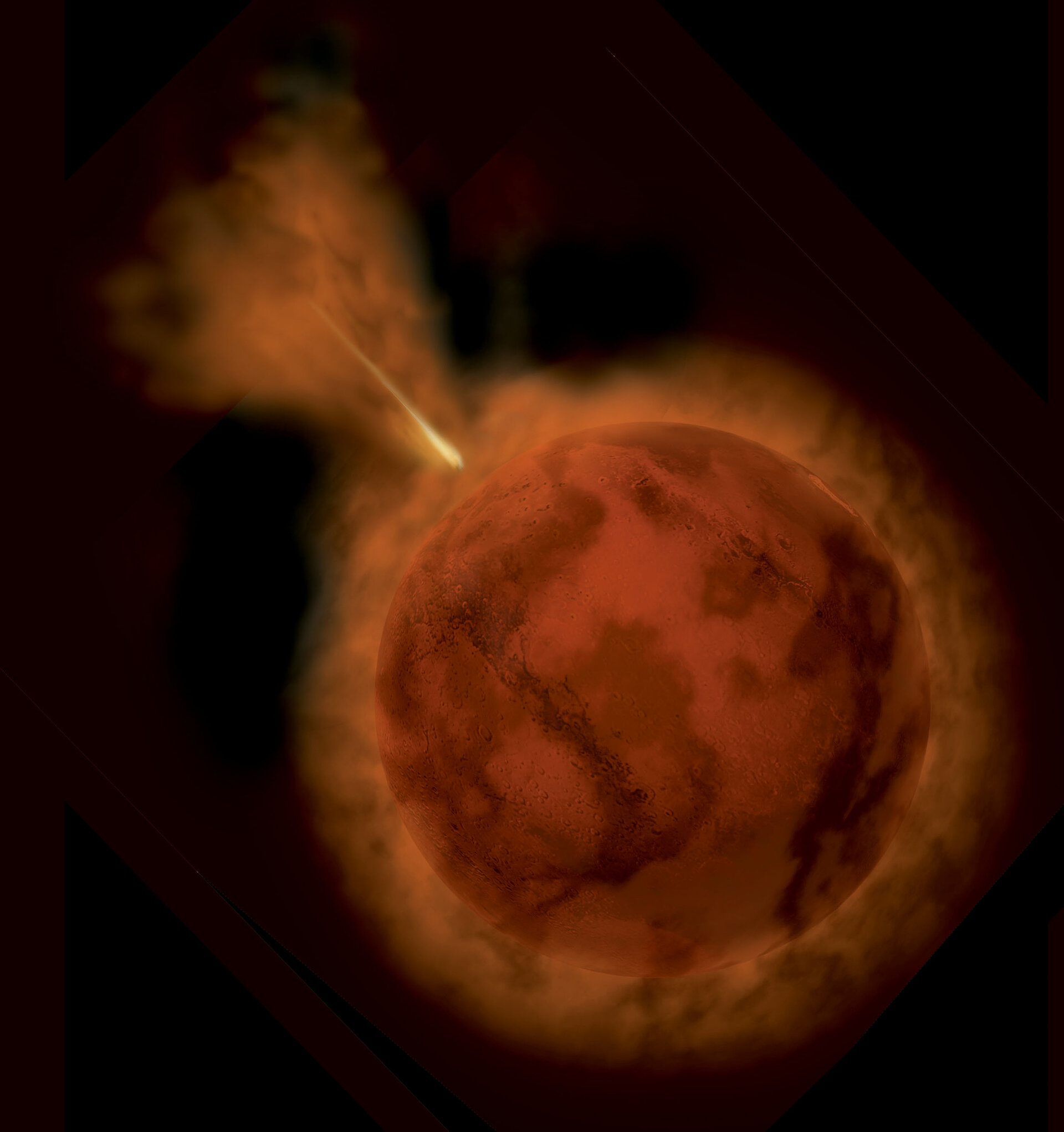
    Mars may have lost much of its atmosphere during asteroid impacts early in its history

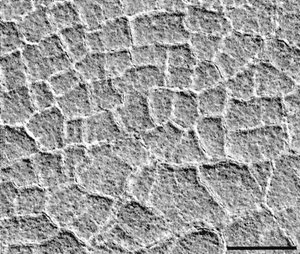
    Where there's water, there could be life. "Meteorites from Mars that have landed on Earth show clear evidence that conditions appropriate to life did exist on the planet, including in the recent past," said Colin Pillinger, Consortium Leader for the Beagle 2 lander at the Open University, Milton Keynes, UK. "However, features in the meteorites which have been described as nanofossils are highly controversial. Unfortunately, we cannot be sure that organic matter found in the meteorites is the remnant of organisms that lived on Mars and not due to contamination on Earth. We need to repeat the experiments on rocks that never left the Red Planet."

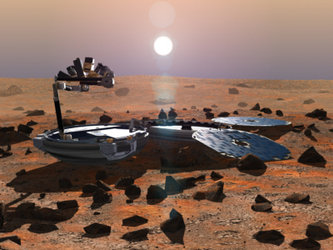
    The Beagle 2 lander would have looked for signatures of life on Mars, whether long-dead or still-living, by measuring the ratio of two different types of carbon in the rock. Biological processes on Earth favour the lighter isotope of carbon, carbon-12, over the heavier carbon-13. Hence, a high carbon-12 to carbon-13 ratio is taken as evidence of life and has been found in rocks up to 4000 million years old, even where geological processing has occurred.

    The martian meteorite ALH 84001
    The martian meteorite ALH 84001

    On Earth, some life that is still active produces another signature - methane. The simplest biological sources, such as those associated with peat bogs, rice fields and ruminant animals, continuously supply fresh gas to replace that destroyed by oxidation.

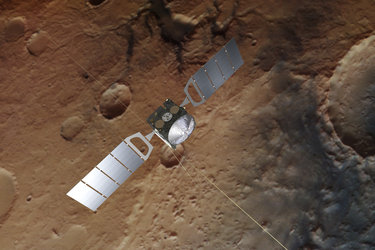
    Methane also has a very short lifetime on Mars because of the oxidising nature of the atmosphere, so its presence would indicate a replenishing source, which may be life, even if it is buried beneath the surface. If this methane exists, the Mars Express orbiter's PFS intrument will be able to detect this gas in the atmosphere.

    The only previous landers to look directly for evidence of life on Mars were NASA's Vikings in 1976. However, Mars's harsh, oxidising atmosphere would almost certainly have destroyed any such evidence on the surface.
    Last update: 10 October 2005

    Rate this

    Views

    Share

    • Currently 0 out of 5 Stars.
    • 1
    • 2
    • 3
    • 4
    • 5
    Rating: 0/5 (0 votes cast)

    Thank you for rating!

    You have already rated this page, you can only rate it once!

    Your rating has been changed, thanks for rating!

    66
    facebook
    twitter
    reddit
    google plus
    digg
    tumbler
    digg
    blogger
    myspace
    • Looking at Mars
    • More about...
      • Mars Express mission facts
      • Related articles
        • Mars Express instruments
          • The search for life
            • Chances of life are linked to water
              • Water on early Mars?
                • Signatures of life
                  • Geography of Mars

    Connect with us

    • RSS
    • Youtube
    • Twitter
    • Flickr
    • Google Buzz
    • Subscribe
    • App Store
    • LATEST ARTICLES
    • · CryoSat hits land
    • · Ariane 5 completes seven launches …
    • · Measuring skull pressure without t…
    • · Malargüe station inauguration
    • · The solar wind is swirly
    • FAQ

    • Jobs at ESA

    • Site Map

    • Contacts

    • Terms and conditions