• → European Space Agency

      • Space for Europe
      • Space News
      • Space in Images
      • Space in Videos
    • About Us

      • Welcome to ESA
      • DG's News and Views
      • For Member State Delegations
      • Business with ESA
      • ESA Exhibitions
      • ESA Publications
      • Careers at ESA
    • Our Activities

      • Space News
      • Observing the Earth
      • Human Spaceflight
      • Launchers
      • Navigation
      • Space Science
      • Space Engineering
      • Operations
      • Technology
      • Telecommunications & Integrated Applications
    • For Public

    • For Media

    • For Educators

    • For Kids

    • ESA

    • ESA Science

    • Mars Express

    • Europe goes to Mars

      • Europe reclaims a stake in Mars exploration
      • Space age transforms our knowledge about Mars
    • About Mars Express

      • Mars Express mission facts
      • Mars Express instruments
      • The mission
      • The spacecraft
      • The launcher
    • About Mars

      • Geography of Mars
      • Water on early Mars?
      • Signatures of life
      • Facts about Mars
    • Meet the team

      • International collaboration
      • Project Manager
      • Project Scientist
      • Mars Lead Scientist
      • Principal Investigators
      • Operations
      • Industry
    • Multimedia
    • VideoTalk
    • Mars Express images
    • Mars Express videos
    • HRSC videos
    • Animation in 11 languages
    • Download wallpapers
    • Download screensavers
    • 3D Flash 'model'
    • Make a model
    • Services
    • Comments

    ESA > Our Activities > Space Science > Mars Express

    World's largest postcard?

    29 March 2004

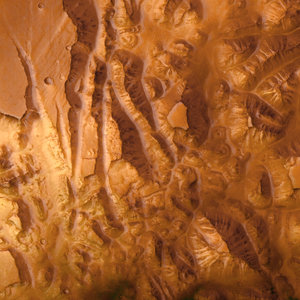
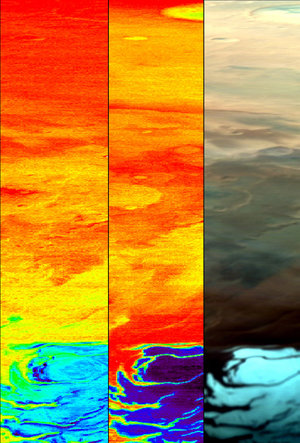
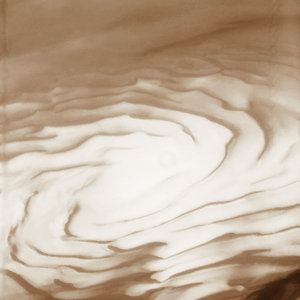
    The biggest postcard in the world does not fit into any known terrestrial letterbox. It measures 24 metres by 1.35 metres and shows a 3700-kilometre long, 166-kilometre wide strip of Martian landscape in south-north direction.

    World's largest postcard?
    World's largest postcard?

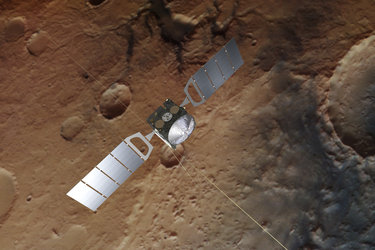
    This postcard of Mars shows a section of surface covering 380 000 square kilometres, an area bigger than Germany. It contains 2.5 gigabytes of uncompressed data. The picture was taken from an altitude of between 275 and 830 kilometres by the HRSC on board ESA's Mars Express orbiter.

    Because of the varying height from which the photograph was, the section of Mars shown has also different dimensions: at the start, the width is 166 kilometres, at the orbiter's closest point to Mars the width is 62 kilometres, and at the end it is 78 kilometres. The picture starts at 52 degrees South and ends at 12 degrees North, the Gusev crater and the NASA Spirit rover landing site lies at about 14.5 degrees South. The European Mars Express spacecraft flies at a speed of one to four kilometres per second over the surface of Mars, depending on its altitude.
    Rate this

    Views

    Share

    • Currently 5 out of 5 Stars.
    • 1
    • 2
    • 3
    • 4
    • 5
    Rating: 5/5 (1 votes cast)

    Thank you for rating!

    You have already rated this page, you can only rate it once!

    Your rating has been changed, thanks for rating!

    79
    facebook
    twitter
    reddit
    google plus
    digg
    tumbler
    digg
    blogger
    myspace
    • Looking at Mars
    • Recent images
      • Ascraeus Mons in 3D
        • Hecates Tholus volcano in 3D
          • Kasei Vallis
            • Olympus Mons - the caldera in close-up
            • Europe's eye on Mars
              • First spectacular results from Mars Express
                • Mars Express sees its first water – scientific results
                  • Mars Express instruments
                  • High Resolution Stereo Camera
                    • What do the colours mean?
                      • Behind the lens...

    Connect with us

    • RSS
    • Youtube
    • Twitter
    • Flickr
    • Google Buzz
    • Subscribe
    • App Store
    • LATEST ARTICLES
    • · CryoSat hits land
    • · Ariane 5 completes seven launches …
    • · Measuring skull pressure without t…
    • · Malargüe station inauguration
    • · The solar wind is swirly
    • FAQ

    • Jobs at ESA

    • Site Map

    • Contacts

    • Terms and conditions