• → European Space Agency

      • Space for Europe
      • Space News
      • Space in Images
      • Space in Videos
    • About Us

      • Welcome to ESA
      • DG's News and Views
      • For Member State Delegations
      • Business with ESA
      • ESA Exhibitions
      • ESA Publications
      • Careers at ESA
    • Our Activities

      • Space News
      • Observing the Earth
      • Human Spaceflight
      • Launchers
      • Navigation
      • Space Science
      • Space Engineering
      • Operations
      • Technology
      • Telecommunications & Integrated Applications
    • For Public

    • For Media

      • Media
      • ESA TV
      • Videos for professionals
      • Photos
    • For Educators

    • For Kids

    • ESA

    • SMART-1

    • ESA Science

    • About SMART-1
    • SMART-1 factsheet
    • Towards final impact
    • Approaching the mission end
    • Frequently Asked Questions
    • Ask about the SMART-1 impact
    • Join the SMART-1 impact observation campaign
    • About the journey

      • The magic of ion engines
      • The SMART way to travel
      • A spiral pathway to the Moon
    • About the mission

      • Masterpieces of miniaturisation
      • What do all the instruments do?
    • About the Moon

      • Welcome to the double planet
      • Lunar science - still plenty left to do!
      • Where did the Moon come from?
    • Multimedia
    • SMART-1 images
    • SMART-1 videos
    • SMART-1 animations
    • 3D Flash 'model'
    • SMART-1 wallpaper
    • Launch replay
    • Services
    • Comments

    ESA > Our Activities > Space Science > SMART-1

    SMART-1 ion engine fired successfully

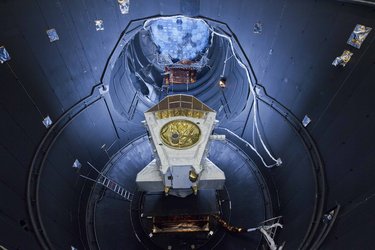
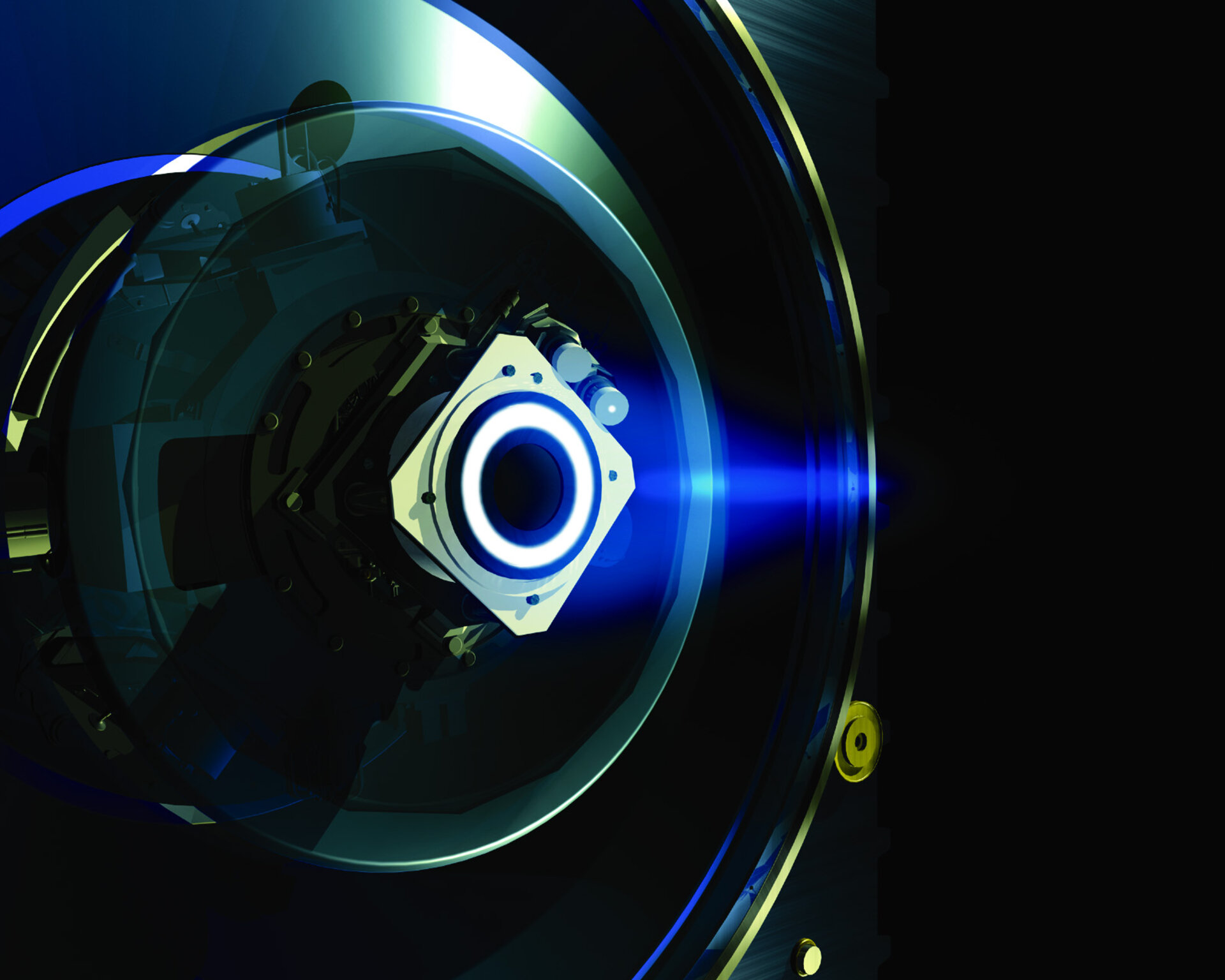
    Close-up view of SMART-1's stationary plasma thruster
    1 October 2003

    SMART-1's revolutionary propulsion system was successfully fired at 12:25 UT on 30 September, 2003, in orbit around the Earth.

    Engineers at ESOC, the European Space Agency's control centre in Darmstadt, Germany, sent a command to begin the firing test, which lasted for one hour. This was similar to a trial performed on Earth before SMART-1 was launched.

    Several months ago, the ion engine, or Solar Electric Primary Propulsion (SEPP) system, had been placed in a vacuum chamber on the ground and its functions and operation were measured. Now in space and in a true vacuum, the ion engine actually worked better than in the test on ground and has nudged SMART-1 a little closer to the Moon.

    This is the first time that Europe flies an electric primary propulsion in space, and also the first European use of this particular type of ion engine, called a 'Hall-effect' thruster.

    The SEPP consists of a single ion engine fuelled by xenon gas and powered by solar energy. The ion engine will accelerate SMART-1 very gradually to cause the spacecraft to travel in a series of spiralling orbits - each revolution slightly further away from the Earth - towards the Moon. Once captured by the Moon's gravity, SMART-1 will move into ever-closer orbits of the Moon.

    As part of one of the overall mission objectives to test this new SEPP technology, the data will now be analysed to see how much acceleration was achieved and how smoothly the spacecraft travelled. If the ion engine is performing to expectations, ESA engineers will regularly power up the SEPP to send SMART-1 on its way.

    Rate this

    Views

    Share

    • Currently 0 out of 5 Stars.
    • 1
    • 2
    • 3
    • 4
    • 5
    Rating: 0/5 (0 votes cast)

    Thank you for rating!

    You have already rated this page, you can only rate it once!

    Your rating has been changed, thanks for rating!

    27
    Tweet
    • Videos
    • SMART-1 en route to the Moon
    • More about...
    • Looking at the Moon
      • SMART-1
      • Related links
      • SMART-1 launch accreditation form
      • Arianespace
      • Related articles
        • SMART-1 leaves Earth on a long journey to the Moon
          • ESA’s SMART-1 satellite ready for lift-off
            • SMART-1: the first spacecraft of the future
              • SMART-1 ready for launch
                • Testing spacecraft
                  • Getting ready for launch
                    • What is a 'launch window'?
                      • Ion drives: Science fiction or science fact?

    Connect with us

    • RSS
    • Youtube
    • Twitter
    • Flickr
    • G+
    • Facebook
    • Livestream
    • Subscribe
    • App Store
    • LATEST ARTICLES
    • · Rare merger reveals secrets of gal…
    • · Watching for hazards: ESA opens as…
    • · ESA astronaut Timothy Peake set fo…
    • · Space drives e-mobility
    • · Proba-V opens its eyes
    • FAQ

    • Jobs at ESA

    • Site Map

    • Contacts

    • Terms and conditions