• → European Space Agency

      • Space for Europe
      • Space News
      • Space in Images
      • Space in Videos
    • About Us

      • Welcome to ESA
      • DG's News and Views
      • For Member State Delegations
      • Business with ESA
      • ESA Exhibitions
      • ESA Publications
      • Careers at ESA
    • Our Activities

      • Space News
      • Observing the Earth
      • Human Spaceflight
      • Launchers
      • Navigation
      • Space Science
      • Space Engineering
      • Operations
      • Technology
      • Telecommunications & Integrated Applications
    • For Public

    • For Media

      • Media
      • ESA TV
      • Videos for professionals
      • Photos
    • For Educators

    • For Kids

    • ESA

    • SMART-1

    • ESA Science

    • About SMART-1
    • SMART-1 factsheet
    • Towards final impact
    • Approaching the mission end
    • Frequently Asked Questions
    • Ask about the SMART-1 impact
    • Join the SMART-1 impact observation campaign
    • About the journey

      • The magic of ion engines
      • The SMART way to travel
      • A spiral pathway to the Moon
    • About the mission

      • Masterpieces of miniaturisation
      • What do all the instruments do?
    • About the Moon

      • Welcome to the double planet
      • Lunar science - still plenty left to do!
      • Where did the Moon come from?
    • Multimedia
    • SMART-1 images
    • SMART-1 videos
    • SMART-1 animations
    • 3D Flash 'model'
    • SMART-1 wallpaper
    • Launch replay
    • Services
    • Comments

    ESA > Our Activities > Space Science > SMART-1

    SMART-1 ‘star tracker’ peeks at the approaching lunar surface

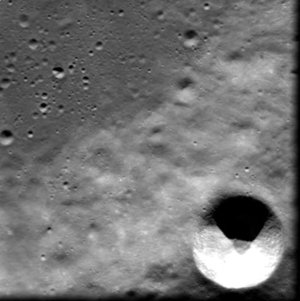
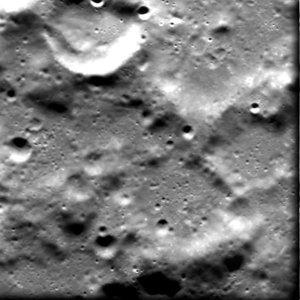
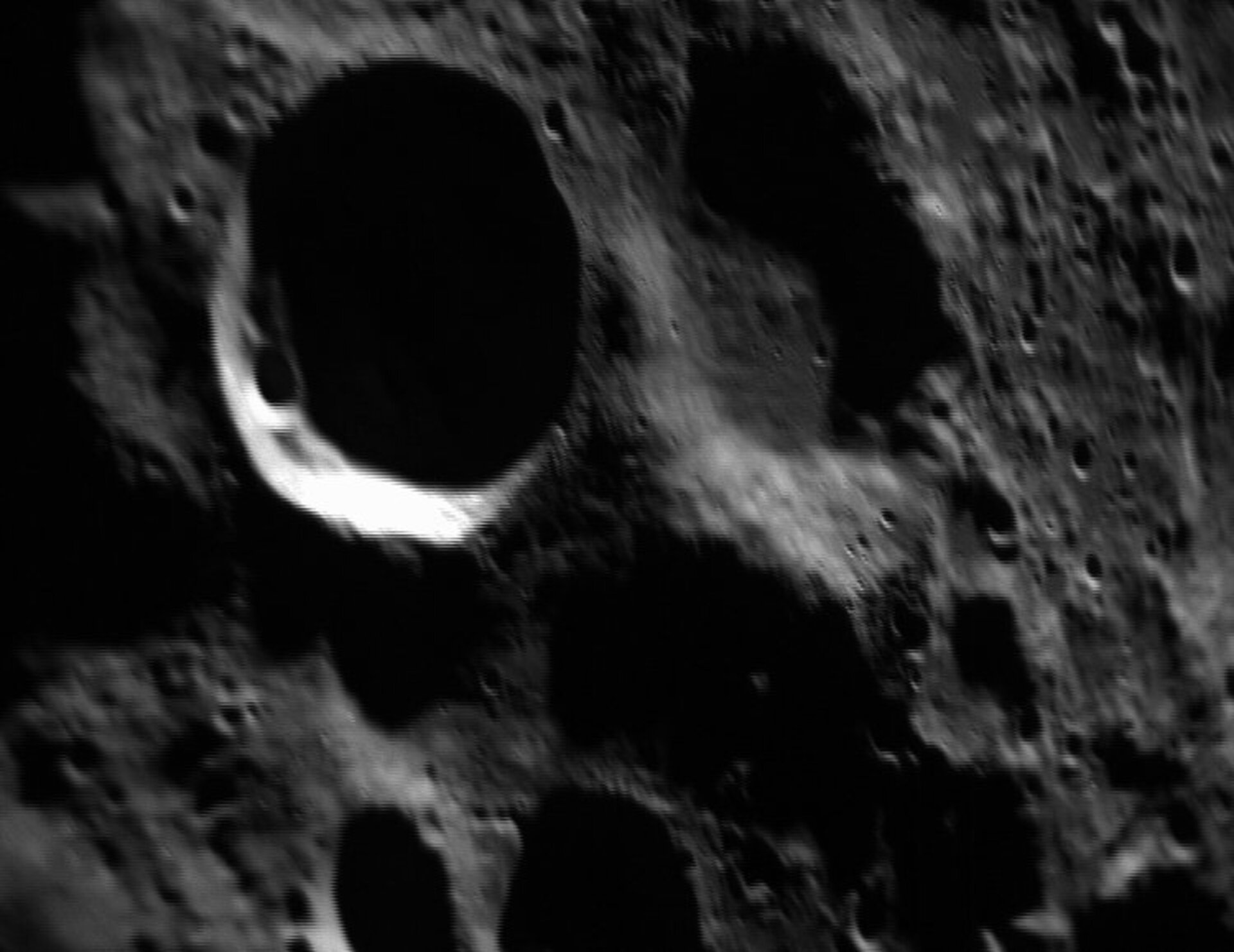
    SMART-1 star tracker image from 165 kilometres altitude
    29 August 2006

    While ESA's SMART-1 mission is running on its last orbits around the Moon before its planned lunar impact on 3 September 2006, the spacecraft 'star tracker' – or attitude camera - is taking exciting pictures of the ever approaching surface.

    One week before the end of the SMART-1 mission, the SMART-1 Mission Control Team at the European Space Operations Centre (ESOC) in Germany are working together with the Danish Technical University (DTU), manufacturer of the star tracker, to demonstrate that this attitude camera is not only capable of determining the spacecraft attitude by looking at the stars, but can also be used for exciting peeks at the Moon. The DTU star tracker is a light-weight instrument, weighing only 3.2 kilogrammes including the baffles, and operates highly autonomously.

    With only a few days to go, the flight control team is taking advantage of the star tracker being blinded by the moonlight to fuel the imagination and take images at close distance.

    The first image was taken on 23 August at 12:42 CEST (10:42 UT), from 165 kilometres above the Moon surface, while SMART-1 was travelling at a speed of 1.93 kilometres per second. The two craters visible on the image are 'satellite' craters to the Neumayer crater. Satellite craters are identified by the name of their parent crater and an additional letter.

    On the star tracker image the crater with the sharp rim is called Neumayer M (located at a latitude of 71.6° South, and a longitude of 78.5° East) and the one with the smooth rim is called Neumayer N (at a latitude of 70.4° South, and a longitude of 78.7° East). The image is slightly smeared as the spacecraft is moving at high speed and at low altitude. This image was taken as a test, which means the spacecraft pointing was not optimised for taking images with the star tracker.
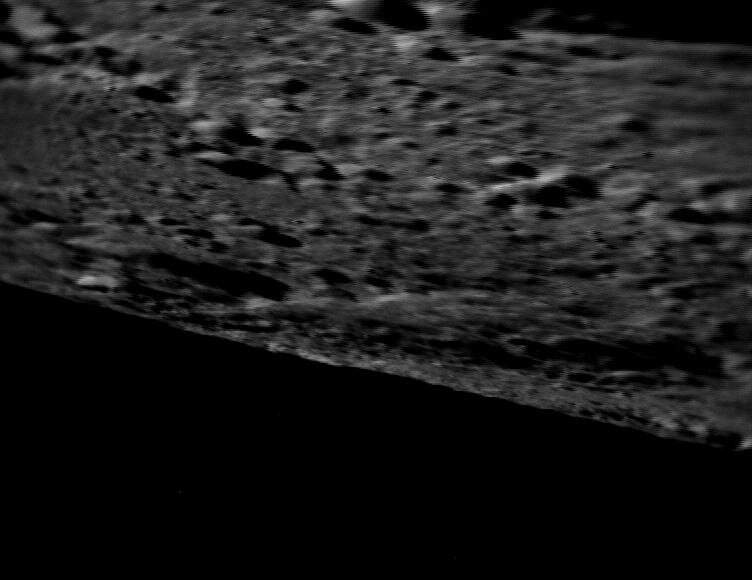

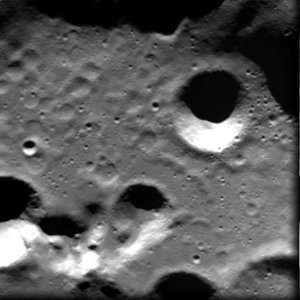
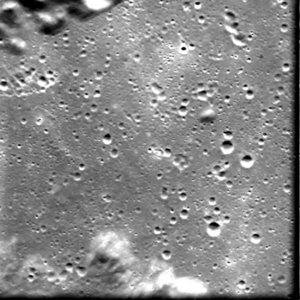
    SMART-1 star tracker image from 59 kilometres altitude

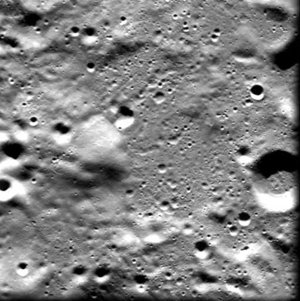
    Additional test images were taken by the star tracker on 25 August, from 165 and 59 kilometres altitude, respectively. The first image was taken while the spacecraft was moving at a speed of 2 kilometres per second, while the second image was taken when SMART-1 was travelling at 1.6 kilometres per second.
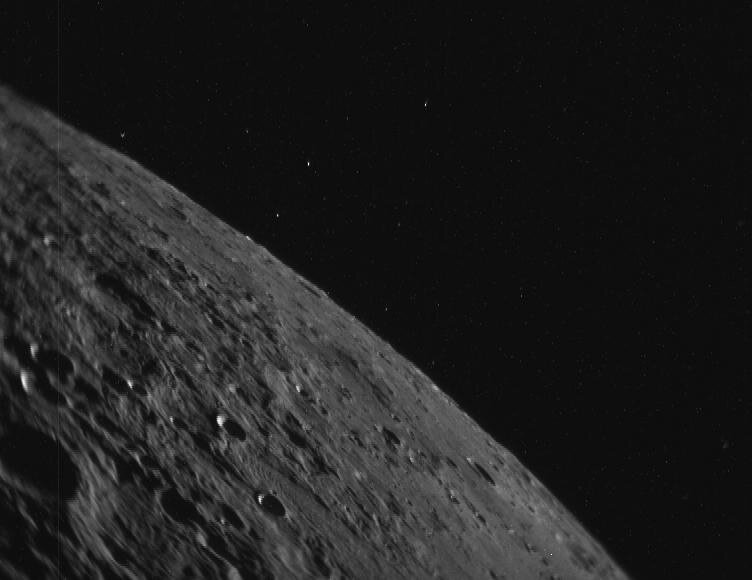
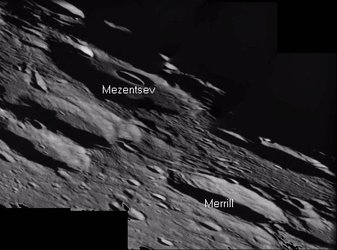
    SMART-1 star tracker image from 744 kilometres altitude

    On Tuesday 29 August the spacecraft is in a favourable position to take the most exciting images so far. At that time the star tracker will have both the Earth and the Moon in its field of view, with the Earth about to disappear on the Moon's horizon.

    To calibrate the star tracker and to ensure safe star tracker operation, the Flight Control Team at ESOC have taken test images with new star tracker settings provided by DTU. The resulting images already show a breath-taking view of the Moon.

    "The star tracker provided its first images of the Milky Way a few days after SMART-1 was 'born' in space", says SMART-1 Project scientist Bernard Foing, "and it is also witnessing the last moments from the vehicle as if we were on board."

    For more information

    Octavio Camino-Ramos, ESA SMART-1 Spacecraft Operations Manager
    Email: octavio.camino @ esa.int

    Bernard Foing, ESA SMART-1 ESA Project Scientist
    Email: bernard.foing @ esa.int

    Gerhard Schwehm, ESA SMART-1 Mission Manager
    Email: gerhard.schwehm @ esa.int
    Rate this

    Views

    Share

    • Currently 0 out of 5 Stars.
    • 1
    • 2
    • 3
    • 4
    • 5
    Rating: 0/5 (0 votes cast)

    Thank you for rating!

    You have already rated this page, you can only rate it once!

    Your rating has been changed, thanks for rating!

    110
    Tweet
    • SMART-1
    • More about...
      • Close-up on Cuvier crater ridge
        • Eroded structures in Jacobi crater: a window on the past
          • An oblique look on the north lunar far west
            • Close-up on highlands near crater Pentland
              • Lava dome in Schiller
                • Mare Serenitatis: crater statistics and lunar chronology
                  • Mersenius crater – wrinkles between Humorum and Procellarum
                    • Lomonosov – a large crater filled by lava
                      • SMART-1 birthday postcard of Apollo 11 landing site
                        • Gruithuisen: non-mare volcanism in Procellarum
                          • Landscapes from the ancient and eroded lunar far side
                            • SMART-1 view of crater Sulpicius Gallus
                              • The SMART-1 way - giving the Moon some great new looks
                                • Mare Humorum: where craters tell the story of basalt
                                  • Gassendi crater - clue on the thermal history of Mare Humorum
                                    • Kepler Crater as seen by SMART-1
                                    • Related links
                                    • Space-X
                                    • Advanced Moon micro-Imager Experiment (AMIE)

    Connect with us

    • RSS
    • Youtube
    • Twitter
    • Flickr
    • G+
    • Facebook
    • Livestream
    • Subscribe
    • App Store
    • LATEST ARTICLES
    • · The fast winds of Venus are gettin…
    • · ExoMars 2016 set to complete const…
    • · Herschel ends operations as orbiti…
    • · Europe’s largest spaceship reache…
    • · ATV ready to nose up to Station
    • FAQ

    • Jobs at ESA

    • Site Map

    • Contacts

    • Terms and conditions