About Proba-2
Editor's note: This page is no longer being updated, but will be preserved as a record.
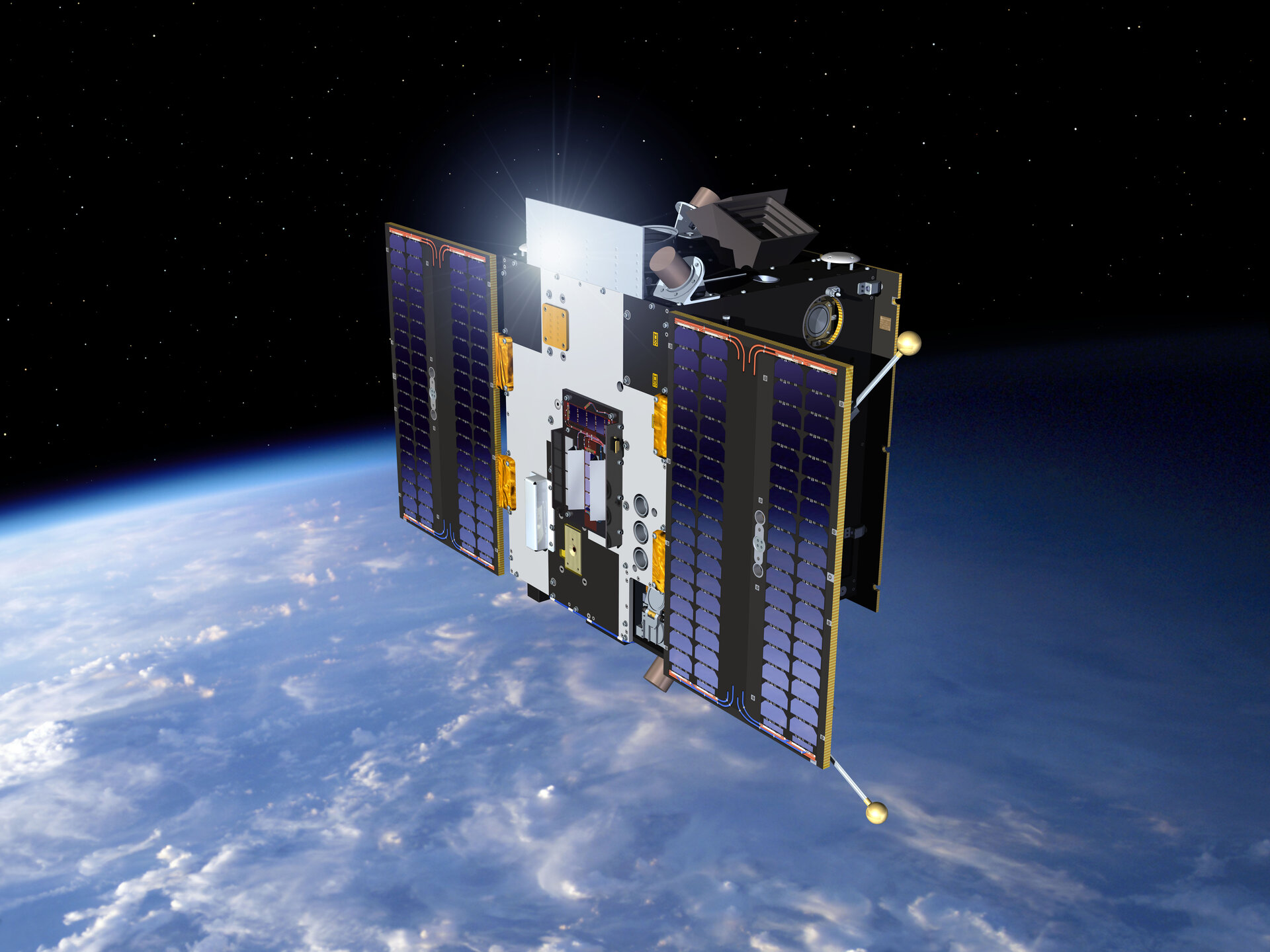
Proba stands for PRoject for OnBoard Autonomy. The Proba satellites are among the smallest ever to be flown by ESA, but they are making a big impact in space technology. Proba-2 is the second of the series, building on nearly eight years of successful Proba-1 experience.
Providing flight opportunities
The Proba satellites are part of ESA’s In-orbit Technology Demonstration Programme, missions dedicated to the demonstration of innovative technologies. In-orbit demonstration is the last step on the technology development ladder. New technology products need to be demonstrated in orbit, particularly when users require evidence of flight heritage or when there is a high risk associated with use of the new technology.
In-orbit demonstration is achieved through experiments on carriers of opportunity, such as the International Space Station, or through dedicated small satellites such as the Proba series, which was created to increase the availability of flight-testing opportunities.
Ensuring a competitive European industry
Small, low-cost missions allow small companies access to space and provide them with the experience that is essential for European industries to be competitive and innovative.
Commitment to technological innovation
Proba-2 is the result of ESA’s commitment to technological innovation. Altogether, 17 new technological developments and four scientific experiments are being flown on Proba-2.
Technology demonstrations
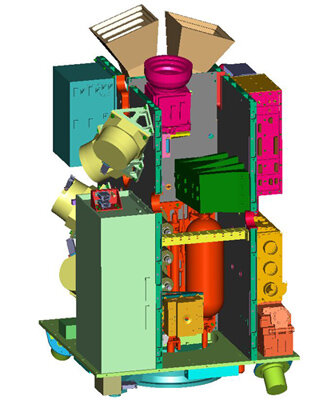
The technology demonstrations are:
- a new type of lithium-ion battery, developed by SAFT (FR)
- an advanced data and power management system, containing many new component technologies including the LEON processor developed by Verhaert Space (BE)
- combined carbon-fibre and aluminium structural panels, developed by Apco Technologies SA (CH)
- new models of reaction wheels from Dynacon (CA), startrackers from DTU (DK) and GPS receivers from DLR (DE)
- an upgraded telecommand system with a decoder largely implemented in software by STT- SystemTechnik GmbH (DE)
- a digital Sun-sensor, developed by TNO (NL)
- a dual-frequency GPS receiver, developed by Alcatel Espace (FR)
- a fibre-sensor system for monitoring temperatures and pressures around the satellite, developed by MPB Communications Inc. (CA)
- a new startracker development being test-flown before use on the BepiColombo mission, developed by Galileo Avionica (IT)
- a very high-precision flux-gate magnetometer, developed by DTU (DK)
- an experimental solar panel with a solar flux concentrator, developed by CSL (BE)
- a xenon gas propulsion system using resistojet thrusters and a solid-state nitrogen gas generator to pressurise the propellant tanks, developed by SSTL (GB) and Bradford (NL)
- an exploration micro-camera (X-CAM), developed by Micro-cameras & Space Exploration (CH)
- new GNC algorithms developed by NGC (CA)
The two solar observation experiments are:
- a Large Yield Radiometer (LYRA) that monitors four bands in a very wide ultraviolet spectrum, with Centre Spatial de Liège as lead institute supported by the Royal Observatory of Belgium as scientific leader and with an international team comprising PMOD (CH), IMOMEC (BE) and BISA (BE)
- an extreme-ultraviolet telescope (SWAP) using new pixel sensor technology (APS), that makes measurements of the solar corona in a very narrow band, with Centre Spatial de Liège as lead institute supported by the Royal Observatory of Belgium and with an industrial team comprising Alcatel-Lucent (BE), AMOS SA (BE), DELTATEC (BE), Fill Factory NV (BE) and OIP NV (BE)
The two space weather experiments are:
- Dual Segmented Langmuir Probes (DSLP), which measures electron density and temperature in the background plasma of the Earth’s magnetosphere
- a thermal plasma measurement unit (TPMU), that measures ion densities and composition
Both were developed by a Czech consortium, led by the Institute of Atmospheric Physics, Academy of Sciences of the Czech Republic (CZ).
In total, ten European countries and Canada were involved in the construction of the Proba-2 satellite.
Effective Engineering
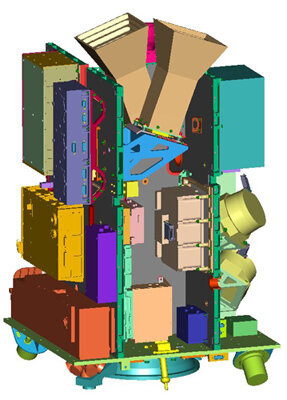
To ensure on board autonomy, mission control system development is an integral part of the overall mission programme, along with the associated operations. Development occurs incrementally, with progressive validation taking place throughout activities ranging from software development, spacecraft integration and system testing to in-orbit operations.