• → European Space Agency

      • Space for Europe
      • Space News
      • Space in Images
      • Space in Videos
    • About Us

      • Welcome to ESA
      • DG's News and Views
      • For Member State Delegations
      • Business with ESA
      • ESA Exhibitions
      • ESA Publications
      • Careers at ESA
    • Our Activities

      • Space News
      • Observing the Earth
      • Human Spaceflight
      • Launchers
      • Navigation
      • Space Science
      • Space Engineering
      • Operations
      • Technology
      • Telecommunications & Integrated Applications
    • For Public

    • For Media

    • For Educators

    • For Kids

    • ESA

    • Proba Missions

    • Proba-V at a glance
    • Overview
    • Objectives
    • About the instrument
    • V for Vegetation
    • Serving science
    • Fitting the world in a box
    • About the platform
    • Joining ESA’s Proba family
    • Boxing clever
    • About the mission
    • Made in Belgium
    • On the ground
    • Starting operations
    • New technology
    • Hitching a ride
    • Tracking aircraft from orbit
    • New space semiconductor
    • Detecting radiation
    • Fly by fibre
    • About the launch
    • Launcher
    • Launch site
    • Proba-V launch diary part 1
    • Proba-V launch diary part 2
    • Proba-V launch diary part 3
    • Proba-V launch diary part 4
    • What's next
    • Proba-3
    • Already flying
    • Proba-1
    • Proba-2
    • Multimedia
    • Proba-V images
    • Proba images
    • Proba Earth images
    • Videos
    • Animations
    • Contact
    • Contact us

    ESA > Our Activities > Technology > Proba Missions

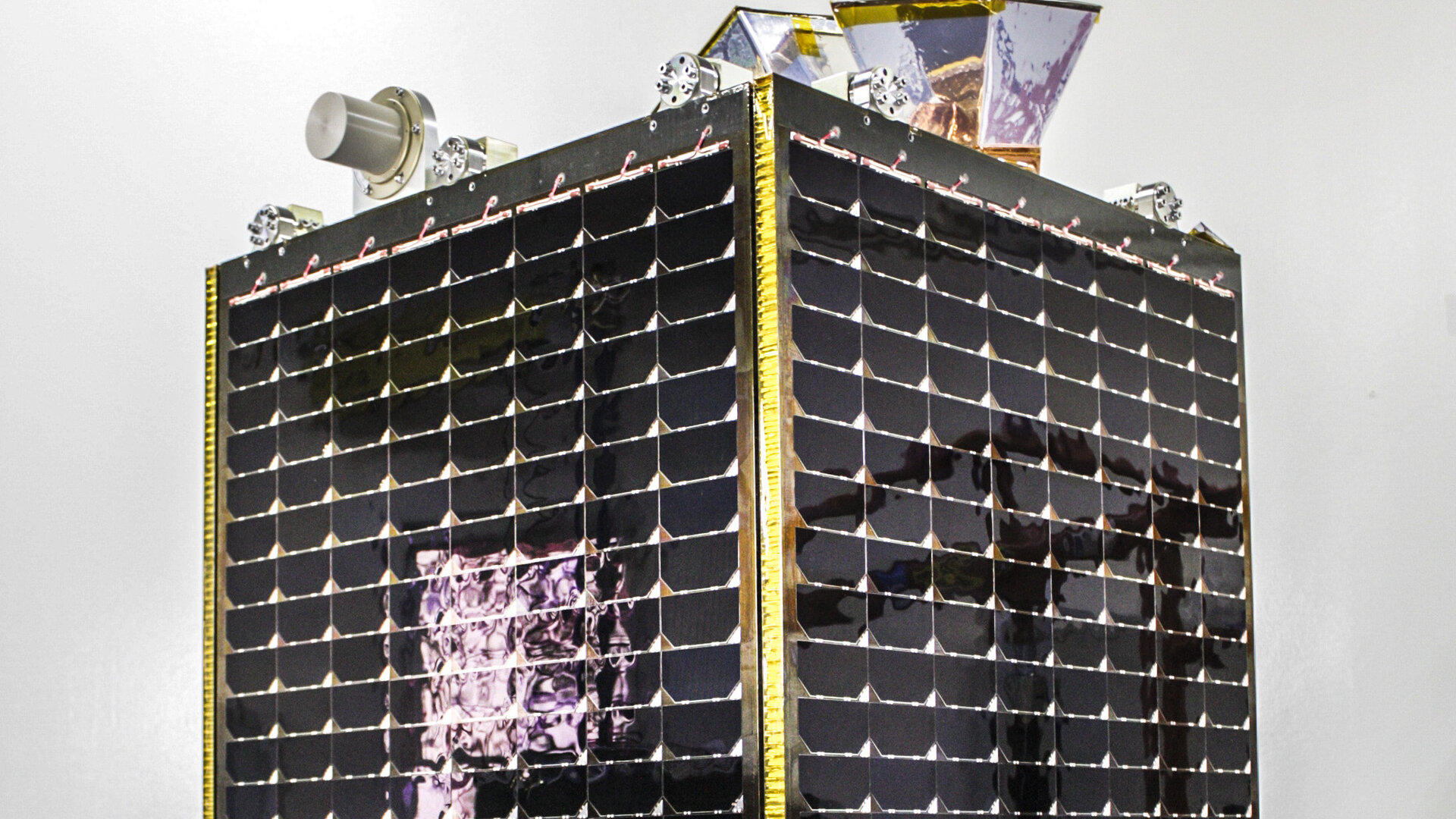
    Completed Proba-V satellite

    Testing time for Proba-V, ESA’s global vegetation tracker

    14 January 2013

    ESA’s Proba-V microsatellite is now assembled and midway through testing to ensure it is fully spaceworthy. The miniature Earth-observer, designed to chart global vegetation every two days, will be launched in April.

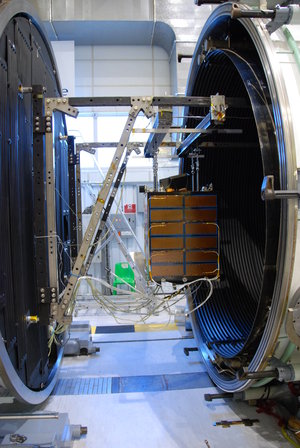
    The testing at the specialised Intespace facility in Toulouse, France, includes rigorous simulations of Proba-V’s take-off conditions and the hard vacuum and temperature extremes it must endure in orbit.

    It comes after Proba-V’s assembly was completed by prime contractor QinetiQ Space at its facility in Kruibeke, Belgium last month.

    Proba-V satellite

    Building it was a complex operation. Although smaller than a cubic metre, the satellites carries a wide-angle telescope for its main Earth-monitoring instrument, a pair of radiation sensors, a fibre optic connector experiment, a prototype radio transmitter based on the semiconductor gallium nitride, and a test receiver to track aircraft in flight all around the globe.

    Such a crowded payload is standard for ESA’s Proba series of satellites, set up to give early space experience to promising new European technologies, especially from smaller companies often lacking easy access to space.
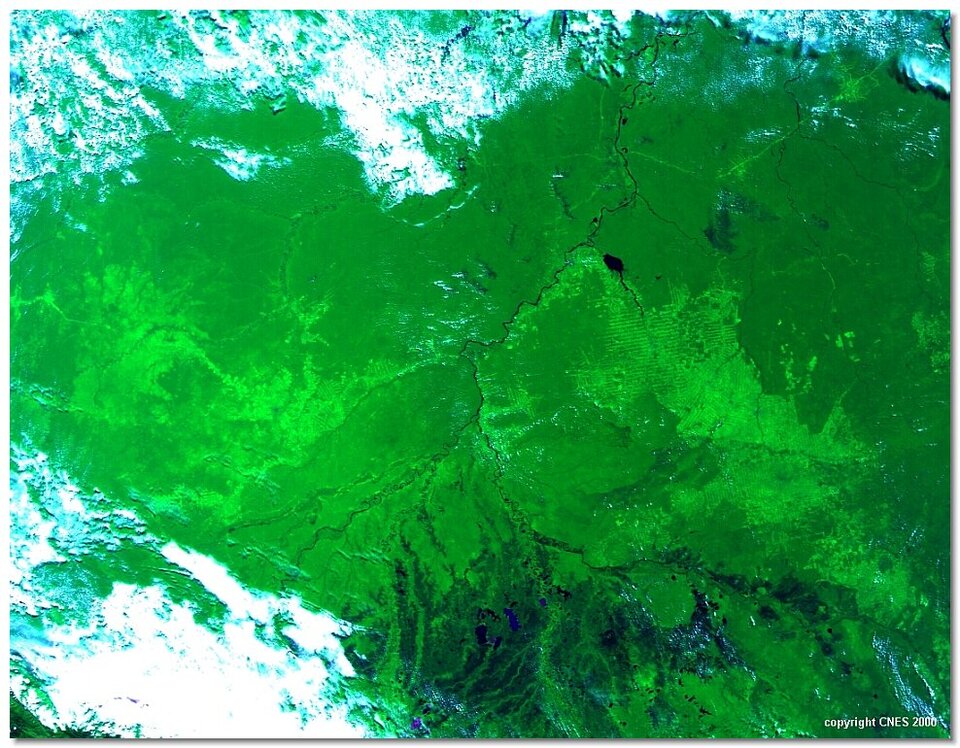
    Deforestation in Brazil

    But Proba-V also marks a departure from previous technology demonstrators Proba-1 in 2001 and Proba-2 in 2009. Both later became operational missions once the outstanding performance of their main instruments became clear.

    This time around, Proba-V has been conceived as a quasi-operational mission from the start, serving a waiting community of users. 

    The V stands for Vegetation: the small satellite is flying a miniaturised version of the Vegetation sensor on France’s full-sized Spot-5 satellite, intended to extend its nearly 15-year continuous record of observations – dating back to the previous Spot-4 mission, launched in 1998.

    There are more than 10 000 registered users of Vegetation products worldwide, and the data have contributed to hundreds of scientific papers. 
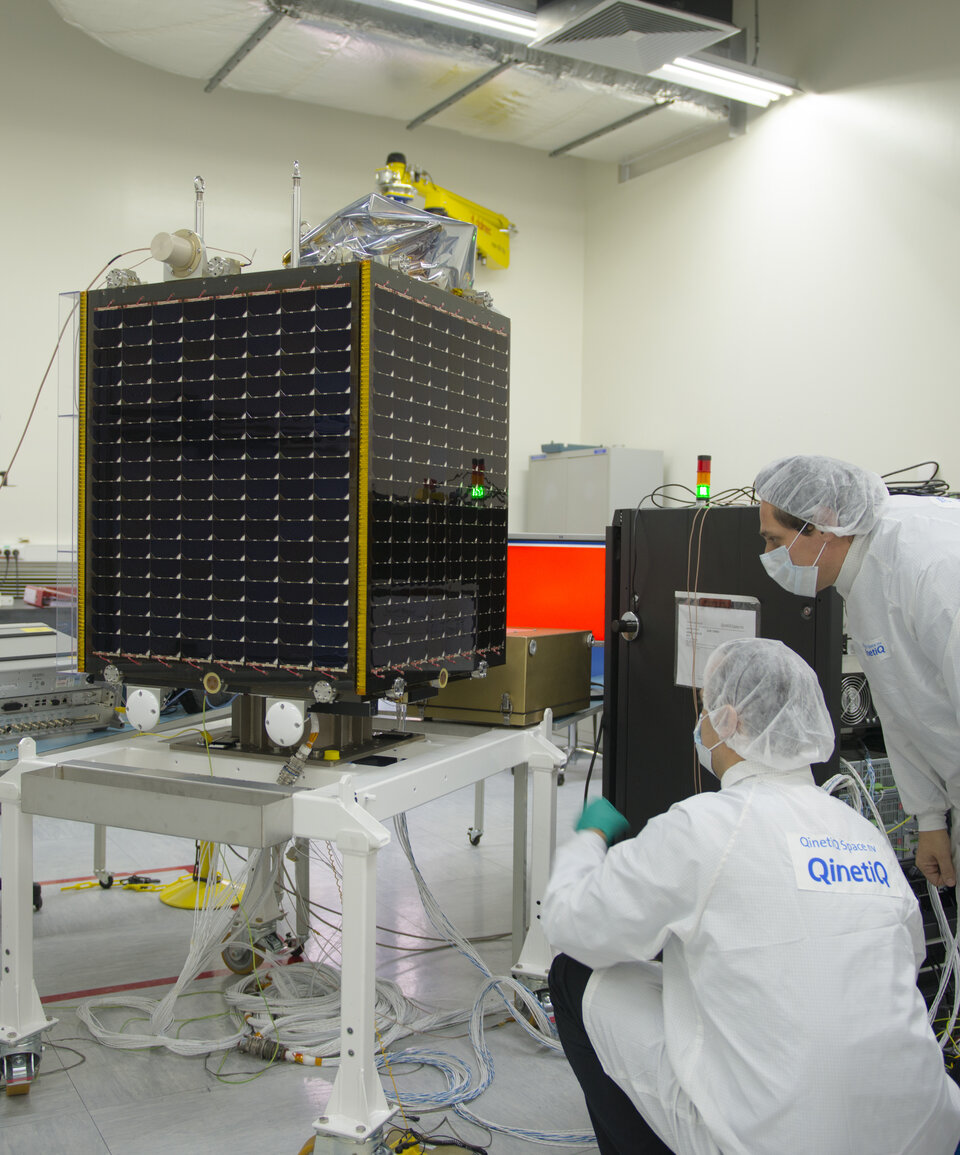
    Integrating Proba-V at QinetiQ Space

    Despite being much smaller than the original Vegetation instrument, Proba-V’s version observes compatible spectral bands while delivering a spatial resolution three times sharper.

    Among other firsts for the mission, Proba-V will fly a radio amplifier based on gallium nitride. Often described as the most promising semiconductor since silicon, gallium nitride offers higher power levels and radiation resistance.

    Proba-V will also be the world’s first space mission to detect Automatic Dependent Surveillance Broadcast signals from aircraft, building up a global overview of air traffic. 
    Rate this

    Views

    Share

    • Currently 4.5 out of 5 Stars.
    • 1
    • 2
    • 3
    • 4
    • 5
    Rating: 4.45/5 (24 votes cast)

    Thank you for rating!

    You have already rated this page, you can only rate it once!

    Your rating has been changed, thanks for rating!

    4431
    Tweet

    Related articles

    Space environment conditions are a complex set of phenomena involving the Sun and Earth

    Proba-V equipped for radiation census of space17 June 2011

    Space environment conditions are a complex set of phenomena involving the Sun and Earth

    Proba-V equipped for radiation census of space17 June 2011 Planned to be launched next year, ESA’s Proba-V mission will perform daily tracking of global vegetation growth. At the same time, the small satellite will also monitor the space environment with a compact radiation instrument.

    Proba-V STM

    Proba-V keeps its cool in space simulation17 November 2010

    Proba-V STM

    Proba-V keeps its cool in space simulation17 November 2010 Proba-V is taking shape. A test model of ESA’s small satellite has proved it can keep its cool while performing its demanding mission of tracking vegetation growth across the world on a daily basis.

    Proba-V transmitter

    Proba-V will put European gallium nitride to its first space test20 October 2010

    Proba-V transmitter

    Proba-V will put European gallium nitride to its first space test20 October 2010 Proba-V, ESA’s small satellite for global vegetation mapping, will be the first space mission to fly European gallium nitride technology. This novel material’s high power capacity makes it the most promising semiconductor since silicon.

    • Technology
    • Observing the Earth
    • QinetiQ Space
    • Vegetation instrument
    • Intespace

    Connect with us

    • RSS
    • Youtube
    • Twitter
    • Flickr
    • G+
    • Facebook
    • Livestream
    • Subscribe
    • App Store
    • LATEST ARTICLES
    • · Proba-V opens its eyes
    • · First new Galileo satellite arrive…
    • · Next destination: space
    • · Leak repaired on International Spa…
    • · After Chelyabinsk: European expert…
    • FAQ

    • Jobs at ESA

    • Site Map

    • Contacts

    • Terms and conditions